The DHIS2 Annual Conference takes place from 15-18 June 2026! Learn more


The DHIS2 Annual Conference takes place from 15-18 June 2026! Learn more
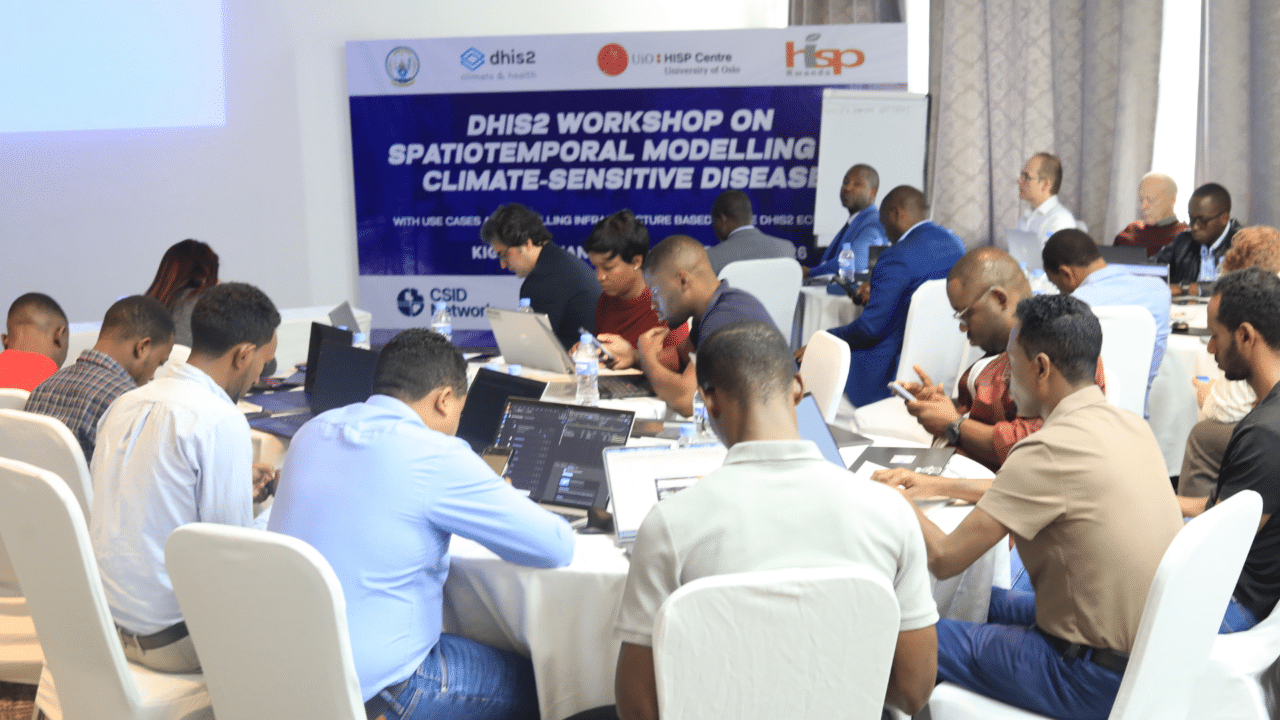
More than 60 participants from 15+ countries convene to advance spatiotemporal analysis of climate-sensitive diseases.
A five-day DHIS2 Workshop on Spatiotemporal Modeling of Climate-Sensitive Diseases concluded last week in Kigali, Rwanda, bringing together more than 60 participants from over 15 countries across Africa, Europe, and Asia for intensive hands-on learning and collaboration.
The workshop was organized by the HISP Centre at the University of Oslo in collaboration with the CSID Network, the SOSCHI Project UK, the Data Lab for Social Good Research Group, and the Wellcome Trust, with support from HISP Rwanda and the Ministry of Health of Rwanda. The training aimed to strengthen capacity in low- and middle-income countries (LMICs) to analyze, model, and interpret climate and health data to improve forecasting and response to climate-sensitive diseases.
Throughout the week, participants engaged in practical sessions using real datasets and modeling approaches to explore how climate variability influences disease patterns. Country teams developed and evaluated predictive models capturing spatial and temporal disease risks linked to climate variability, strengthening their ability to apply evidence-based approaches in national public health programs.
The workshop focused on DHIS2-based tools, including the Chap modeling platform and the DHIS2 Climate App, which enable integration of climate data and modeling outputs into routine surveillance systems and climate-informed early warning mechanisms. Workshop participants arrived in Kigali already having had an in-depth introduction to these tools through the DHIS2 advanced webinar series on spatiotemporal modeling of climate-sensitive diseases, which is available to view on YouTube as a capacity-building resource.
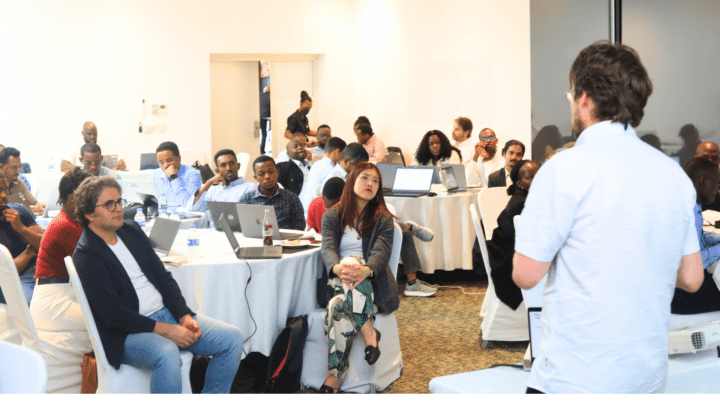
The event provided a collaborative platform for national health program teams, researchers, and DHIS2 implementing partners to exchange experiences and build technical skills in analyzing, modeling, and interpreting climate-sensitive disease data. Through continued partnership and innovation, the DHIS2 community and country stakeholders are strengthening data-driven preparedness and response to emerging climate-related public health risks.
This workshop marks a capstone for a significant area of work under the two-year, Wellcome-funded Climate & Health project. Building on the tools, methods, and partnerships developed through the project, the HISP Centre and partners will continue iterative development of DHIS2 climate and health modeling tools and sustained capacity building in close collaboration with country stakeholders, ensuring that these approaches remain practical, locally grounded, and responsive to evolving public health needs.