The DHIS2 Annual Conference takes place from 15-18 June 2026! Learn more


The DHIS2 Annual Conference takes place from 15-18 June 2026! Learn more
During the ongoing conflict in Gaza, Palestine’s Ministry of Health and UNFPA launched a DHIS2 system to collect and visualize women’s health data, supporting coordinated response, service gap identification, and resource allocation for more than 545,000 women.
Amid one of the world’s most complex humanitarian crises, Palestine’s Ministry of Health (MoH), with the support of UNFPA and HISP MENA, launched the Sexual and Reproductive Health (SRH) dashboard to ensure that data continues to guide lifesaving decisions in Gaza.
Built on the DHIS2 digital platform, the dashboard allows real-time tracking of SRH services across public and partner-supported facilities. Since its launch in 2024, the SRH dashboard has helped the MoH and humanitarian actors coordinate responses, identify service gaps, monitor and plan resource allocation more effectively.
The initiative demonstrated that even in protracted crises, digital health systems can sustain essential health functions, strengthen accountability, and lay the foundation for long-term health system recovery. Building on this success, Palestine is now advancing toward national adoption of DHIS2 as a unified routine aggregated health management information system (HMIS).
The war that began in Gaza in late 2023 triggered one of the most devastating collapses of a health system in modern history. Around 94 percent of hospitals were damaged or destroyed, and only a third of health facilities remained partially functional. The destruction of infrastructure, compounded by severe shortages of medical supplies and fuel due to the aid blockade, communication blackouts, insecurity, and movement restrictions, made it nearly impossible to maintain even the most basic health services.
“At one point, we lost both the main and backup data centers. In a single moment, we had no history, no system, and no data to support decision-making.” — Eng. Loai Fraija, MoH Gaza, PHIC
The impact on SRH was catastrophic. More than 545,000 women of reproductive age, including an estimated 55,000 pregnant women, were left with little or no access to essential services. With an average of around 4,000 deliveries each month, many births in Gaza now took place in unsafe and unhygienic conditions, some without skilled attendants. As the crisis deepened, pregnancy complications and miscarriages increased sharply, one in three pregnancies became high risk, and the incidence of premature and low-birth-weight births rose as high as 70 percent.
Parallel to this physical collapse, the information systems that underpin healthcare delivery also crumbled. The national health information system (HIS) in Gaza stopped functioning, power outages and communication blackouts halted digital reporting, and the displacement and loss of health staff further eroded data management capacity. With no data flow from the MoH or the Palestinian Health Information Center, health actors on the ground were left operating in isolation. Information was often collected manually and shared through unstable networks or even by hand using flash drives, which hindered coordination, disrupted monitoring efforts, and limited the ability to identify service gaps, overlaps, and unmet needs.
It was within this context that the need became clear for a unified, reliable, and adaptable data platform that could function amid blackout conditions and system breakdowns. A crisis-responsive and offline system was required to capture, consolidate, visualize and analyze data to guide the SRH response and strengthen coordination across actors.
The DHIS2-based SRH Dashboard emerged as a direct response to this need, an innovative digital solution designed to restore SRH documentation and enable evidence-based coordination. It provides an adaptable, offline, and unified data solution capable of functioning amid power cuts, internet disruptions, and access restrictions, while still ensuring real-time visibility of service delivery across partners and facilities.
UNFPA and the HISP MENA team provided financial and technical support to the MoH to design and launch the SRH Dashboard, which serves as a centralized and adaptable tool that brings together data from multiple partners into one unified system. It enhances the accuracy, accessibility, and use of information to guide coordination, monitor service delivery, and strengthen accountability within Gaza’s SRH response.
The dashboard includes a range of visualization tools and disaggregated indicators to support evidence-based planning. It allows administrators to view and analyze data by service type, partner, and location, and to track trends over time. Its service mapping feature presents an interactive map of all facilities providing SRH services across Gaza’s governorates, allowing partners to quickly identify service coverage, overlaps, and unmet needs.
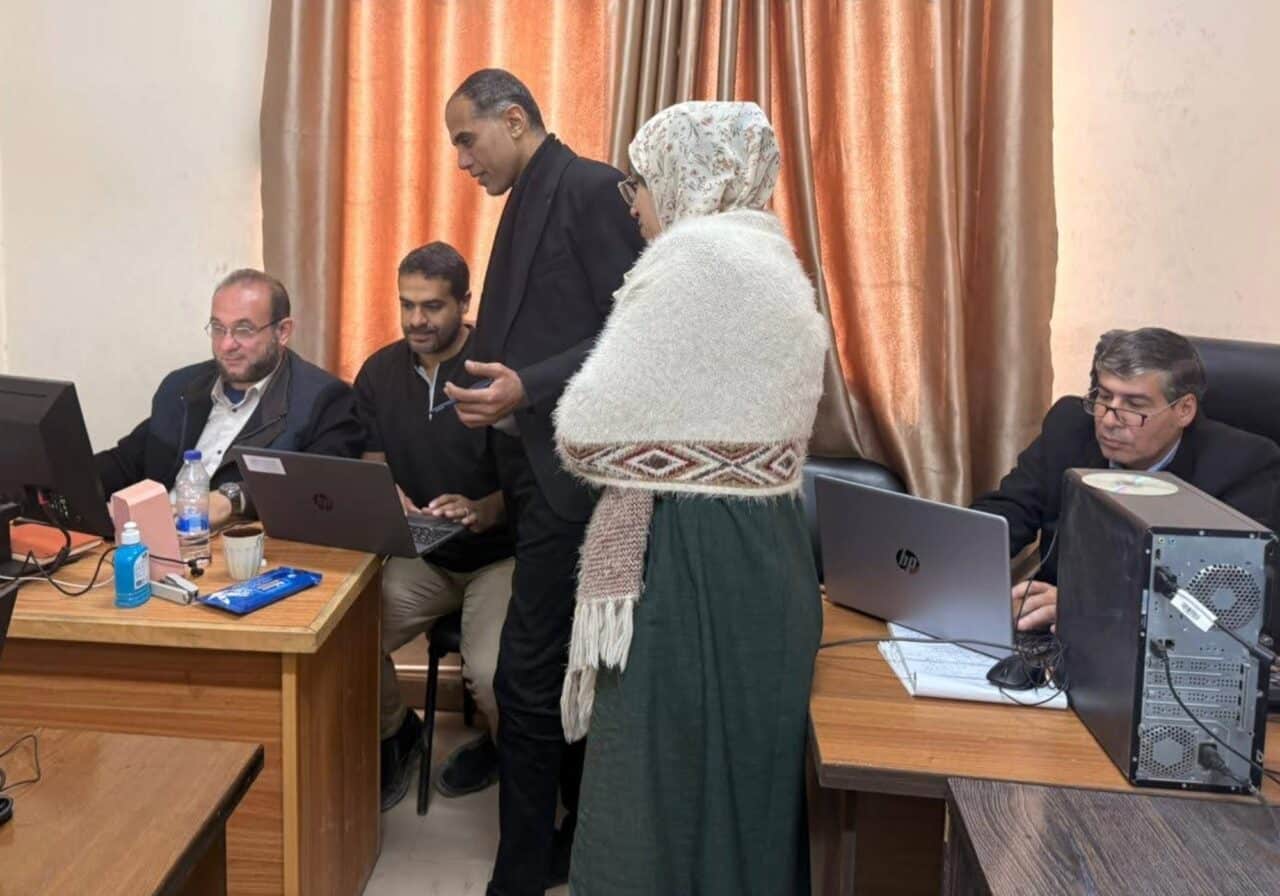
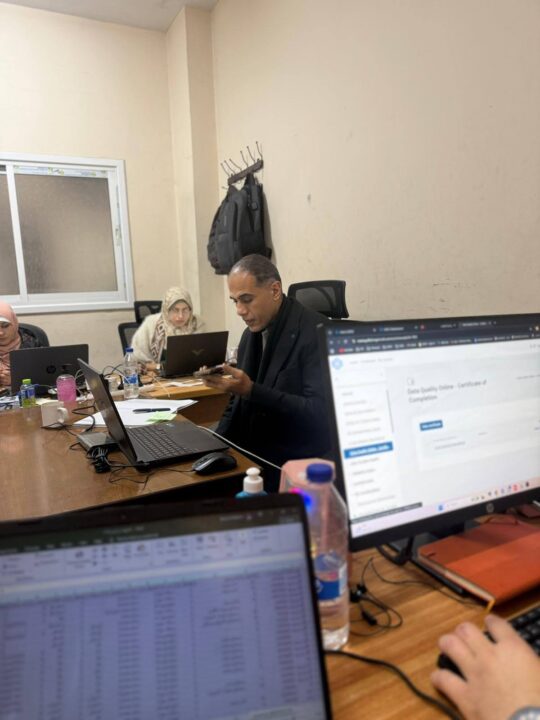
To ensure sustainability and local ownership, UNFPA with HISP MENA supported multiple capacity-building efforts for PHIC staff, SRH partners, and service providers. These included orientation sessions on indicators and dashboard use, technical trainings on DHIS2 customization, and follow-up meetings with hospitals to review progress and refine data quality. Through this process, health information officers, midwives, and SRH coordinators strengthened their digital and analytical skills, enabling them to use data more effectively for planning and decision-making even in crisis conditions.
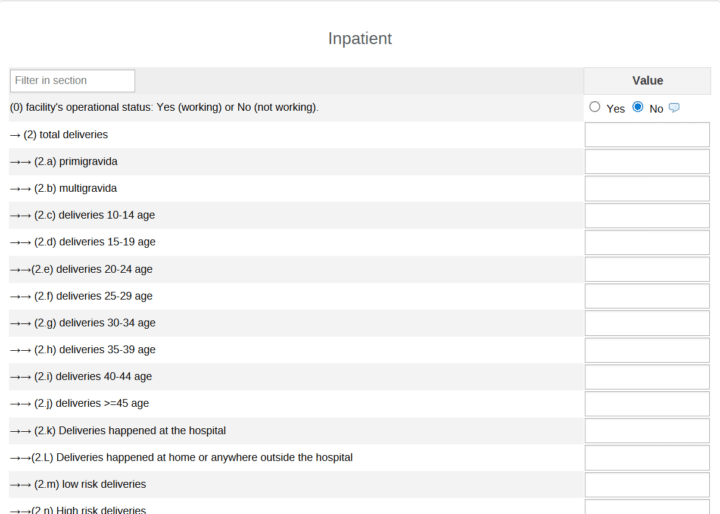
The SRH Dashboard was developed through a collaborative process that focused on users like health data officers and service providers to ensure that the tool reflected operational realities and challenges on the ground. The system was configured to function both online and offline, allowing continuous data entry and analysis despite recurrent blackouts, unstable internet, and access restrictions. Key attention was given to defining clear and standardized indicators and data elements across partners, ensuring consistency in how inpatient, outpatient, and training data were recorded.
Following a limited initial rollout of the dashboard to select SRHTWG partners and PHIC teams, and a series of iterative improvements and training sessions to support improved dashboard use and data cleansing, the dashboard was rolled out across all SRHTWG partners. Regular follow-up meetings with hospitals and implementing partners helped strengthen consistency in data use and build a culture of evidence-based coordination.
By mid 2025, the SRH Dashboard had become a central pillar of the SRH coordination system in Gaza. Its institutionalization under MoH leadership not only ensures long-term sustainability but also positions it as a foundation for re-establishing the national SRH information system covering other health fields and integrating it within the broader DHIS2 architecture for Palestine.
The SRH Dashboard has transformed how partners and the MoH coordinate, monitor, and respond to the SRH crisis in Gaza. By consolidating data from dozens of facilities and humanitarian actors into one unified platform, the dashboard restored visibility and accountability in a setting where routine reporting had collapsed. For the first time since the onset of the war, the MoH and SRHTWG partners gained a consolidated overview of SRH service delivery across Gaza.
“We were not just rebuilding a system. We were rebuilding the ability to see what was happening on the ground, day by day.” – Eng. Zaher Wihidi of the MoH Gaza, PHIC
Insights gathered through consultation with the MoH and PHIC leadership, combined with feedback collected from SRHTWG member organizations, further confirm the dashboard’s operational impact. MoH teams highlighted that the dashboard enabled real-time decision-making during the crisis, including the deployment of midwives to shelters and underserved areas after identifying a significant rise in births occurring outside health facilities, along with rising rates of premature and low-birth-weight deliveries. Data on anemia, malnutrition, and pregnancy complications informed targeted follow-up and coordination with partners to strengthen maternal care where risks were highest.
Additionally, the process of developing and deploying the dashboard has built significant local expertise in DHIS2 use and data management. The capacity-building activities and feedback loops equipped PHIC and partner staff to independently manage and maintain the system, reducing dependency on external technical support, and contributing to a shift in how facilities value data quality and routine reporting as part of everyday service delivery.
“Data alone is not enough. Our goal is to analyze, interpret, and present options to decision-makers so that data leads to action, not just reports.” — Eng. Loai fraija – MoH Gaza, PHIC
Building on this success, the MoH has been able to document facility-level data for 2025 for the first time since the start of the conflict, and is preparing to publish its first annual maternal and child health report since the onset of the war, covering the first 12 months of 2025.
The Gaza experience has shown that digital health is a critical enabler of resilience and effective humanitarian response. Scalable, crisis-ready platforms like DHIS2 allow countries to sustain essential health functions, coordinate responses, and plan recovery even under the most challenging conditions.
With the leadership of the MoH and the technical and financial support of UNFPA, WHO, and the Health Cluster, Palestine is advancing toward the national adoption of DHIS2 as its unified health information system. The platform will expand beyond SRH to include patient-level data and comprehensive reporting across all health programs, establishing a single national framework for data-driven planning, monitoring, and accountability. This will build on the existing information system in the West Bank, where DHIS2 is already implemented across primary healthcare clinics at district and facility level.
“The SRH dashboard was the starting point. What we are building now is not a dashboard, but a national data system that brings together hospitals, primary care, partners, and services under one platform.” — Eng. Zaher Wihidi, MoH Gaza, PHIC
Looking ahead, Palestine may explore the establishment of a Public Health Dashboard to make aggregated national data accessible to all stakeholders. Such an open-data initiative would promote transparency, collaboration, and shared accountability, empowering policymakers, partners, and communities with reliable information to guide recovery and future development.
This evolution reflects a shift from crisis-driven reporting toward a transparent, accountable, and nationally owned data ecosystem that supports recovery, reconstruction, and long-term health system resilience.