The DHIS2 Annual Conference takes place from 15-18 June 2026! Learn more


The DHIS2 Annual Conference takes place from 15-18 June 2026! Learn more
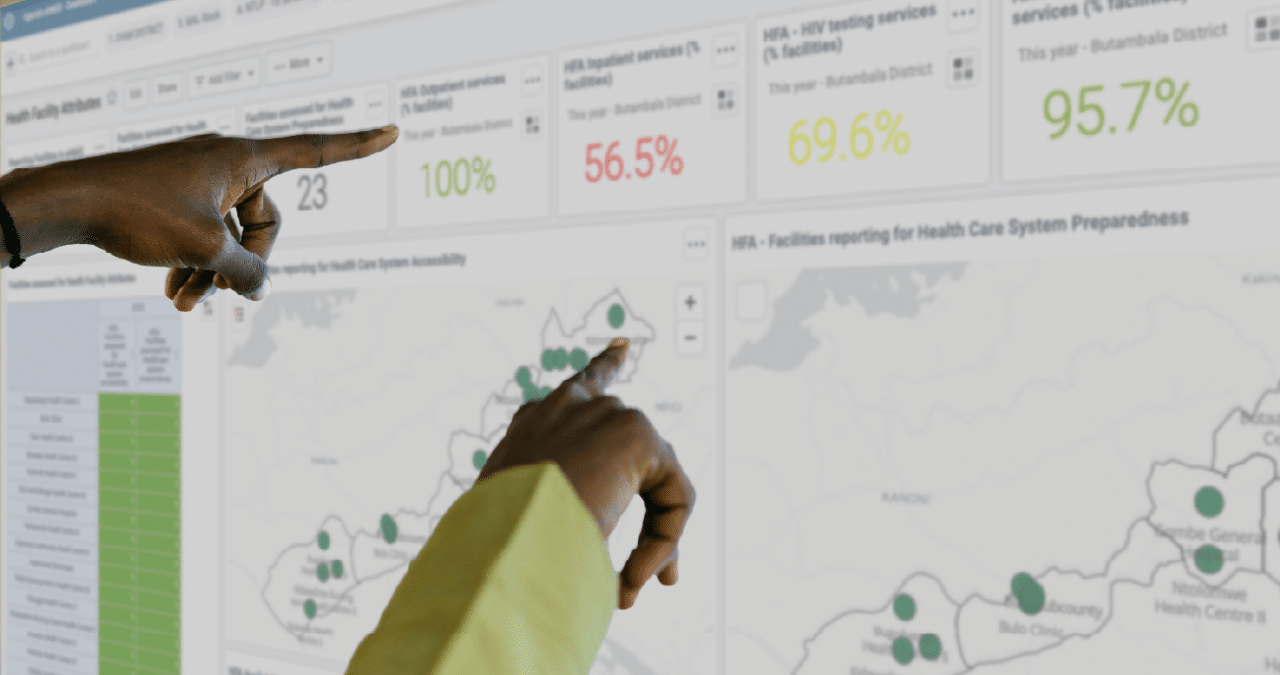
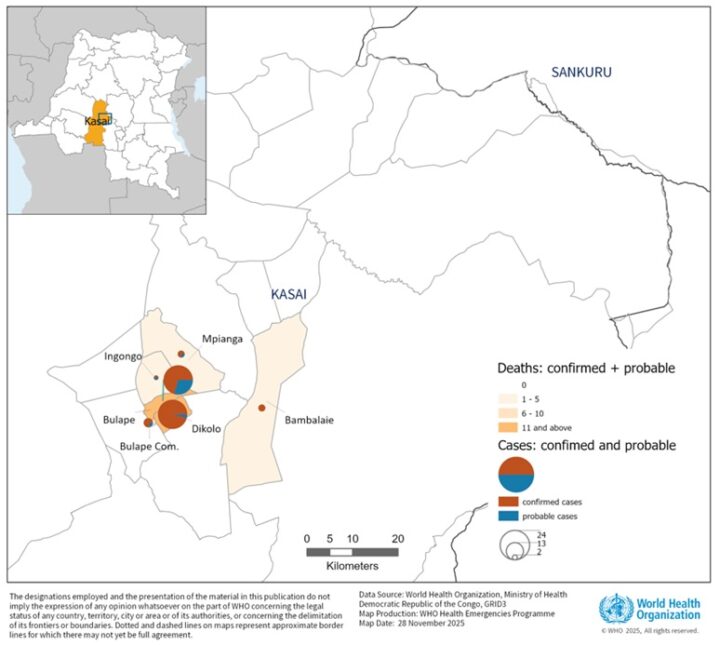
DHIS2 serves as the digital foundation for national health intelligence approaches—both as a sustainable source of health data and as an open platform that can combine and visualize data from a variety of sources, powering integrated analysis and data-driven decisions
The term “Health Intelligence” describes how countries and organizations can leverage available data to improve individual and population health. It can draw on traditional forms of data analysis as well as cutting edge approaches like machine learning and AI. Health Intelligence Centers (HIC) are designed to operationalize health intelligence approaches in a command center setting, providing a centralized platform for processing, integrating, triangulating, and analyzing real-time and routine health data.
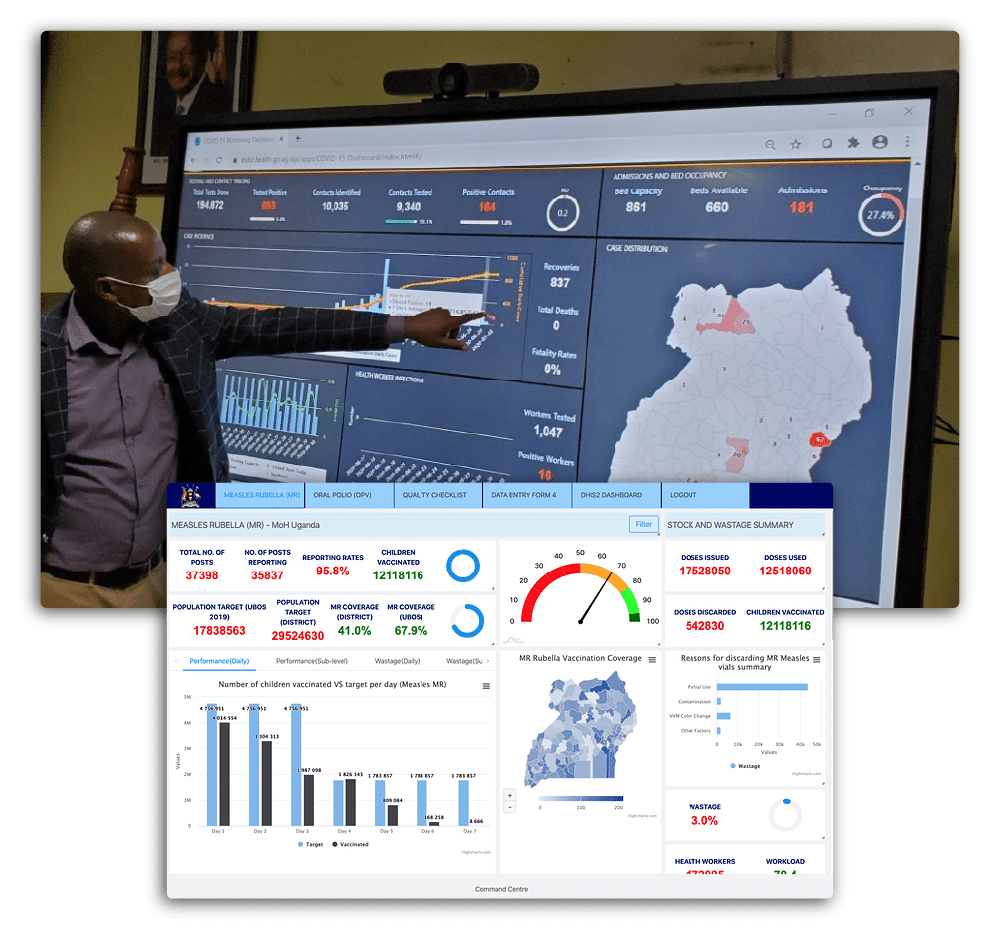
DHIS2 can power health intelligence as a standalone platform. As a platform, DHIS2 already includes the architecture, governance models, data pipelines, analytics tools, and interoperability layers required to provide stakeholders with health intelligence while maintaining full data and digital sovereignty, without creating long-term dependencies on external vendors or proprietary technologies. DHIS2 has already been used to power programme-specific command centers in multiple countries, and can be used as the backbone of a lightweight national HIC. A certified Digital Public Good, DHIS2 gives governments full control over their digital health ecosystem and data.
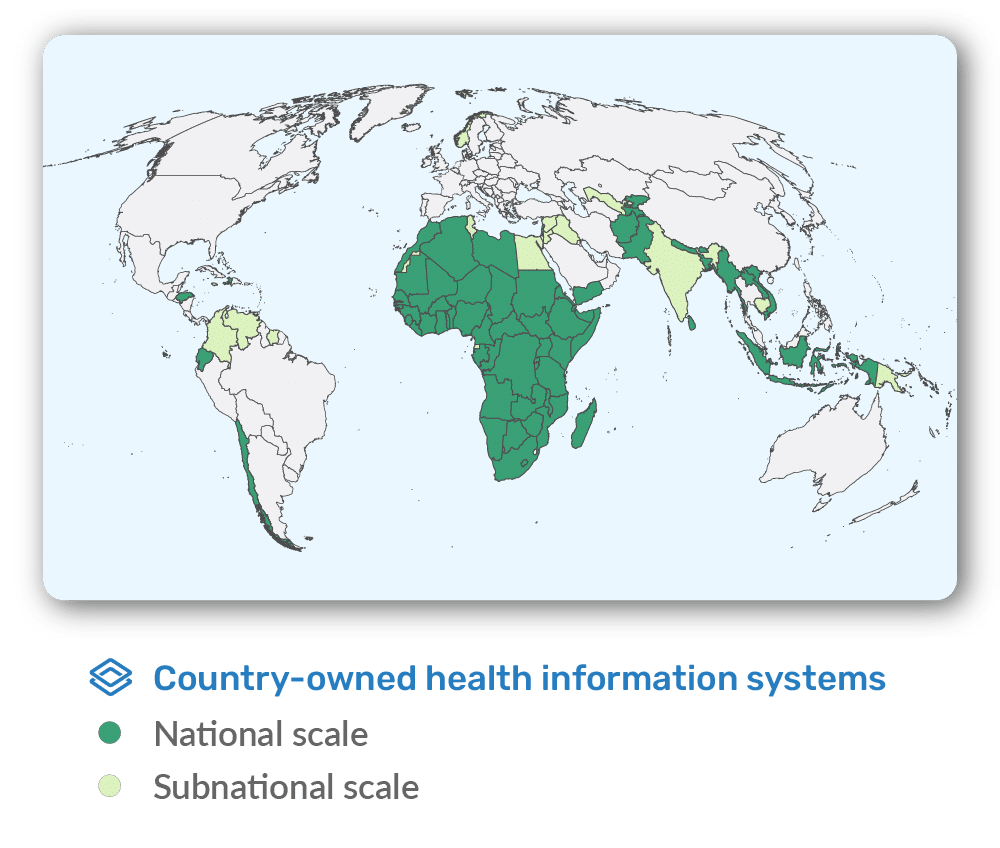
DHIS2 can serve as a key component of an integrated health intelligence architecture. More than 75 countries already use DHIS2 as their locally owned, national-scale platform for collecting and managing routine health data. In addition to the service delivery and population health from national Health Management Information Systems (HMIS), these national systems can also include granular disease surveillance data from Integrated Disease Surveillance and Response (IDSR) systems, real-time data from health campaign platforms, facility-level commodity and logistics data, and more. Thanks to DHIS2’s design as an open, interoperable platform, countries can leverage DHIS2 as the foundation of integrated health intelligence approaches that also include additional software platforms and data sources.
DHIS2 is the world’s largest open-source health information system and, used in more than 75 low- and middle-income countries (LMICs) to collect, manage, analyze, and visualize health data at national scale. Here are some of reasons that make DHIS2 a robust open-source platform to power sovereign health intelligence centers:
DHIS2 is designed to operate at population scale and allows governments to fully own their DHIS2 systems, infrastructure, data, and governance model. As an open-source platform–with transparent and auditable code–DHIS2 guarantees that countries maintain long-term digital autonomy, avoiding closed ecosystems, proprietary data formats, and commercial lock-ins. DHIS2 data is stored in a sovereign data repository, fully under government control, facilitating alignment with national data protection and governance frameworks.
A Health Intelligence Center requires a harmonized, high-quality national data infrastructure. DHIS2 provides a flexible data model that can be configured to meet national frameworks and aligned with global standards through the DHIS2 Health Data Toolkit. This makes it easier to bring data together in DHIS2 from a variety of sources, and to share DHIS2 data with international organizations when required.
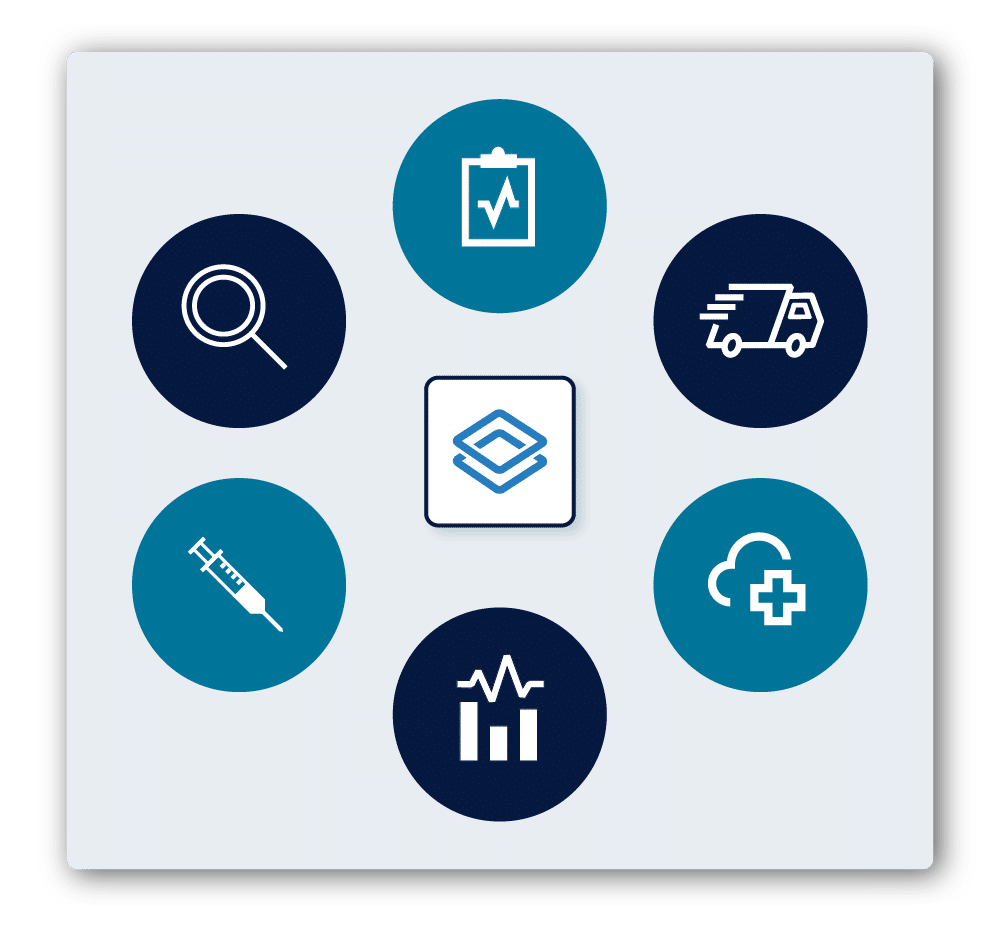
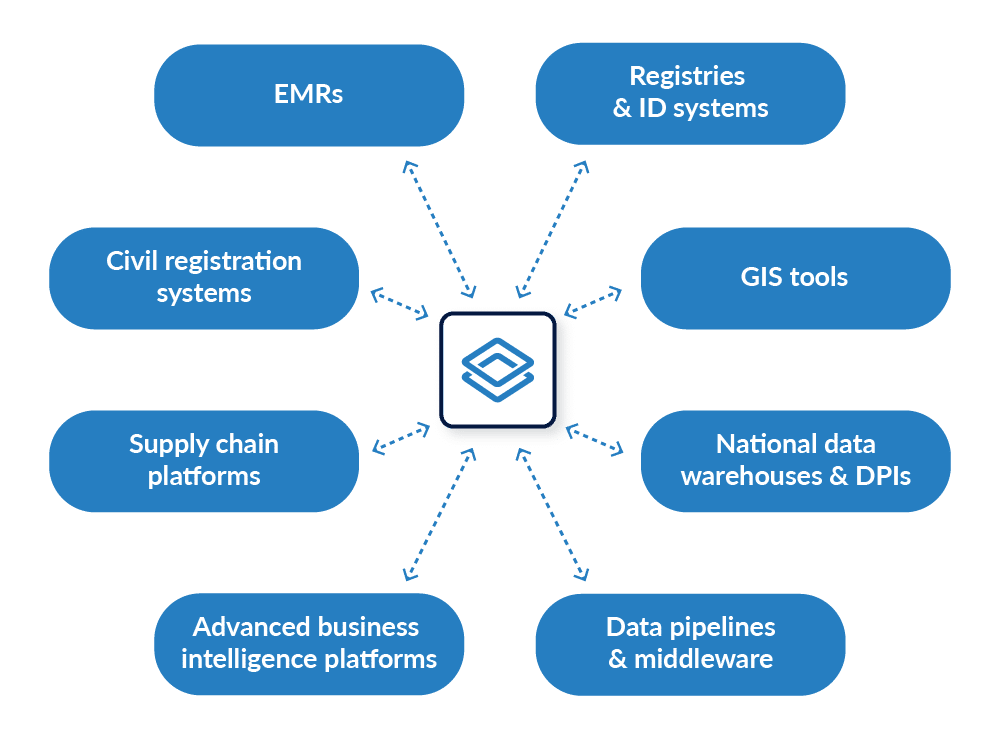
DHIS2’s fully open APIs and adherence to global standards facilitates integration with other national systems and data sources while preserving digital independence, supporting architectural approaches based on digital public infrastructure (DPI). DHIS2 connects with:
Because DHIS2 is open-source, governments never need to rely on a single vendor or proprietary connector for interoperability.
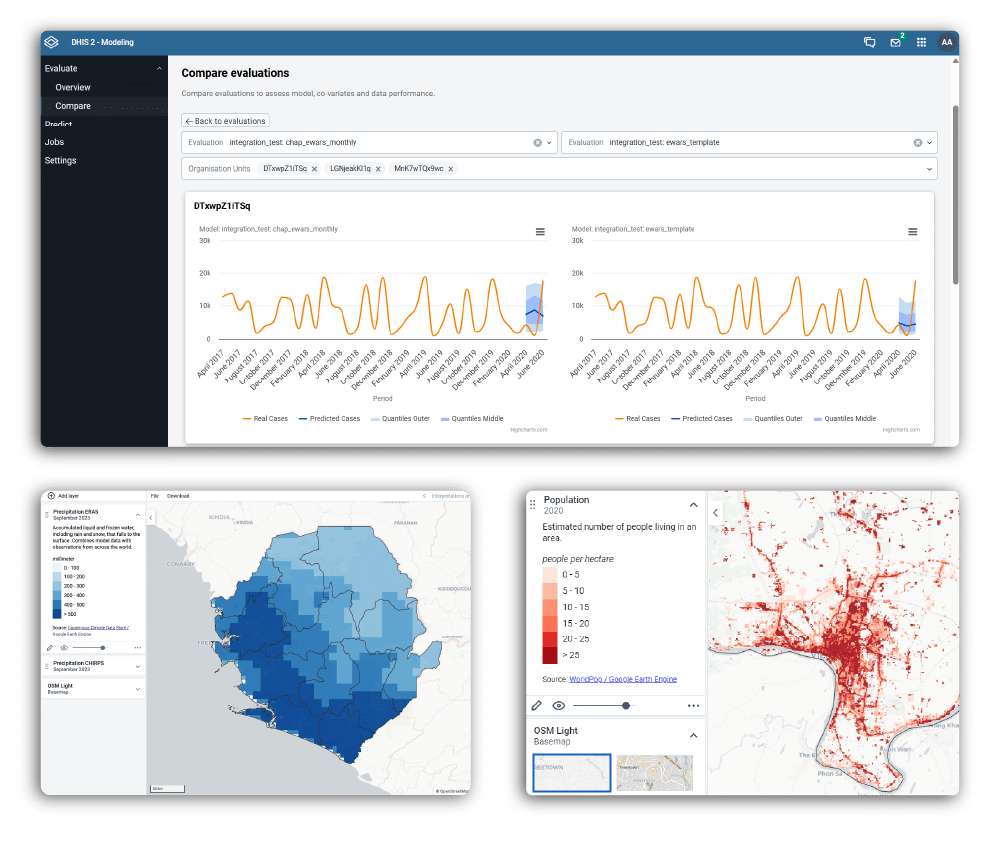
DHIS2 enables national leadership to generate intelligence independently, without licensing fees, per-user costs, or proprietary analytics engines. Built-in DHIS2 tools include:
Unlike many proprietary health software platforms, DHIS2 is designed to be fully configurable, allowing countries maximum flexibility to customize their DHIS2 systems, with no coding required. DHIS2 also makes it easy to incorporate local innovations and tools that extend the platform’s functionality, such as adding custom applications and dashboards, AI and machine learning tools, interoperability connectors, and more–all without licensing restrictions.
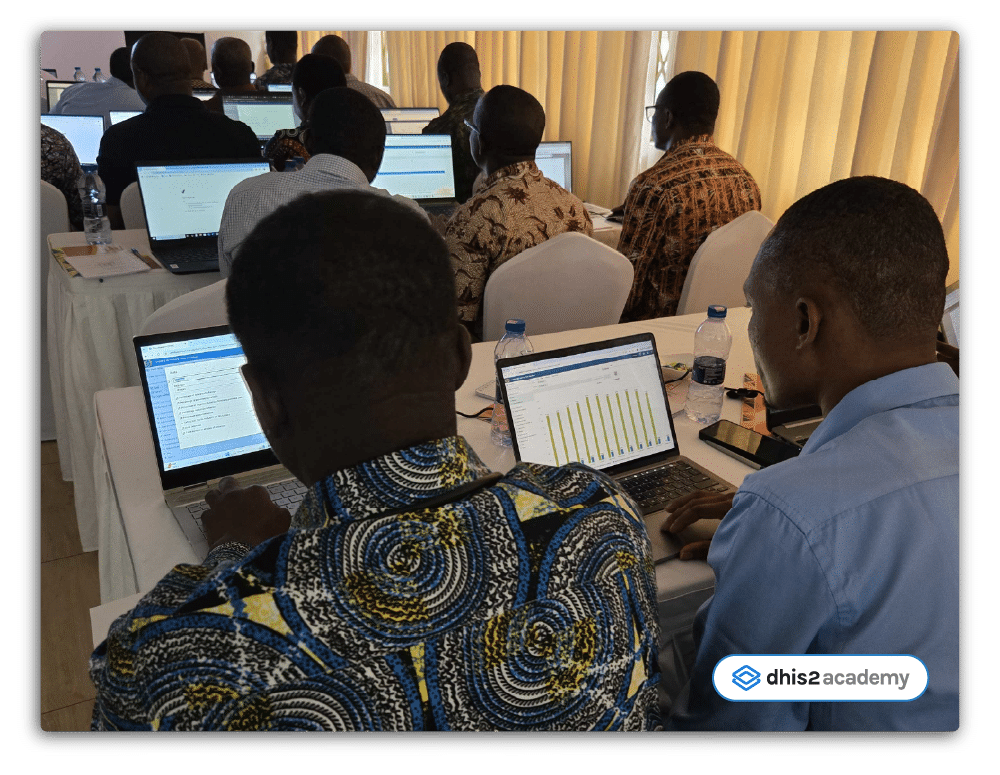
DHIS2 supports national digital sovereignty by strengthening local health data and IT ecosystem capacity through hands-on support and mentorship from HISP groups and other local implementation partners, national training programs and DHIS2 Academies. DHIS2’s open-governance models and transparent financing mechanisms also help ensure that countries maintain full autonomy over system evolution, hosting choices, and future enhancements to their national DHIS2 system.
Bespoke HIC software systems can quickly become out-of-date, while proprietary systems require countries to pay licensing fees to retain access and make updates. DHIS2 is one of the world’s most established and long-running Digital Public Goods, used in more than 100 countries and backed by global health partners including WHO, UNICEF, Gavi, and the Global Fund. This means that countries can depend on DHIS2 to remain a reliable, open-source platform that they can continue to build on locally, while benefiting from the support of a global community.
Read these real-world examples to see how DHIS2 is already being used to meet countries’ health intelligence needs–ranging from routine health system management to outbreak and pandemic response–empowering effective, data-driven health interventions.
The 23 local groups in the HISP network provide advanced technical support for DHIS2 implementations in more than 80 countries. In several countries, HISP groups have supported the design and configuration of command center dashboards and other health intelligence systems. Contact your local HISP group to discuss how you can transform your existing national DHIS2 infrastructure into a platform for health intelligence.