

The DHIS2 Annual Conference takes place from 15-18 June 2026! Learn more
The DHIS2 Annual Conference takes place from 15-18 June 2026! Learn more

The December 2025 HISP Highlights post features the latest news, achievements, and updates from across our global HISP network.
From system integration and Tracker configuration to education data and AMR surveillance, December capped the year with practical, hands-on progress across the HISP network. Highlights include an integration workshop in Addis Ababa for Global Fund–supported projects, multiple trainings in Ethiopia and Pakistan, and a new Climate & Health Catalytic Fund supporting seven African countries. On implementation, teams completed a DHIS2 rollout in Balochistan, advanced eIDSR in Somalia, refined indicators in Togo, ran a maturity assessment in Zanzibar, and deepened DHIS2-Ed analysis in East Africa. The HISP network also supported Chad’s national vaccination campaign and shared HISP insights at global fora—from Stockholm to Senegal and Kampala.
Scroll for updates in Training, Partnership, Implementation, and Events.
Integration Workshop in Ethiopia
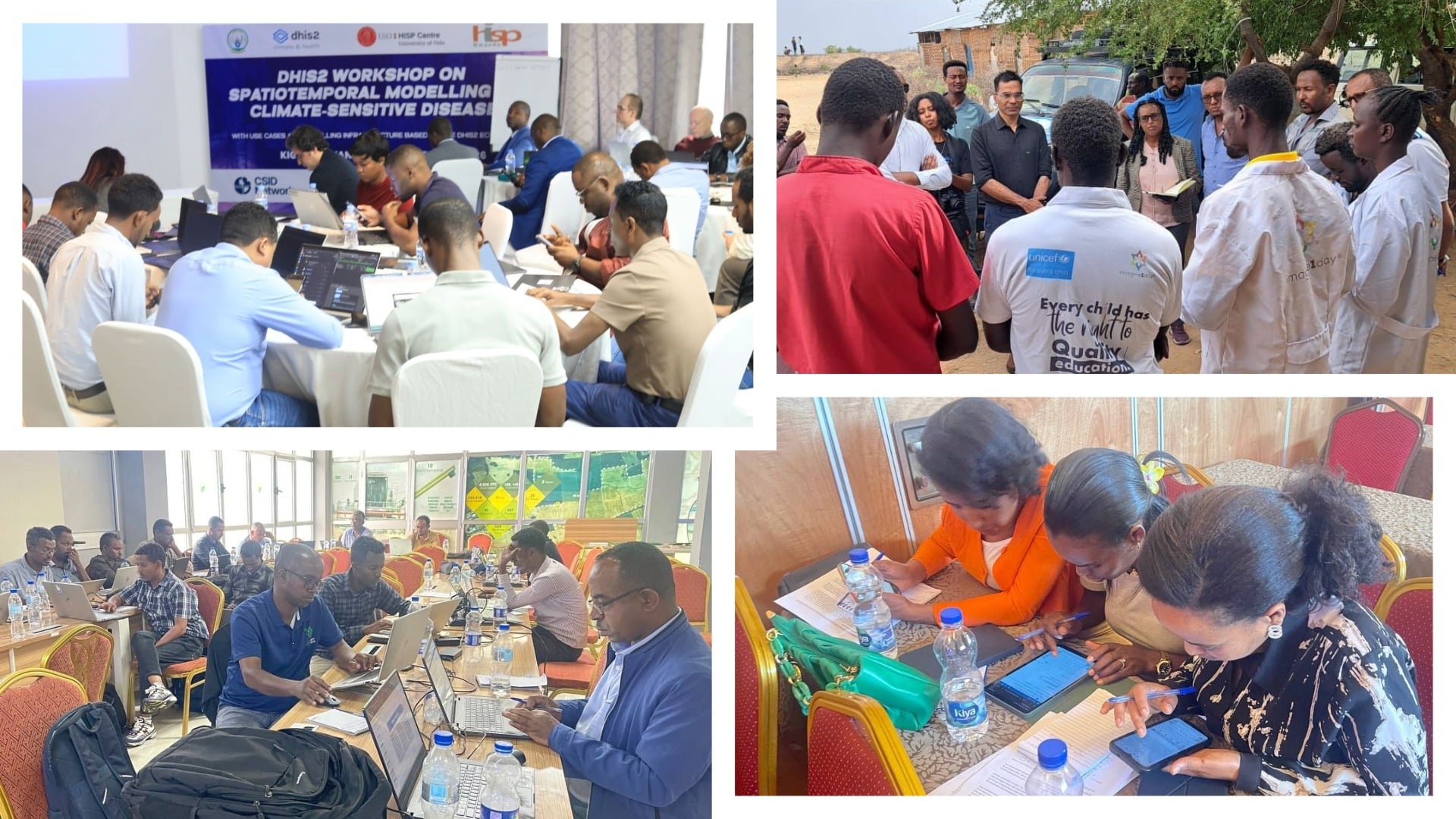
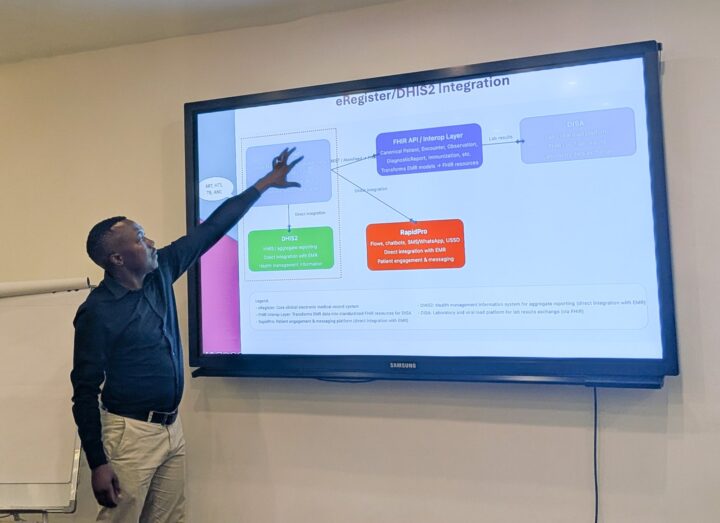
The HISP Centre at the University of Oslo (HISP UiO), in collaboration with HISP Ethiopia, facilitated an integration workshop in Addis Ababa to support projects supported by The Global Fund in Rwanda, Zimbabwe, Ethiopia and Burkina Faso. This workshop included presentations about country projects, peer review, deep dives, and more. More
Tracker Configuration Academy in Ethiopia
HISP Ethiopia hosted a DHIS2 Tracker Configuration Academy in Addis Ababa, bringing together participants from Uganda, Namibia, Egypt, Somalia and Ethiopia for an intensive, collaborative and hands-on Academy focused on configuration of DHIS2 Tracker—from design and configuration, to implementation considerations and best practices. More
Cascade Training in Pakistan
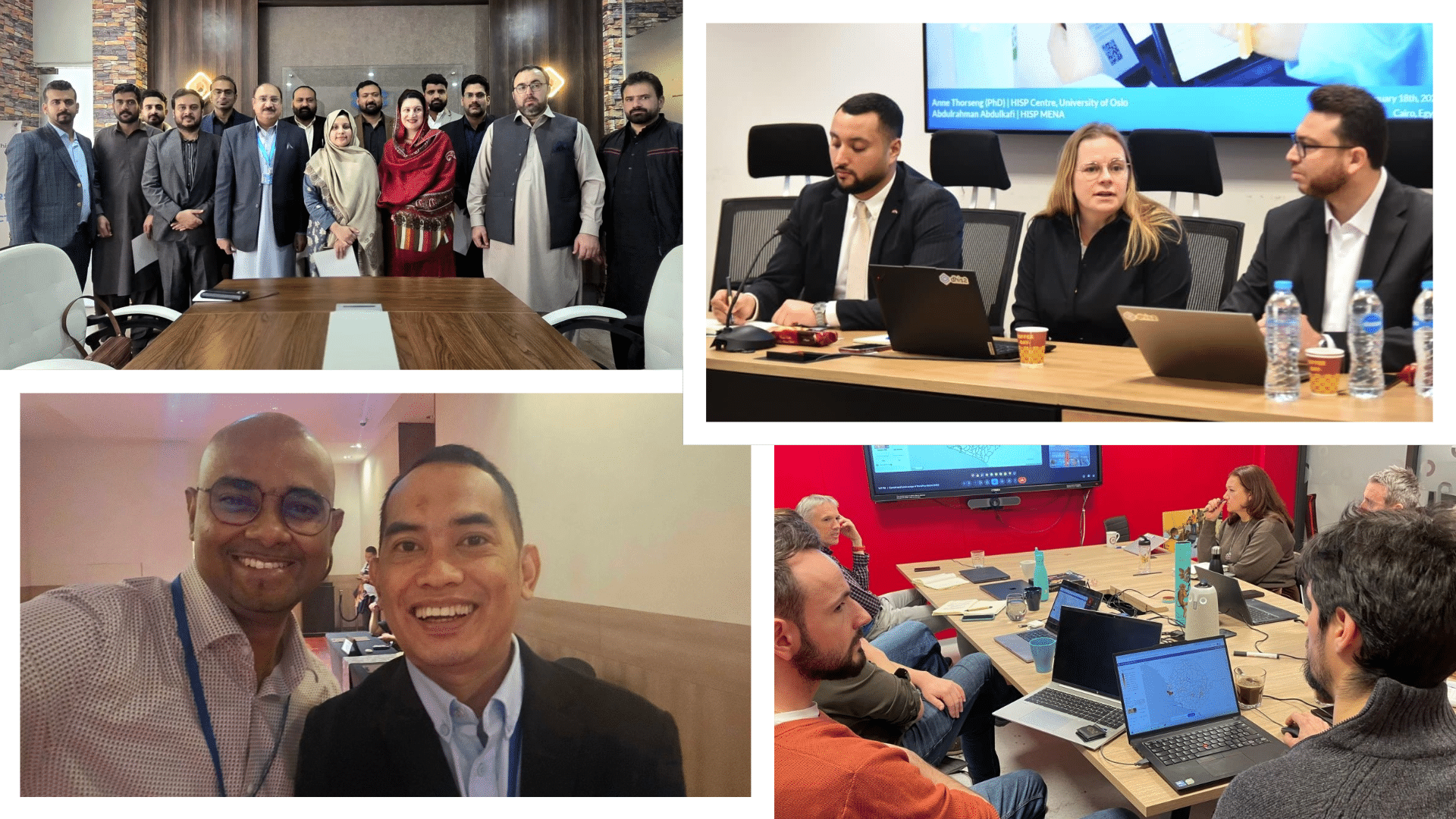
HISP Pakistan, in collaboration with UNICEF, successfully concluded a Two-Day Cascade Training on DHIS2-Based Reporting and Recording Tools, organized by the Department of Health, Government of Azad Jammu & Kashmir. The training focused on strengthening participants’ practical skills in digital health reporting. More
HMIS Training for Pakistan Red Crescent Society
HISP Pakistan completed DHIS2-based HMIS training for teams from the Pakistan Red Crescent Society with support from the Norwegian Red Cross. The session focused on practical system use, data quality, analysis, and dashboard development to strengthen data-driven decision-making across health programs. More
Climate & Health Catalytic Fund
The HISP Centre at the University of Oslo (HISP UiO) and members of the HISP network will support seven African countries with DHIS2 Climate & Health tools through a collaboration between The Global Fund, Gates Foundation, and Foundation S. HISP will support countries working to strengthen their national information systems for climate-informed health programming and disease surveillance. More
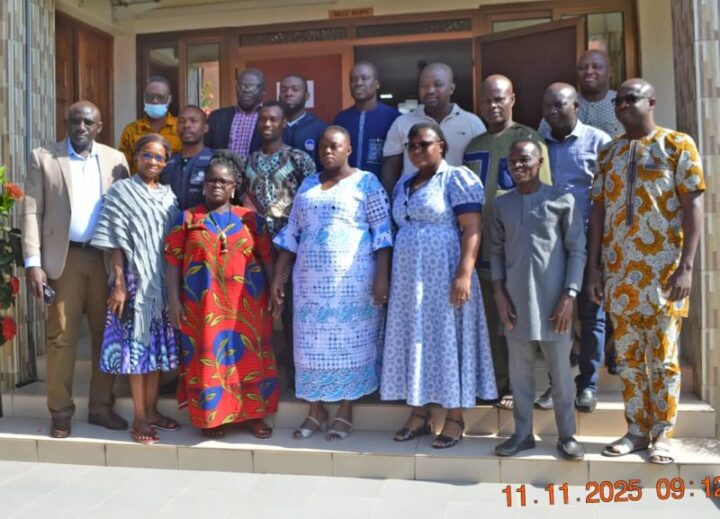
DHIS2 Fully Implemented Across Balochistan
HISP Pakistan, as the technical partner to the Health Department of Balochistan, in collaboration with UNICEF, celebrates the complete rollout of DHIS2 across all districts in Balochistan. The province’s Minister of Health, Bakht Kakar, chaired a meeting of the HMIS Core Committee, to brief the team on this important milestone toward strengthening Pakistan’s digital health ecosystem. More
Disease Surveillance in Somalia
HISP Tanzania has shared how DHIS2 is being used to strengthen disease surveillance in Somalia through an integrated electronic integrated disease surveillance and response (eIDSR) system that builds on existing digital infrastructure and workflows, helping to reduce reporting delays and support decision making. More
Monitoring Indicators in Togo
HISP West and Central Africa (WCA) supported a three-day planning workshop organized by Togo’s Ministry of Health alongside participants from the WHO, GIZ and other national experts, to create a draft document containing national monitoring indicators. Next, the indicators will be reviewed and finalized before official publication. More
Maturity Assessment in Zanzibar
HISP Tanzania conducted a DHIS2 maturity assessment in Zanzibar, engaging the Ministry of Health‘s HMIS Unit, along with representatives from key health programs including HIV, TB, EPI, Surveillance, Malaria, RMNCAH, NCD, and CHIS. The assessment provided a clear overview of the implementation, and will guide the development of targeted recommendations and a prioritized plan to support continued system strengthening and data use. More
Data Analysis & Documentation
HISP Uganda’s DHIS2-Ed team collaborated with the African Population and Health Research Center on an intensive three-day analysis and outcome documentation session for its KIX SEEDS project. They focused on strengthening policy impact, improving reporting systems, and enhancing the visibility of education data across the region. More
Prix Galien Bridges Forum in Stockholm
HISP UiO colleague Ellen Summey represented the HISP Centre and DHIS2 at the 2025 Prix Galien Bridges Forum and award ceremony in Stockholm. Held at the historic Nobel Forum on the campus of Karolinska Institutet, the event convened Nordic and European leaders in global health to reflect on today’s most urgent challenges. More
National Vaccination Campaign in Chad
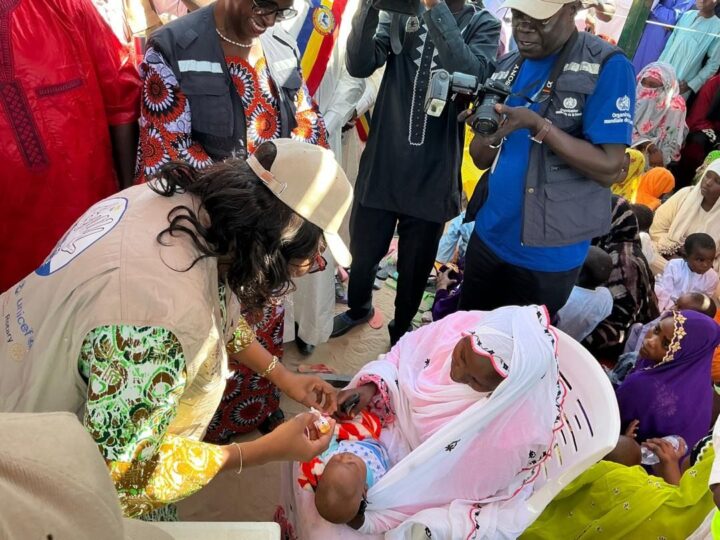
HISP Rwanda supported an integrated national vaccination campaign in Chad, Dec. 5-11, by Chad’s Ministry of Public Health, Gavi, Enfants du Monde, Mannion Daniels, and the Expanded Program on Immunization. The campaign, which targeted poliomyelitis, measles, and Vitamin A deficiency, employed a DHIS2-based tool with dashboards for real-time monitoring of vaccinated children, digital management of vaccines and inputs, VPD monitoring, and more. More
GPE KIX Symposium in Senegal
HISP WCA Director of Implementation Jerry Aziawa shared a presentation at the GPE KIX Project Research Symposium in Senegal on Dec. 3-4. His presentation, “Strengthening Education Decision-Making Through DHIS2: Lessons from The Gambia & Togo,” highlighted the group’s work with DHIS2 and artificial intelligence, demonstrating how to unlock the potential of education data and inform public policy. More
Data Integration and Sharing Information System Stakeholder Engagement
HISP Uganda presented its Antimicrobial Resistance (AMR) surveillance system, built on DHIS2, during the second phase of the Data Integration and Sharing Information System (DISIS) Stakeholder Engagement on 15 December in Kampala. The system tracks antimicrobial resistance, providing comprehensive insights that enable better monitoring, reporting, and evidence-based decision-making across sectors. More
Ethiopia Countdown to 2030 Country Collaboration
HISP Ethiopia participated in the Dec. 30 Ethiopia Countdown to 2030 Country Collaboration Study Dissemination Workshop, organized by the Health System Research Directorate at Ethiopian Public Health Institute in collaboration with the Federal Ministry of Health Ethiopia. Discussions highlighted progress in RMNCH service coverage while underscoring the importance of strengthening data quality and data use. More
Interviews From Logistics Academy
HISP Rwanda has published a series of video interviews from the recent Academy on End-to-end Supply Chain Management with DHIS2 and mSupply, highlighting the experiences HISP UiO LMIS Tech Lead Breno Horsth, HISP Rwanda LMIS Implementer Augustin Dushime, and other Academy participants. More
“Inside HISP WCA” Interviews
HISP WCA has published a series of video interviews from members of the team, sharing insights on the work of HISP WCA. Hear from the director of systems development, Sakibou Alassani, about how his team designs systems and contributes to health information systems with DHIS2. More