The DHIS2 Annual Conference takes place from 15-18 June 2026! Learn more


The DHIS2 Annual Conference takes place from 15-18 June 2026! Learn more
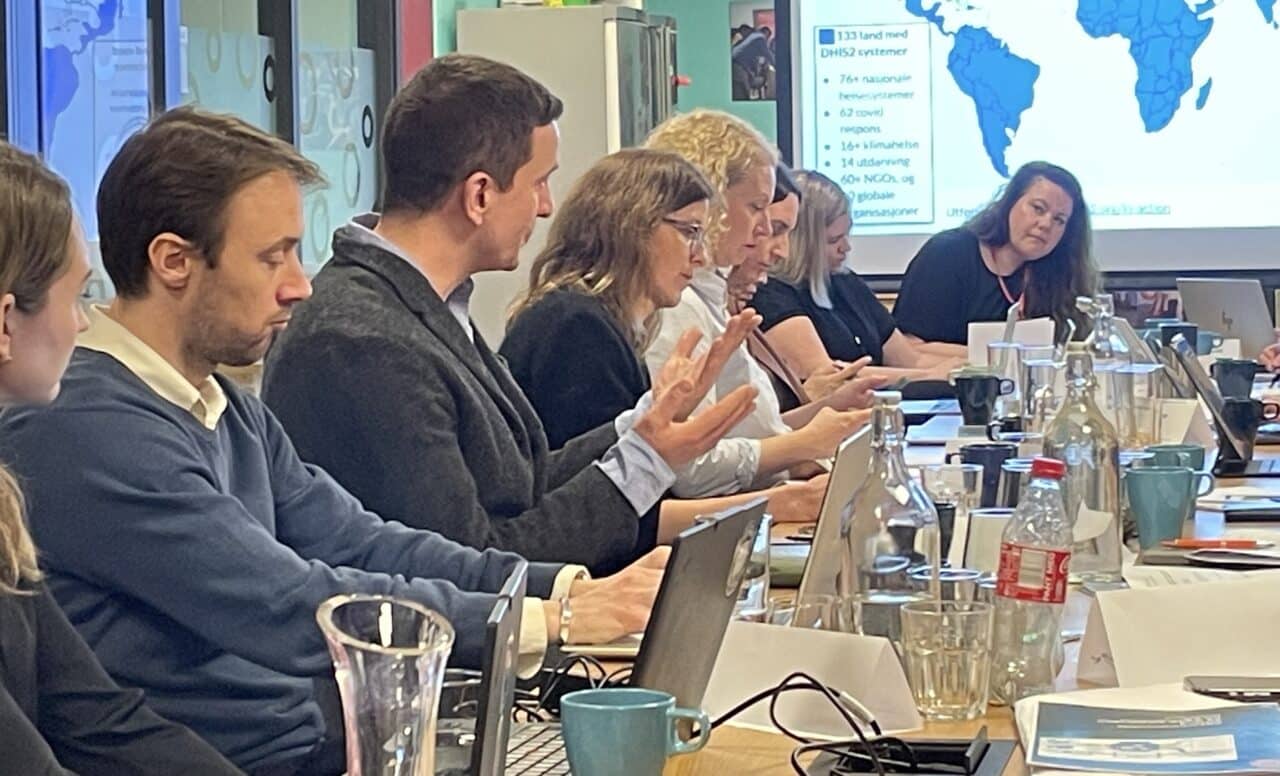
To help kick off Project Turning Point, an initiative which aims to adapt Norway’s development efforts to a changing world, members of the Norwegian government and Oslo’s tech community met at the HISP Centre at the University of Oslo for an engaging discussion that reinforced the critical role of open-source technologies, capacity building, and long-term partnerships in supporting low- and middle-income countries.
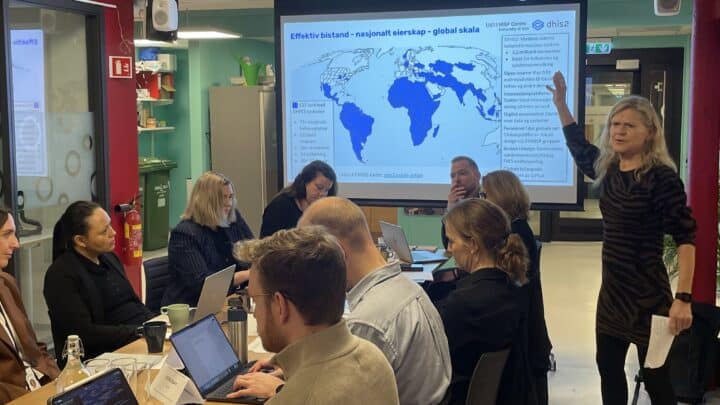
On 3 March 2026, the HISP Centre at the University of Oslo (HISP UiO), together with Norad, the Norwegian Ministry of Foreign Affairs (UD), and the Ministry of Digitalisation and Public Administration (DFD), hosted a roundtable on development policy with representatives from government organizations and Oslo’s tech community.
The event was part of Project Turning Point, a new initiative launched by Norway’s Minister for International Development, Åsmund Aukrust. The project responds to what Minister Aukrust has called “the biggest change in international development cooperation in modern history,” and aims to adapt Norwegian development policy to meet global challenges such as conflict, climate change, and cuts to development aid. The project plans to draw inspiration from consultations, seminars, expert meetings, and debates with experts and stakeholders from various sectors involved in development across Norway.
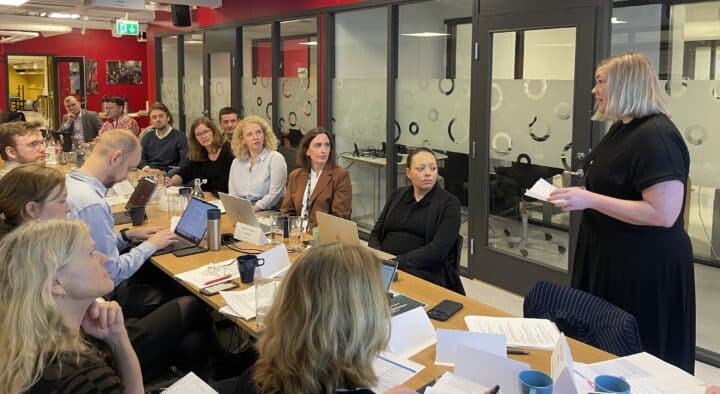
The roundtable at HISP UiO was the first in this series of Project Turning Point events. Nearly 30 participants joined State Secretaries Stine Renate Håheim, UD, and Marte Ingul, DFD, at HISP’s offices on the University of Oslo campus to share perspectives and experiences. It preceded a public event on March 6th where Norway’s Prime Minister, Jonas Gahr Støre, will formally launch the initiative.
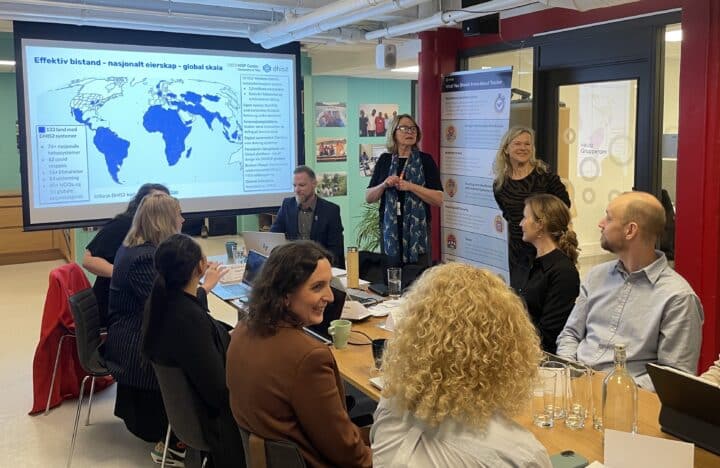
Following a welcome from Kristin Sverdrup, Ministry of Foreign Affairs, Professor Kristin Braa of HISP UiO gave a short introduction to HISP’s work with DHIS2, and how decades of collaboration, co-development, and capacity building with stakeholders in the global south have made it the world’s most widely adopted health information system and leading example of effective digital development that facilitates digital sovereignty, local innovation, and global sharing.
Secretaries Håheim and Ingul then opened the discussion with brief remarks. Citing the challenging global situation, Håheim observed that Norway needs to prioritize, to have fewer goals and activities while also doing development better and more effectively. She asked participants to reflect on “where Norway can make the biggest difference and how we can contribute,” white noting the ongoing importance of countries owning their own development and the potential that digital technologies offer to help countries achieve their goals more quickly.
Ingul echoed these remarks, pointing to open-source solutions that can be locally adapted and developed further–such as digital public goods–as a key tool that countries can use to build their own systems and avoid dependency. However, she noted, “innovation is only half the answer–local capacity and governance are essential to building lasting systems.”
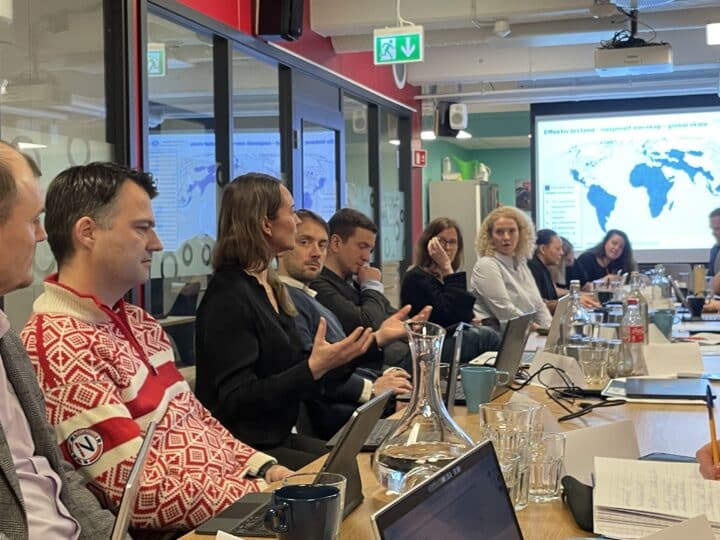
During the ensuing discussion, several common themes emerged. Participants observed that Norwegian organizations have already been involved in a large number of fantastic digital development projects, but that the visibility of these solutions could be greatly improved, and that there is significant potential for collaboration and reuse of tools and building blocks across projects and sectors. Digital sovereignty came up in several contexts, including the necessity of building capacity to support local system and data ownership and the importance of working in partnership with local stakeholders over the long term.
“Norwegian development cooperation on digital public goods and digital public infrastructure has been very effective,” summed up Alexander Klein of Norad, because it provides catalytic support for the foundational infrastructure, capacity, and tools that all countries need. As another participant observed, it is important to learn from this experience, invest in areas where Norway has expertise, and “scale what works.”
Some of Norway’s notable comparative strengths that were mentioned include good governance, trust, and technology areas like sensors, marine, energy, and satellite data. It was suggested that Norway could make a difference through investing in governance structures around digital technologies and building blocks for digital public infrastructure.
Several participants also noted the potential for Norway to benefit locally from digital public goods like DHIS2 that originated as development assistance projects. However, as Tor Arild Sunnevåg of the Directorate for Digitalization observed, what is lacking is a national open-source policy that supports the procurement and use of open-source tools as an alternative to proprietary software.
HISP UiO was selected to host the Project Turning Point roundtable due to our longstanding partnership with Norad and the impact that our work with DHIS2 has had for countries in the global south. Participatory design, local capacity building, and global sharing are fundamental to the HISP approach. Based on the discussions from this roundtable, this remains a relevant model as Norway adapts its development approach to the new reality of global crisis.
We are honored to have had the opportunity to host this important event, and look forward to continuing to collaborate with Norad, UD, and DFD as they work to shape the future of Norwegian development assistance.