The DHIS2 Annual Conference takes place from 15-18 June 2026! Learn more

The DHIS2 Annual Conference takes place from 15-18 June 2026! Learn more
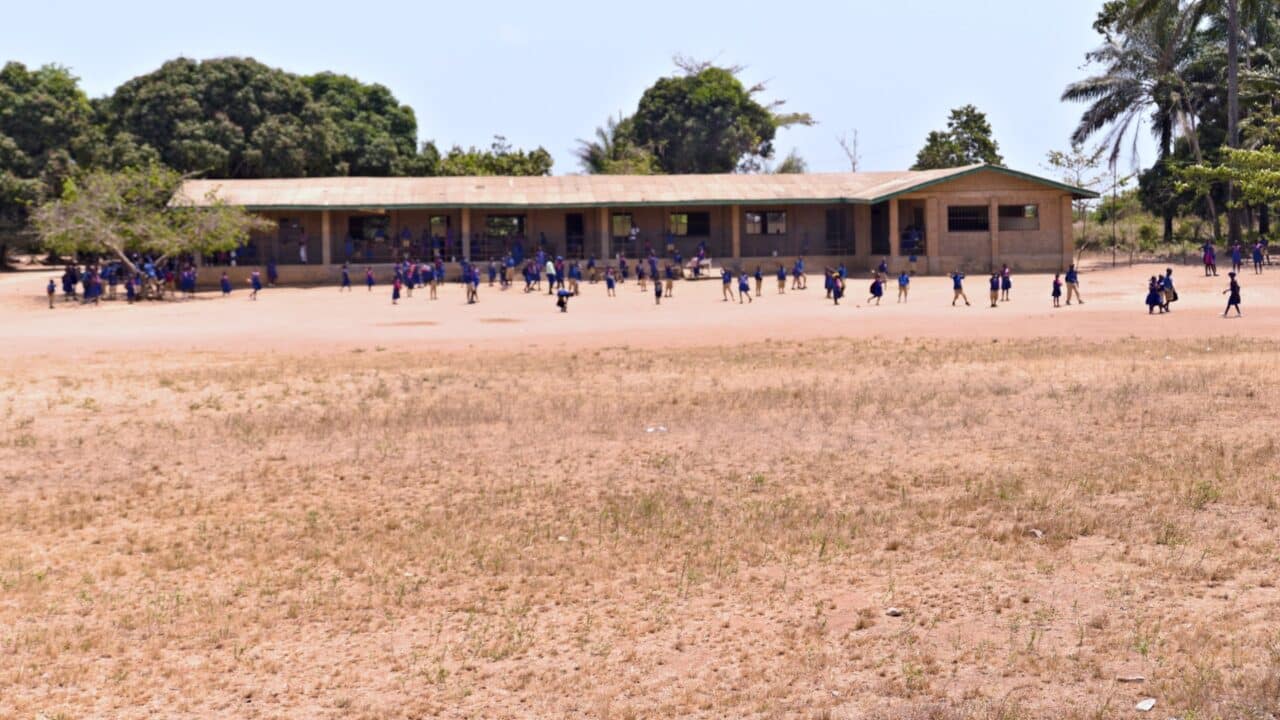
Sierra Leone’s MBSSE is partnering with the HISP network to connect fragmented education data into a single DHIS2-based national hub and link every learner’s school records to the national ID, creating a verified, system-wide picture of learning for the first time.
Sierra Leone’s Ministry of Basic and Senior Secondary Education (MBSSE) has launched a national initiative to build a learner-centered education data system using DHIS2, marking a significant expansion of the platform’s role in the country’s education sector.
The project is funded by the Global Partnership for Education, with UNICEF supporting implementation alongside the MBSSE. Its goal is to give every primary school student a secure, verifiable digital identity via a unique learner ID (ULID) that follows them through their education journey, and to bring together the country’s fragmented education data into a single national platform that decision-makers at every level can actually use.
Sierra Leone’s education data ecosystem has long been characterized by fragmentation. The annual school census, teacher management records, school quality assurance data, foundational literacy and numeracy assessments, and examination results are all collected and maintained in separate systems. This makes it difficult for schools and inspections/clusters to track individual learner progress and manage schools, and for the MBSSE management team to have comprehensive and sector-wide quality information to plan, identify emerging trends, monitor performance and make needed actions. At the learner level, the gap is straightforward: when a child moves schools, repeats a grade, or sits an external exam, there is no reliable way to track them across systems. The project addresses this by connecting each learner’s education record to the National Identification Number issued by the National Civil Registration Authority (NCRA), building on the national identity infrastructure that already exists rather than creating something in parallel.
The national data hub is built on DHIS2, with ClickHouse serving as the underlying data warehouse and Apache Superset providing dashboards, geographic mapping and natural language querying, depending on specific integrations. This is so that ministry staff at national, district and school levels can interact with data without needing technical expertise. An automated interoperability layer connects the annual school census, teacher management system, foundational numeracy and literacy assessments, school quality data and examinations results into this single hub. The ULID system, delivered as a web application and Android app with offline functionality, assigns each learner a secure education identifier linked to their NCRA-issued national ID where available, ensuring that records travel with the learner across schools, districts, and data systems without duplication.
Implementation is led by a consortium anchored by the HISP Centre at the University of Oslo, alongside HISP West and Central Africa, HISP Mozambique (Saudigitus), and Global e-Schools and Communities Initiative (GESCI), with Digital Ascent serving as the local in-country partner. The project builds directly on HISP’s longstanding presence in Sierra Leone: the HISP network has supported the country’s DHIS2-based health management information system since 2007, and the same team has worked across all 16 districts. This history matters as the consortium’s value in this context extends beyond technical expertise, but trust built across institutions. This will support the aim of being a neutral integrator across data systems that have previously operated in siloes.
On the education side, the consortium draws on proven implementations in Nigeria, The Gambia, Togo, Eswatini, and Mozambique, where comparable learner tracking and data hub systems are already operational.
The ULID system will be piloted in four districts, reaching at least 20 schools per district, before scaling to all public primary schools in the select districts. The data hub will scale from the four initial districts to all districts nationwide. Coordination with the NCRA on identity verification is built into the rollout from the outset, with inter-agency data-sharing arrangements identified as a priority for the inception phase. The aggregate data hub will roll out across all 16 districts in parallel. Capacity building is central to the approach: national and district technical teams will be trained as co-designers and future custodians of the system, with the goal of reducing long-term dependence on external support.
The initiative sits within Sierra Leone’s broader “Delivering the Foundations of Learning for All” program (2024–2027) and is aligned with the country’s Education Sector Plan 2022–2026 and a forthcoming national EMIS policy. A key ambition of the program is to ensure that every learner’s educational journey—including attendance, assessment results, transfers, and progression—can be tracked and supported with timely, accurate data.