The DHIS2 Annual Conference takes place from 15-18 June 2026! Learn more


The DHIS2 Annual Conference takes place from 15-18 June 2026! Learn more

The Ministry of Health and Wellness of Jamaica, with support from CARPHA and HISP Rwanda, has successfully used the DHIS2 Cancer Module to strengthen Jamaica’s National Cancer Registry for improving data quality, timeliness, and access for cancer control planning.
Cancer is a leading cause of death in Jamaica, responsible for nearly one in five deaths across the island, with an estimated 7,348 new cancer cases and 4,746 deaths in 2020. Despite this significant burden, national cancer data has historically been collected through a desktop-based system that offered limited access, delayed reporting, and fragmented datasets.
Without a centralized, digital platform, it was difficult for health authorities to analyze trends, track patient outcomes, or coordinate timely public health responses.
To strengthen cancer surveillance and improve decision-making, Jamaica’s Ministry of Health and Wellness, with support from the Caribbean Public Health Agency (CARPHA) and DHIS2 implementation partner HISP Rwanda, began using the DHIS2 Cancer Module—a web-based system that enables cancer data to be collected, validated, and analyzed in real time. Since its deployment in December 2024, the module has improved data completeness and reporting timeliness, giving health authorities faster access to national cancer statistics and a clearer understanding of disease patterns. This digital transition marks a major step toward evidence-based cancer control, supporting earlier detection, better patient tracking, and more informed resource allocation across the country.
The DHIS2 Cancer Module provides Jamaica with a modern, end-to-end system for cancer data management. It allows information to be captured at every stage of the patient journey—from diagnosis to treatment and follow-up—within a single digital workflow.
Built on the open-source DHIS2 platform, the module enables comprehensive management of cancer data within a single digital workflow. Regional Health Authorities can record patient information at diagnosis and add additional details through treatment and follow-up, while review and validation of cases is completed by the national NCD surveillance team. Custom dashboards, geospatial analysis, and role-based access controls make it easier to identify trends, monitor case distribution, and plan interventions securely. Offline and mobile functionality allows continued data entry in areas with limited connectivity, ensuring that cancer data remains complete and up to date across the country.
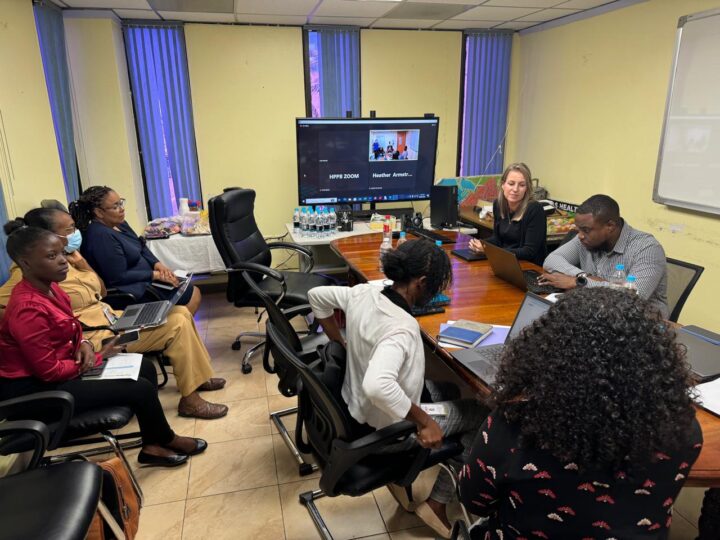
By replacing paper-based and desktop reporting, the new system reduces duplication and delays, helping improve the accuracy and timeliness of cancer data nationwide. Regional Health Authorities can now validate and enrich cases directly in the system, and national decision-makers can use up-to-date dashboards to guide program planning, policy development, and resource allocation.
“Improving the quality, availability, and use of cancer registry data is critical for effective cancer control planning in the Caribbean because it provides an accurate picture of the cancer burden; what types of cancer are most common, who is most affected, and where resources are most needed.” – Dr Lisa Indar, Executive Director, CARPHA
The DHIS2 Cancer Module was developed by HISP Rwanda and adapted for Jamaica to align with national reporting requirements and international standards from the International Agency for Research on Cancer (IARC). Using a remote approach, the implementation followed four key phases—planning, configuration, data migration, and training. During this process, the project team has achieved several key milestones:

This approach helped build in-country capacity to manage and maintain the system after launch, ensuring that the registry can operate sustainably.
“There is a prevailing need for local data to guide response, policy development and programme monitoring and evaluation in order to achieve comprehensive cancer prevention and control. It is against this background that Jamaica has included in its National Strategic and Action Plan for the Prevention and Control of Cancer, the improvement in data collection and utilisation within the National Cancer Registry.” – the Hon. Dr. Christpher Tufton, Minister of Health & Wellness (October, 2024)
This implementation demonstrates how DHIS2 can strengthen national disease registries and support long-term health system transformation. Through collaboration between CARPHA, HISP Rwanda, and Jamaica’s Ministry of Health and Wellness, the country now has a secure, scalable, and interoperable foundation for cancer data management, aligned with its broader non-communicable disease strategy.

CARPHA’s involvement builds on a 2023 Memorandum of Understanding with the HISP Centre at the University of Oslo to strengthen digital public health capacity across the Caribbean. Through this partnership, CARPHA supports its member states in the use of DHIS2 for health surveillance and data management, fostering collaboration between local ministries of health and technical teams within the global DHIS2 network.
The Jamaican Ministry of Health and Wellness plans to expand its use of the DHIS2 Oncology Module by integrating the platform with other national health information systems to strengthen the surveillance of priority NCDs.
Continued capacity building and regional cooperation will ensure that cancer data in Jamaica and across the Caribbean supports more effective cancer prevention and control strategies.
Beyond Jamaica, this project highlights the power of global collaboration within the DHIS2 network. HISP Rwanda’s pioneering work in adapting DHIS2 for cancer registries has already inspired similar initiatives elsewhere. In August 2025, a delegation from Cambodia’s Cancer Registries Program visited HISP Rwanda to learn from their experience, as Cambodia explores using DHIS2 for its own national cancer registry as part of its health information system modernization.