
DHIS2 featured at launch of Digital Development Partnership between India and Norway
A high-level event during Prime Minister Modi’s official visit to Norway marked the signing of a memorandum of understanding between the two countries on digital public infrastructure and digital public goods, including DHIS2 and MOSIP.
On the occasion of Indian Prime Minister Narendra Modi’s official visit to Norway, on May 18th 2026, the Norwegian Agency for Development Cooperation (Norad) hosted a launch event for the new Digital Development Partnership between India and Norway. This event marked the signing of a memorandum of understanding to strengthen the longstanding collaboration between the two countries on digital public goods (DPG) and digital infrastructure (DPI).
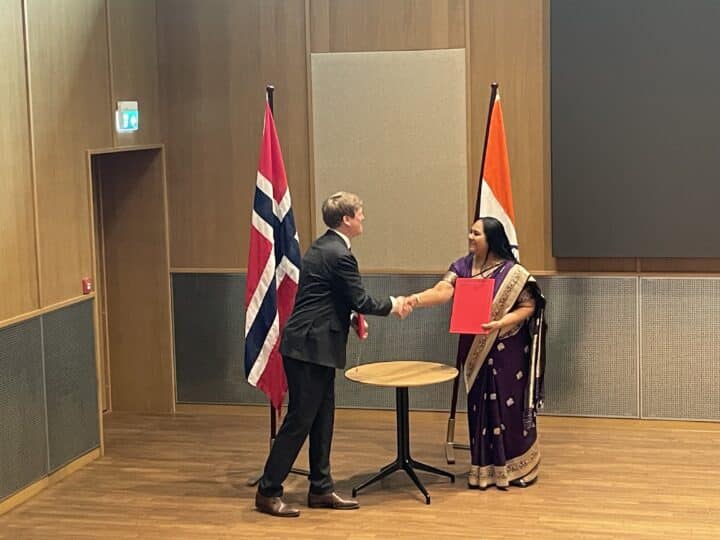
Norad’s Director General, Gunn Jorid Roset, opened the event, noting that India and Norway’s joint vision reflects that technology is not an end in itself, but rather a “powerful enabler of development, inclusion, and sustainable growth,” with DPI and DPGs serving as “essential building blocks for inclusive and transformative development.”
Norway’s Minister of International Development Åsmund Aukrust, spoke about India’s achievements with digitalization, and with digital ID in particular, and noted that this memorandum of understanding is particularly significant as Norway’s first bilateral agreement on DPG collaboration. Aukrust also emphasized the potential global benefits that this cooperation can bring:
“Through this agreement, Norway and India will work together to develop and share open digital solutions that other countries can also use. Open, scalable solutions based on open-source code can be reused across countries and contribute to lower costs and quicker development.”
– Åsmund Aukrust, Minister of International Development, Kingdom of Norway
The Deputy Ambassador of India’s embassy in Oslo, Ms. Ananya Agarwal, echoed these remarks. She observed that the infrastructure that shapes our lives and economies is increasingly digital, and called DPGs the “vehicles” that use DPI pathways to “deliver development at scale.” In her conclusion, Agarwal remarked that centering the India-Norway cooperation around DPI and DPGs will help ensure that benefits of digital transformation are accessible to all, while maintaining digital sovereignty, as countries are engaged as co-creators and empowered through local adaptation and ownership of open-source tools.
Two of the key examples of DPGs that were highlighted during the event were MOSIP and DHIS2. MOSIP, developed by the International Institute for Information Technology, Bangalore, offers countries modular and open-source technology to build and own their national identity systems. Currently, MOSIP is used in more than 30 countries.
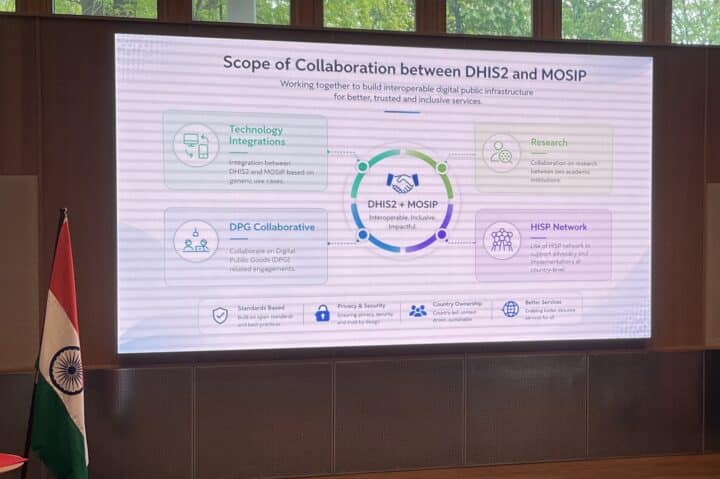
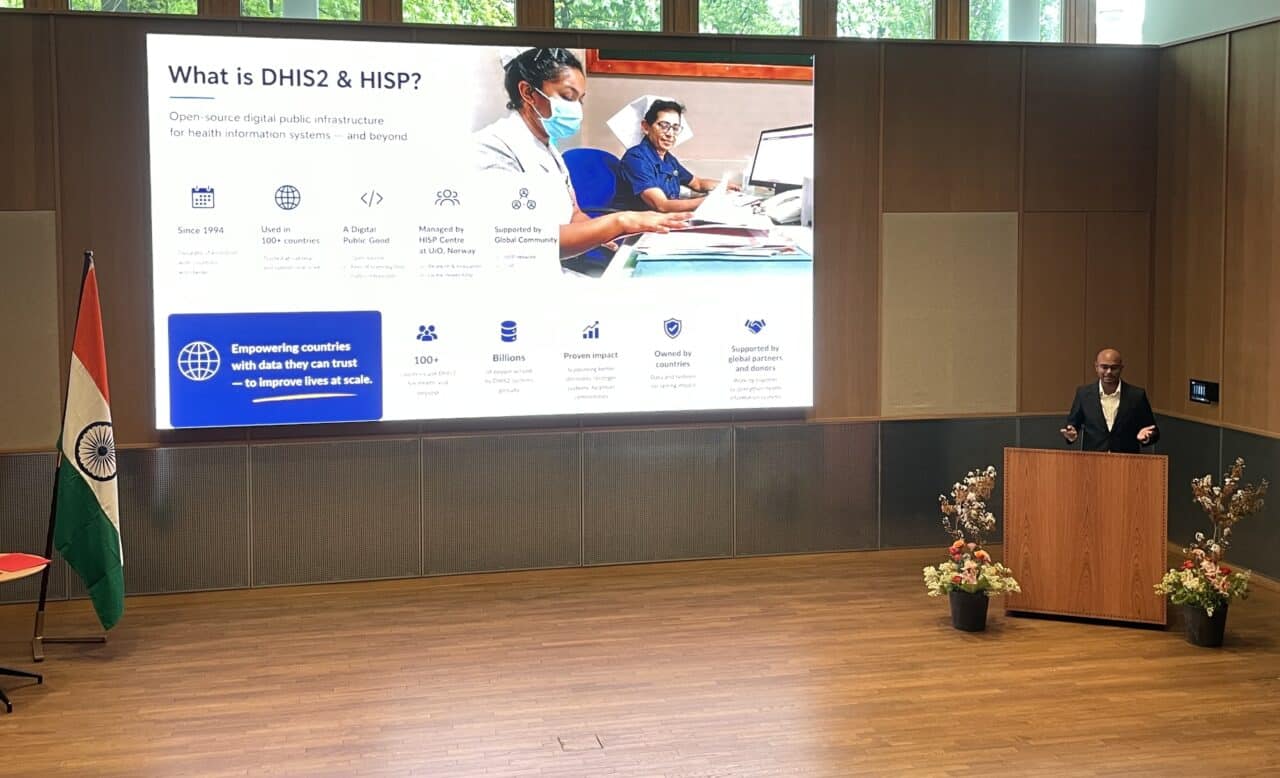
DHIS2 is an open-source platform for data collection and management developed by the HISP Centre at the University of Oslo (HISP UiO). DHIS2 is the world’s largest health management information system (HMIS) platform, used to manage public sector health program data in more than 100 countries.
In 2025, Norad funded an exploratory project to strengthen the interoperability between MOSIP and DHIS2. Through this project, the teams behind both platforms collaborated on designing standards-based approaches that would allow countries to link their digital ID systems with their national health software platforms in a secure way. Sri Lanka was selected as a pilot site to develop and test this approach. As an extension of this collaboration, MOSIP has become an official DHIS2 Technology Partner.
During the launch event at Norad, Arun Kumar Gurumurthy from the MOSIP team and Pamod Amarakoon from HISP UiO both presented an overview of the two platforms and highlighted the potential of linking these systems together.
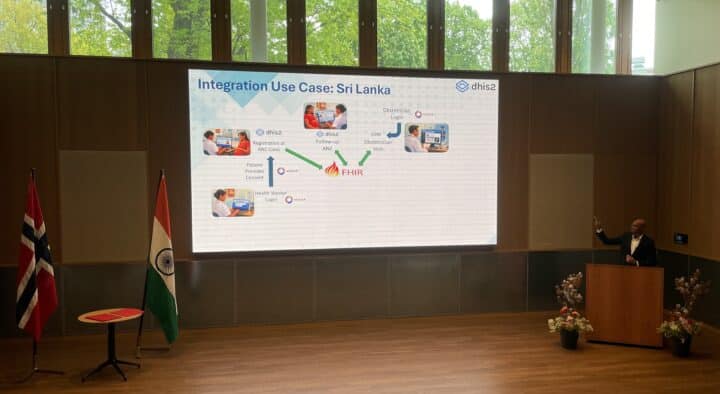
Amarakoon shared more background and learnings from the pilot DHIS2-MOSIP integration in Sri Lanka, including plans for sharing this integration approach across countries, and discussed how this work can also strengthen the HISP network’s collaborative work on supporting the larger ecosystem of DPGs as a whole.
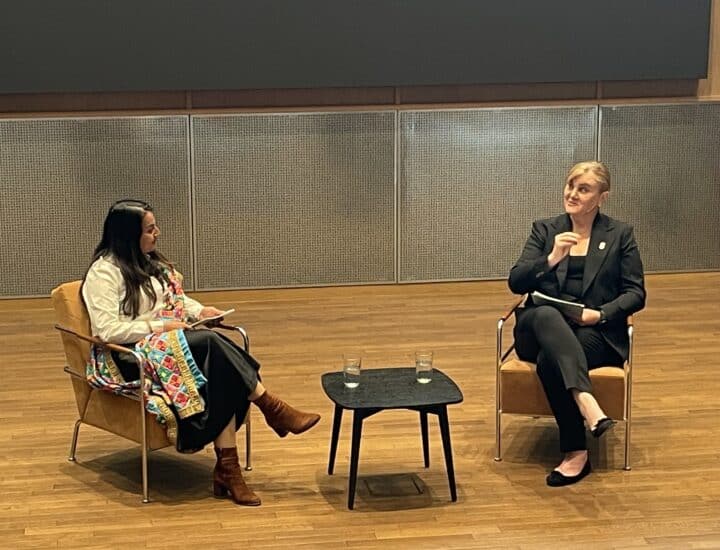
The event also featured a presentation on the SAHAV project, a joint India-Norway GIS initiative facilitating transparent, data-driven ocean governance. The event concluded with a conversation with Gunn Roset that reviewed the key themes of the agreement and expressed a hopeful vision of the future. While noting the increasingly rapid pace of technological change, she emphasized the importance of working “with a long-term perspective and commitment.” She also remarked on the importance of this particular agreement to both countries, noting that it was one of the few bilateral memoranda of understanding that were prioritized during Modi’s visit.
At a press conference with PM Modi later the same day, Norwegian Prime Minister Jonas Gahr Støre pointed to this agreement as a significant new chapter in the partnership between India and Norway. “We are strengthening our cooperation in health,” he announced. “We are signing a memorandum of understanding on developing high-tech quality health services, closer cooperation on digital health, artificial intelligence research, and health technology. We also deepen our cooperation on digital development, including work on digital public infrastructure and digital public goods.” Støre closed his remarks by noting that “cooperation delivers better results than unilateralism and isolation, especially when it comes to global challenges,” which is a fitting description of the power of DPI and DPGs like DHIS2 and MOSIP.
HISP UiO looks forward to supporting this partnership between India and Norway, and continuing to contribute to developing and sharing sustainable digital solutions.