Evidence of DHIS2 Impact
Discover how DHIS2 transforms public sector governance & use of data to achieve outcomes in health, education and sustainable development goals.


Discover how DHIS2 transforms public sector governance & use of data to achieve outcomes in health, education and sustainable development goals.
DHIS2 is a digital public good that has transformed public-sector governance in low- and middle-income countries (LMICs) by making data available and actionable—facilitating informed decision making and progress toward national development goals while supporting digital sovereignty. Organizations around the world use DHIS2 to collect and analyze data to inform decisions and improve the effectiveness of their programs and projects.
DHIS2 has revolutionized access to near real-time data in 90+ LMICs – particularly at the lowest levels where data is needed most. This is particularly true in the health sector, where DHIS2 is used to manage public health programs covering a total population of more than 3.2 billion people. Where data collection was once largely a manual, paper-based process that could take months and result only in static analytical outputs at the national level, it is now digitized and approaching real-time reporting and data analysis is possible at all levels. Data that was once stored in silos is now available in one holistic, locally owned system.
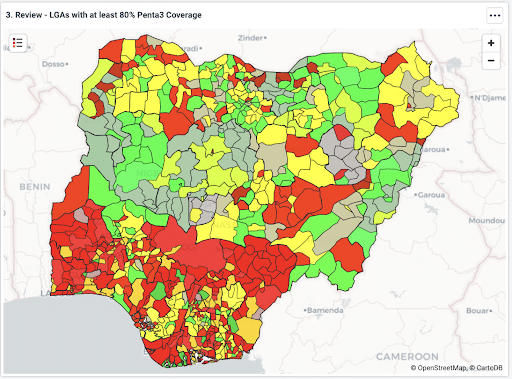
These advances help drive actions and interventions that contribute to improved health outcomes. DHIS2 has contributed to improvements in immunization coverage, testing and treatment of infectious diseases, timeliness of outbreak detection and response, maternal and child health service delivery, and much more. Using DHIS2 has also contributed to workforce efficiency gains, cost savings, and improved system resilience in the face of shocks and crises. Similar impacts are being achieved in education and other sectors where DHIS2 is increasingly used as a national data platform.
Significantly, these results have been achieved at a lower cost than custom digital solutions: Countries worldwide benefit from improvements and innovations developed around the shared DHIS2 software platform.
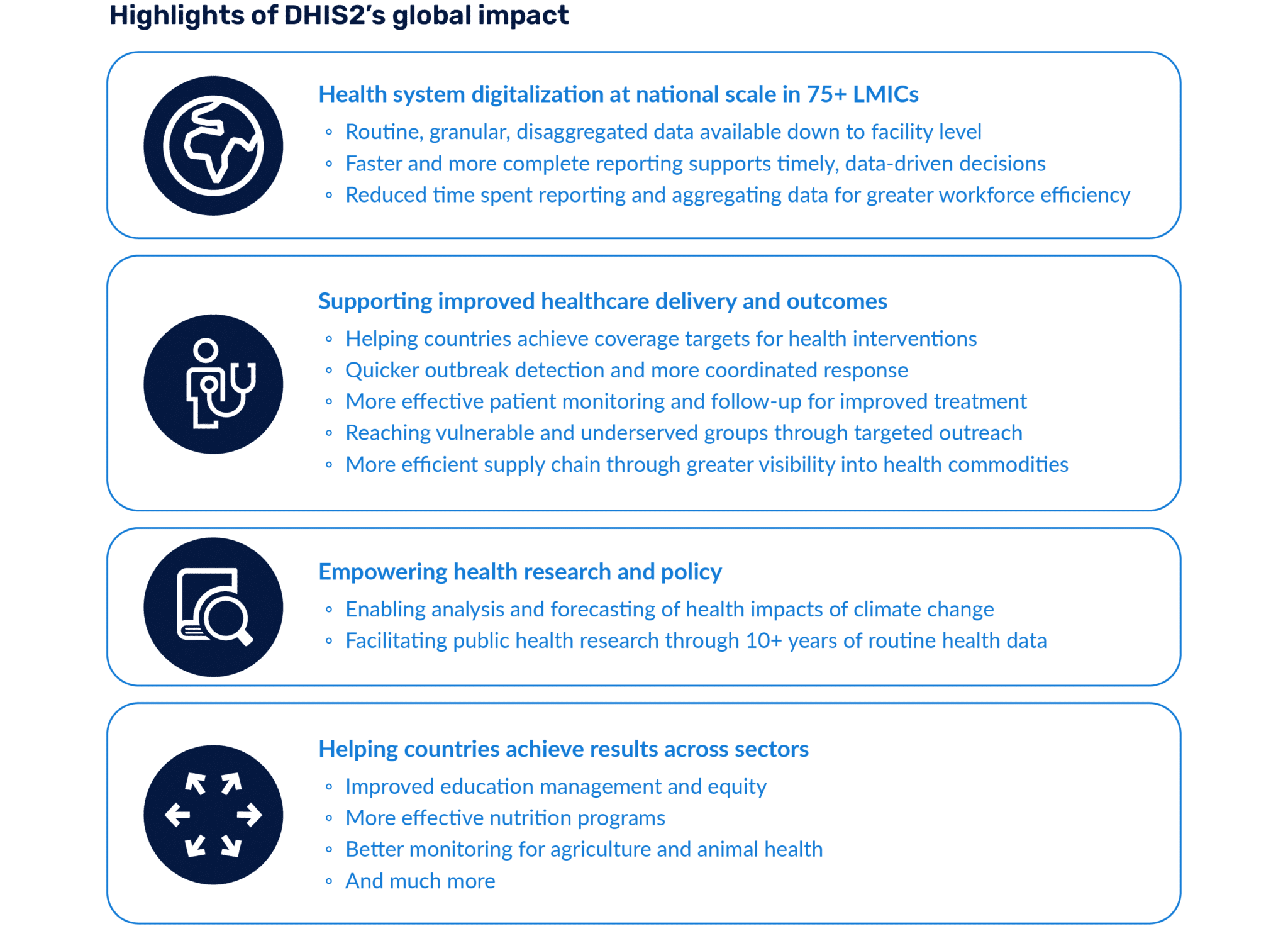
To assess and document DHIS2 impact, HISP UiO draws on research on and evaluations of DHIS2 systems carried out by other organizations, and does its own impact analysis focused primarily on systems supported by the HISP network. For the latter, we look at impact through two primary lenses: process and system improvements, and programmatic impacts.
This covers improvements to areas such as reporting timeliness and completeness, data quality, amount of time spent on data collection and aggregation, and availability of data at different levels. These can be attributed to DHIS2 use fairly directly, and can be measured against a previous baseline to show the magnitude of the impact and how it contributes to organizational objectives.
Examples include:
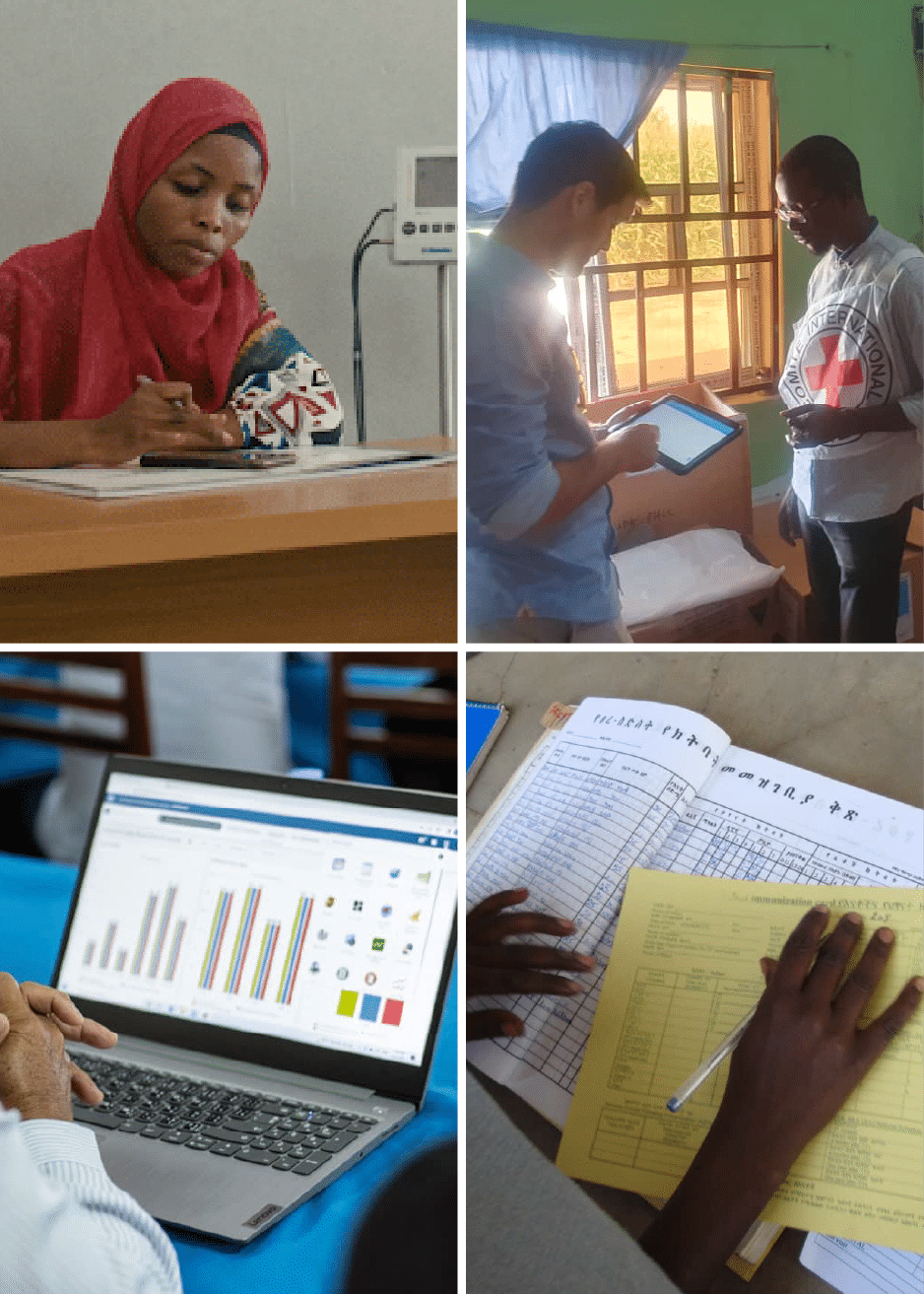
This focuses on improvements to key indicators or achievements of specific targets in public health, education, and other sectors. These can be documented using a “theory of change” to link DHIS2 activities (e.g. implementation, capacity building, system use) to concrete outputs (e.g. real-time data used to inform campaign planning, gaps in vaccination coverage are identified, etc.) that result in positive changes in key indicators. In this context, DHIS2 is typically one of many elements that contribute to achieving the impact.
Examples include:
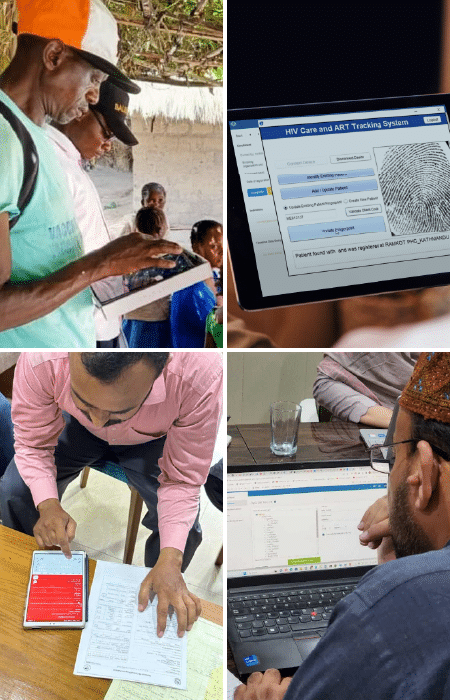
These and other examples of real-world DHIS2 impact are documented and shared by HISP UiO through DHIS2 impact stories, which draw on reporting from the field; analysis from local stakeholders, implementing partners, and funders; and published research.
It is important to note that DHIS2 is not a “magic bullet.” Achieving positive impact with DHIS2 requires good software implementation practices to ensure that the local DHIS2 system is aligned with stakeholder needs and workflows—and takes into account the country’s DHIS2 maturity and readiness—as well as continuous capacity building for the workforce that will be responsible for using and managing the system. HISP UiO and the HISP network support this through the time-tested HISP approach, and also provide shared resources for effective DHIS2 implementation.
DHIS2 is mostly commonly used as a national-scale health management information system (HMIS). In the 75+ countries where it serves as an HMIS, DHIS2 is the national system of record for data on health service delivery and population health, and the data from these systems is routinely used for national reporting, and informs planning and budgeting of public health interventions. Digitalizing health data management with DHIS2 has supported a range of positive impacts in LMICs.
Explore some examples in the impact stories below.
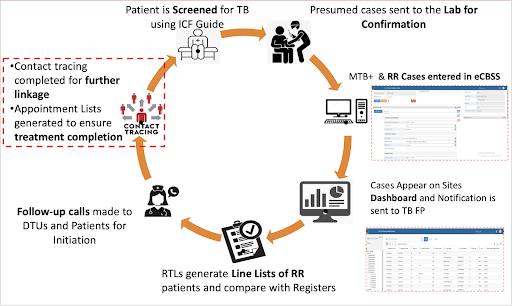
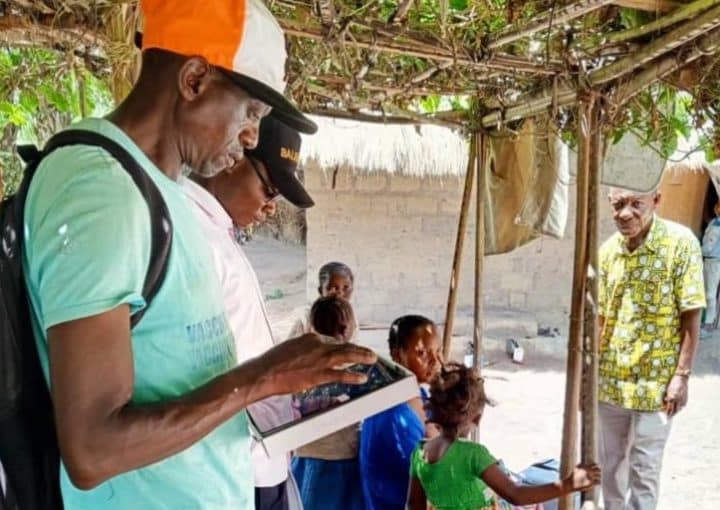
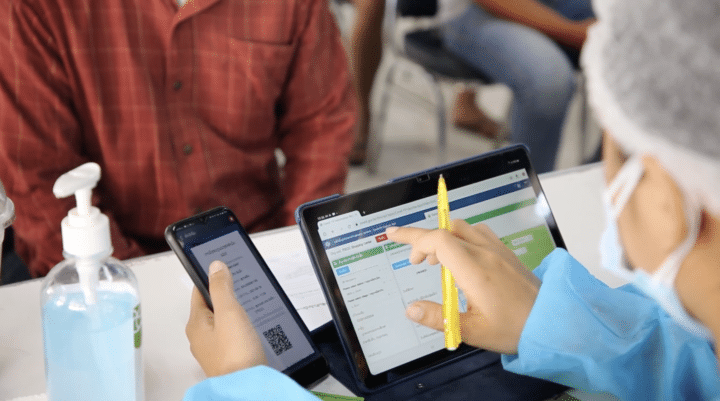
By providing a lightweight platform for digital registries and electronic medical records, DHIS2 facilitates many aspects of patient care at health facilities, by community health workers, and in fragile and humanitarian settings. Combined with aggregate health data in DHIS2, this can help identify vulnerable and hard-to-reach populations for targeted interventions and follow-up. DHIS2 can support the needs of specific health programs, such as malaria, TB, HIV, and immunization, and bring them together into a holistic, patient-centric system.
Explore some examples in the impact stories below.
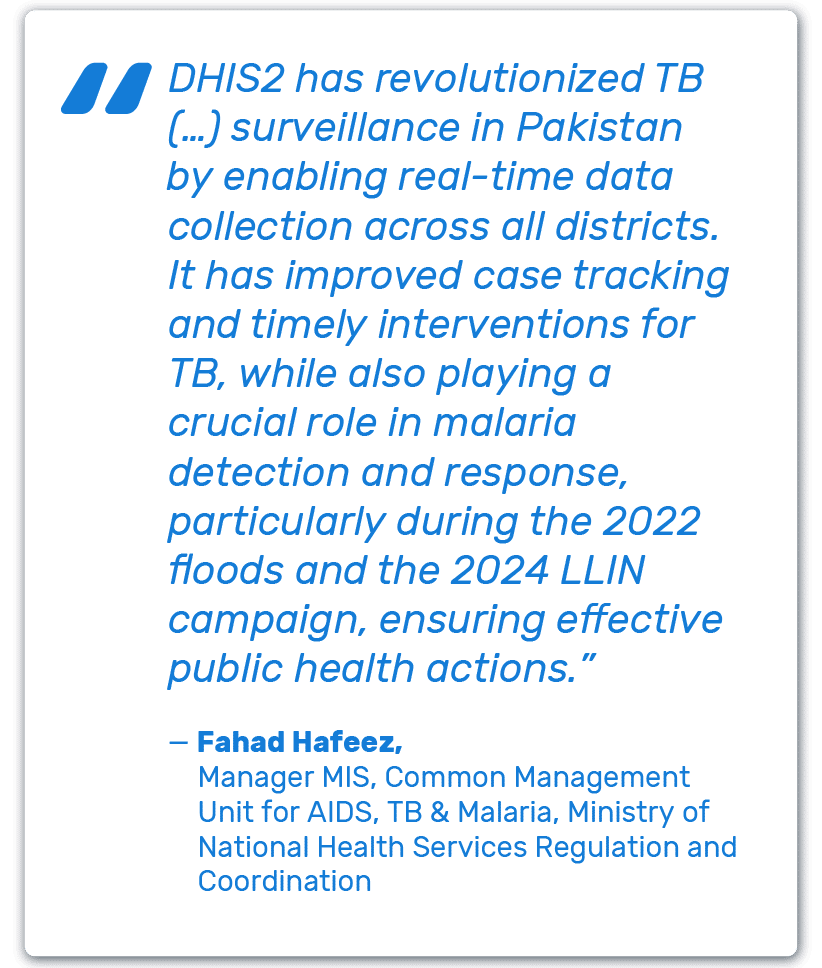
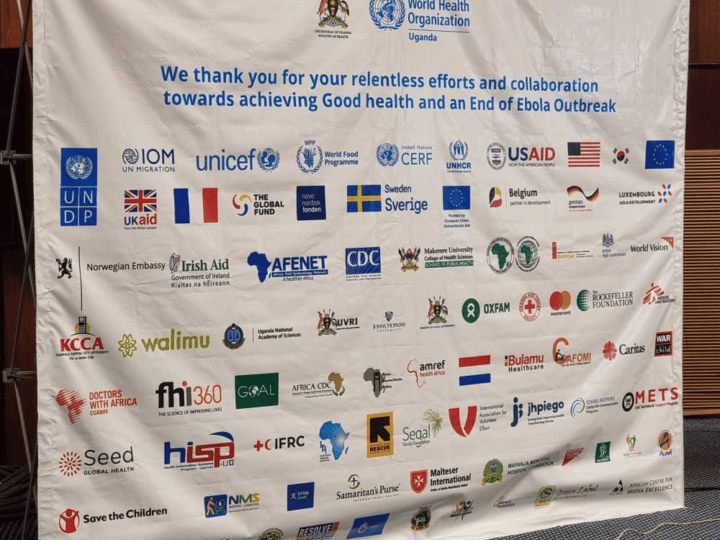
DHIS2 is used in more than 50 countries as a national-scale electronic disease surveillance platform, including support for routine reporting (such as in IDSR systems), case-based surveillance, event-based surveillance, outbreak surveillance and integrated outbreak analytics. It is also used for disease surveillance at a regional level by Africa CDC, the Pan American Health Organization (PAHO), WHO AFRO, and the West African Health Organization, helping countries respond effectively to outbreaks of Ebola, Marburg, measles, mpox and other epidemic-prone diseases.
Explore some examples in the impact stories below.
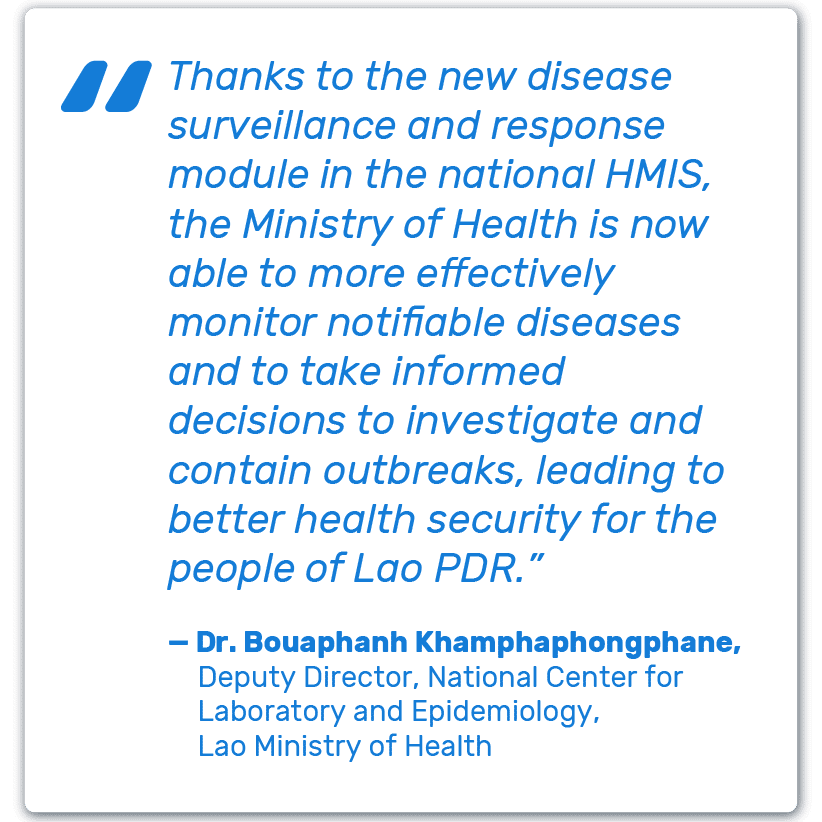
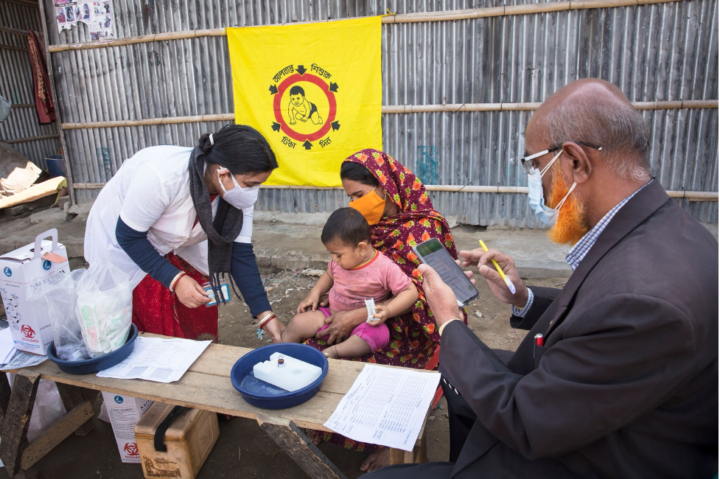
Countries and organizations use DHIS2 to streamline health campaign planning, data collection and real-time monitoring, and post-campaign evaluation. This includes a range of campaign interventions, like supplemental immunization activities, insecticide-treated net distribution, seasonal malaria chemoprevention and other mass drug administration, indoor residual spraying, nutritional supplements and more.
Explore some examples in the impact stories below.
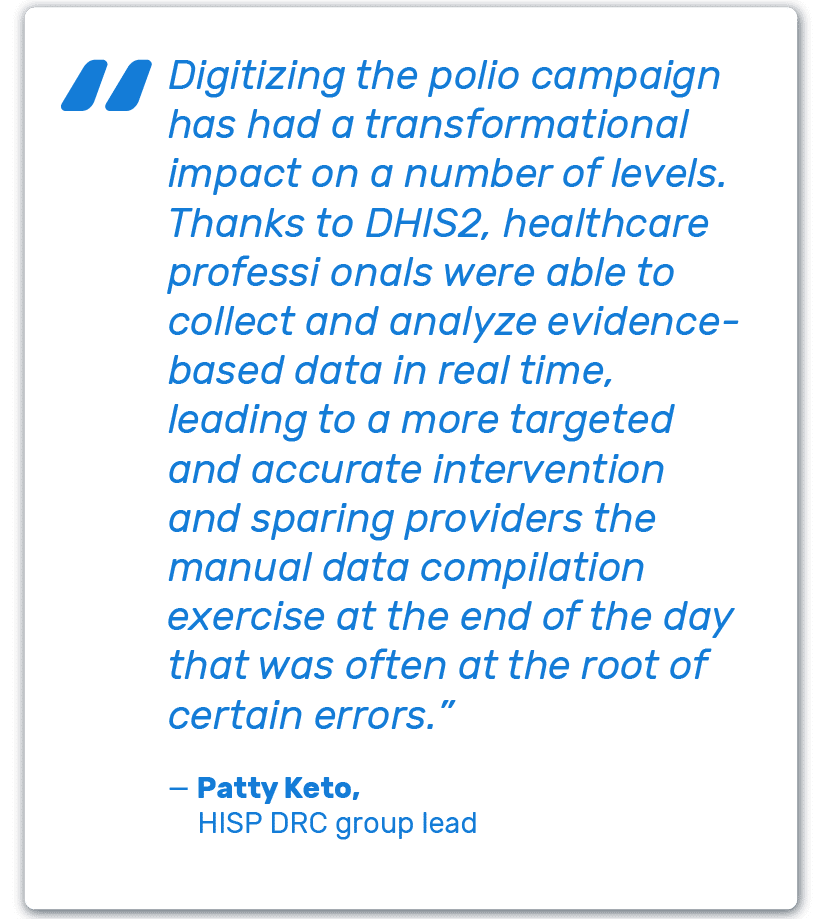
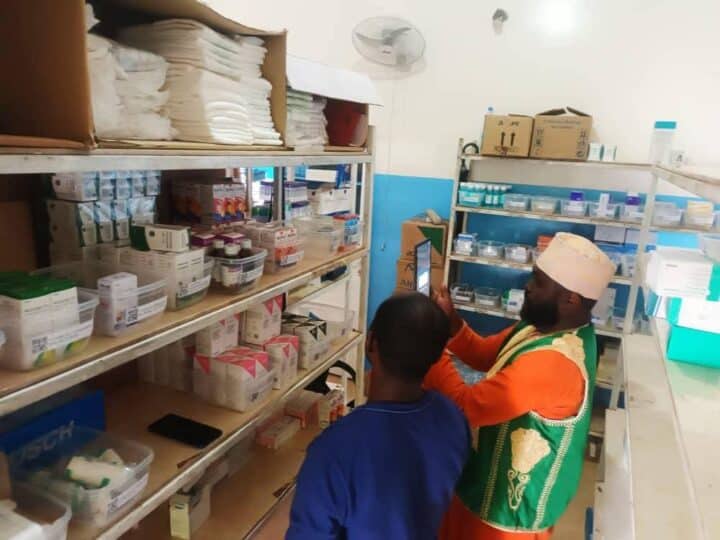
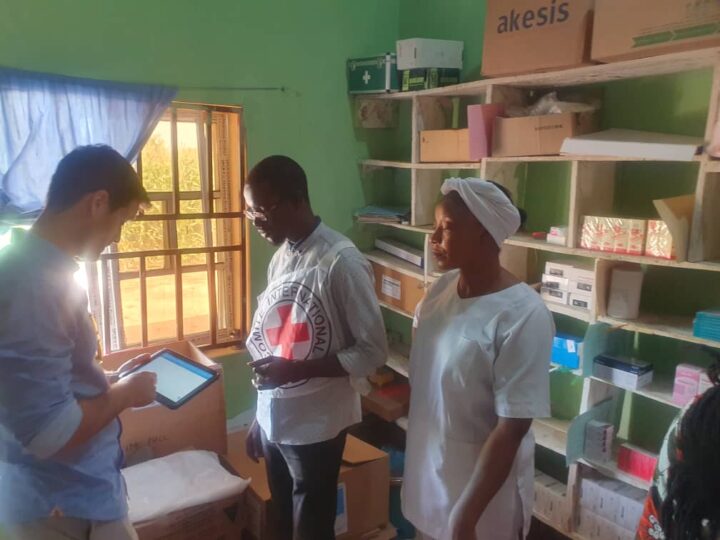
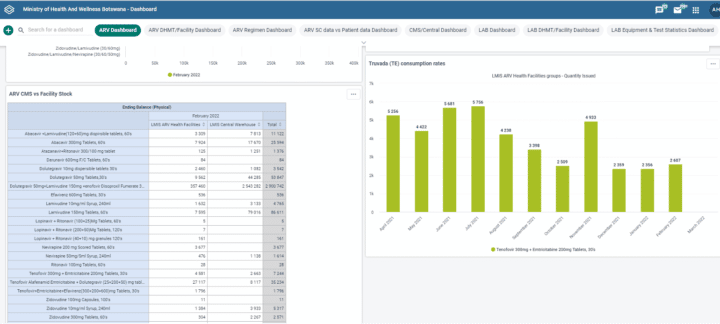
Combining logistics data from health facilities or from the point of care with epidemiological and programmatic data in DHIS2 can support demand planning for health care products, improve supply chain management, monitor performance and identify logistical hurdles. Using DHIS2 for logistics data—either as a lightweight standalone platform or integrated with a full-scale, national eLMIS—provides an efficient and cost-effective way to provide last-mile supply chain visibility.
Explore some examples in the impact stories below.
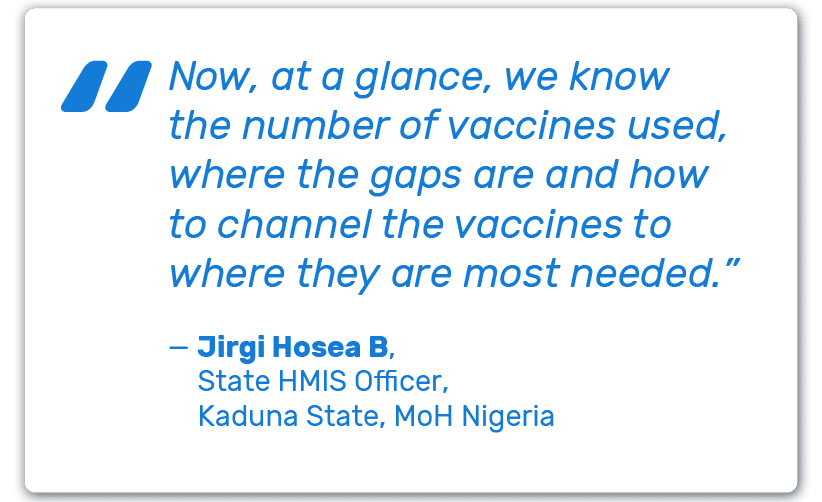
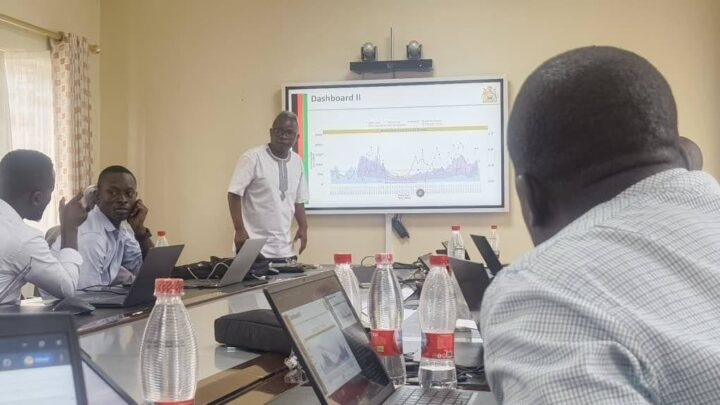
Climate change and extreme weather events pose a significant threat to human health, but barriers to climate-health data integration have made it very difficult to analyze, forecast, and respond to these impacts. Using DHIS2 for Climate & Health, countries can integrate climate and health data for combined analysis, leverage AI and predictive modeling to forecast health risks, and generate dynamic dashboards for routine use by local health stakeholders.
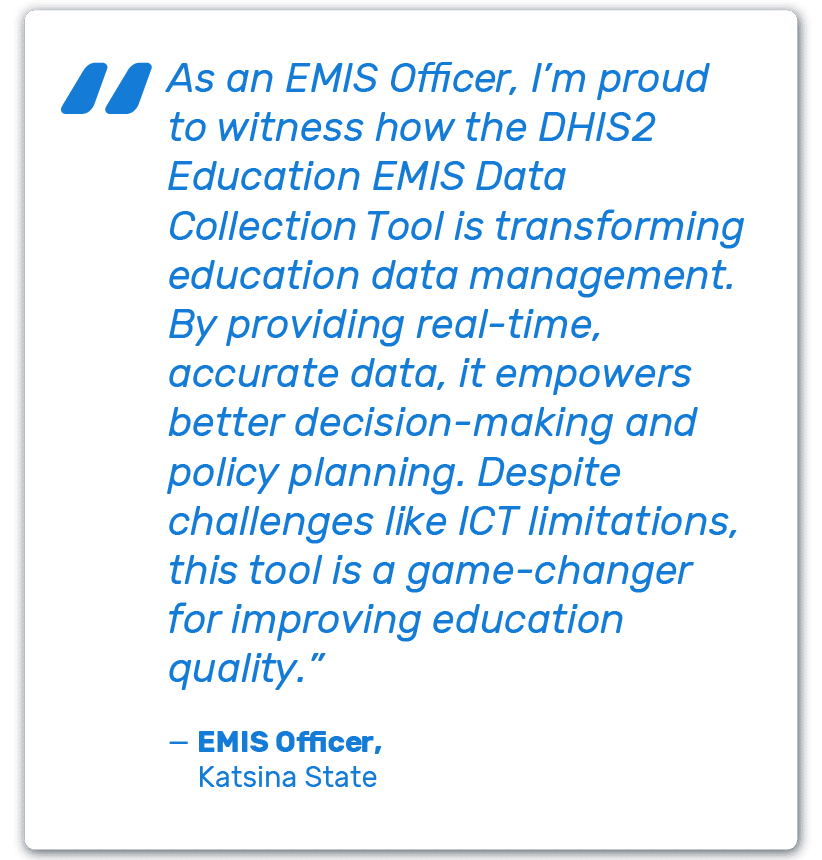
Using DHIS2 for Education enables the collection, analysis, visualization, and use of individual and aggregate data from institutions of learning. Similar to the use of DHIS2 in the health sector, this helps Ministries of Education achieve improved reporting completeness and timeliness, supporting better planning and decision making. Collecting granular, real-time data on students and staff gives teachers, administrators, and district staff greater visibility across a range of factors, and facilitates targeted follow-up to improve education equity and support student success.
Explore some examples in the impact stories below.
One of the reasons that DHIS2 drives local impact at global scale in a rapid and cost-effective way is our emphasis on open source tools and sharing of knowledge and local innovations through the global HISP network and DHIS2 community. This free flow of ideas, open access to solutions, and network of DHIS2 support and expertise has helped countries to rapidly adopt and adapt DHIS2-based solutions developed in other countries—at a fraction of the cost and time. This kind of impact cuts across sectors, and is essential to DHIS2’s success as a digital public good.
Explore these pages to learn more about how local innovation drives global DHIS2 impact in response to emerging needs and crises.
A local innovation in Sri Lanka built on existing DHIS2 infrastructure helped drive rapid adoption of DHIS2 tools for pandemic response in 60+ countries.
Through our ongoing project, local innovations for climate-health data integration and predictive modeling are shared through open platforms.
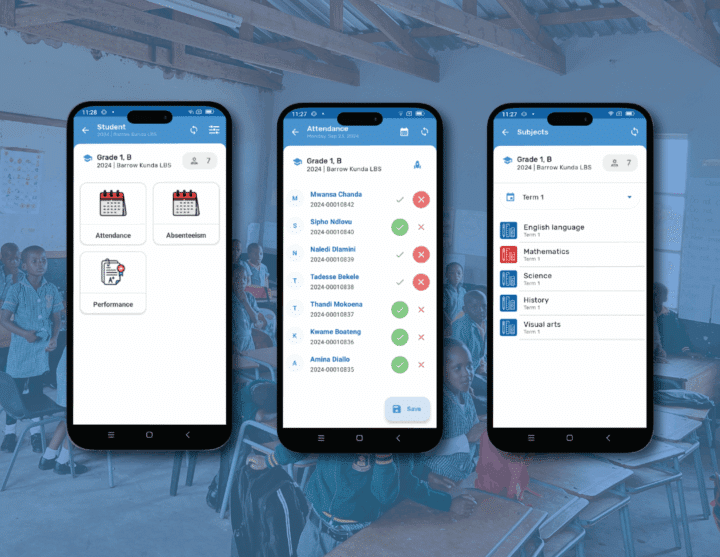
An application for student, staff, and school management created in collaboration by local HISP groups has become a key tool for a growing number of countries.
Researchers in public health, information systems, and interdisciplinary fields regularly publish peer-reviewed articles, papers, and reports that explore the impact and effectiveness of DHIS2 in a variety of contexts. Here are some notable publications from recent years:
“Key lessons from Senegal’s mpox surveillance demonstrate progress thanks to the DHIS2 Tracker, which has improved case collection and monitoring.”
“As a result, the weekly IDSR reporting transformed from nonexistence in 2015 to a state where the nation reached 97.8% and 74.5% reporting quality for completeness and timeliness, respectively, in 2024.”
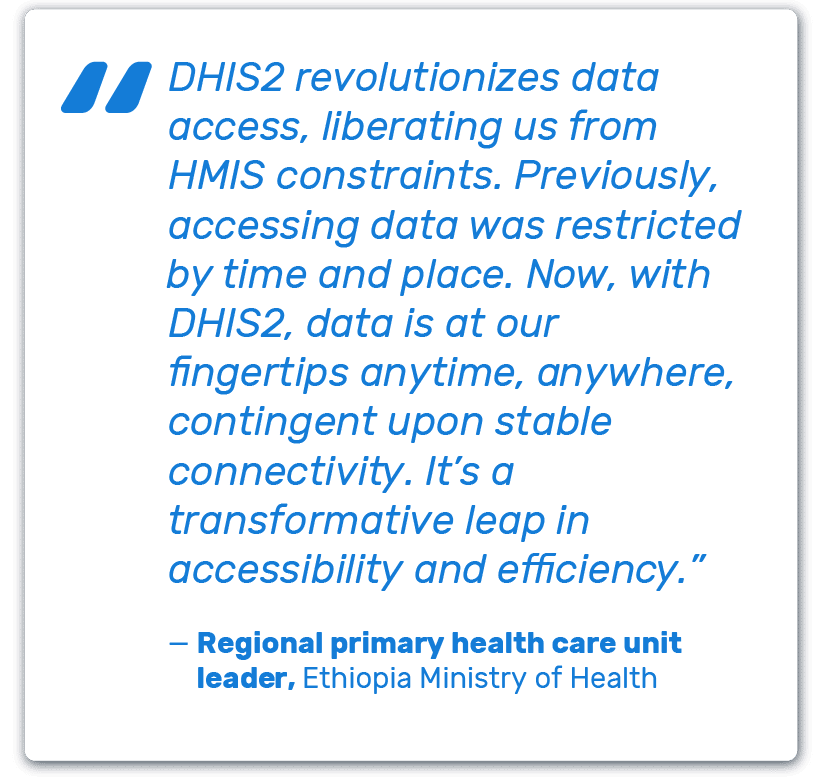
“In Ethiopia, DHIS2 enhanced health system accountability and data quality by streamlining district-level data aggregation, reporting, and performance monitoring. This led to more informed decision-making and improved resource distribution.”
“The DHIS2 platform also enabled real-time monitoring of MDA performance, allowing for programme adjustments as needed, and improving the agility of the MDA process.”
“The results… suggest that the use of these M&E systems (DHIS2 and HMIS) is associated with a 22.4% reduction in malnutrition rates among children under the age of five.”
“By improving data accessibility and communication between health facilities, DHIS 2 has contributed to more coordinated and efficient healthcare service delivery.”
Read the latest DHIS2 impact stories at the links below, or browse our entire collection of articles to explore how DHIS2 is helping make an impact in health, education, agriculture, and more.