The DHIS2 Annual Conference takes place from 15-18 June 2026! Learn more
Sustaining DHIS2 Together
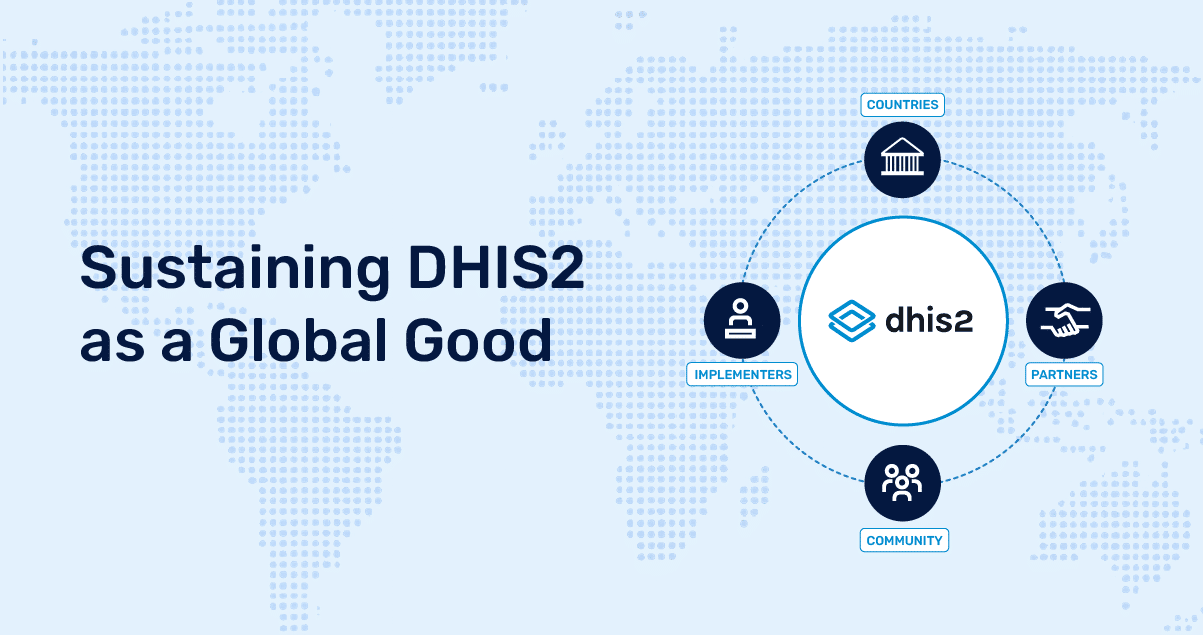
The Shared Services Fee is a collective financing model that keeps DHIS2 free, open, and sustainable, supporting the global platform for everyone. Organizations that contribute become Contributing Partners with a voice in shaping the future of DHIS2.
Jump to a section on this page
A Collective Model for Sustaining DHIS2
DHIS2 is one of the world’s largest digital public goods, supporting national systems in more than 75 countries. It remains open source, license-free, and locally owned. Sustaining a platform of this scale requires continuous investment in core software development, security, interoperability, and global coordination. Historically, this has relied heavily on donor funding, which is increasingly fragmented and insufficient.
To address this, the HISP Centre at the University of Oslo has introduced a collective financing model that connects contribution with participation. At the core of this model is a simple principle: Organizations that contribute to sustaining DHIS2 also help shape its future.
We have implemented this principle in one unified model with two connected components:
- The Shared Services Fee (SSF), which sustains the platform
- The Contributing Partners Program, which enables participation
Through this model, organizations can contribute and participate: Any organization that pays the DHIS2 Shared Services Fee is recognized as a DHIS2 Contributing Partner, a status that enables greater engagement and input on the direction of the DHIS2 platform.
This model is designed around the concept of shared responsibility, where those who rely on DHIS2 also help sustain and guide its evolution. This approach:
- Keeps DHIS2 free and open
- Avoids licenses and vendor lock-in
- Strengthens country ownership
- Ensures long-term sustainability
On this page, you can learn more about how the model works. If you are ready to contribute to DHIS2 by paying the Shared Services Fee, or it you have any questions, you can contact us at partnership@dhis2.org.
What does it mean to be a Contributing Partner?
Organizations contributing financially to DHIS2 through the SSF are recognized as DHIS2 Contributing Partners, and are invited to:
- Participate in strategic briefings and partner forums
- Provide input into the DHIS2 roadmap
- Engage in discussions on platform priorities and governance
- Be recognized across the DHIS2 community
This model is about participation and shared stewardship, not ownership.
What is the Shared Services Fee?
The DHIS2 Shared Services Fee is a voluntary annual contribution, applied per production instance of DHIS2. It supports the global shared services that make DHIS2 viable at scale, including:
- Core software development
- Security updates and platform maintenance
- Interoperability frameworks
- Documentation and implementation guidance
- Global coordination of the DHIS2 ecosystem
The SSF is:
- Not a license
- Not a paywall
- Not required for access
The SSF does not include any other cost components related to DHIS2 implementation, such as system support, hosting, training, etc., and is applied universally to all DHIS2 implementations.
DHIS2 remains fully open. There is no requirement to pay the Shared Services Fee to use DHIS2.
Shared Services Fee contribution levels
Consult the table below for the recommended annual contribution (in USD) per DHIS2 production instance:
| Low income* | Lower-middle income | Upper-middle income | High income | |
|---|---|---|---|---|
| Public Sector | $5,000 | $10,000 | $20,000 | $30,000 |
| Private Sector | $10,000 | $20,000 | $35,000 | $50,000 |
| NGO | $7,500 | $7,500 | $7,500 | $7,500 |
| *Our definitions of income levels and country classifications are based on the World Bank’s groupings. | ||||
How to include the Shared Services Fee in budgets
The SSF is designed to fit within existing funding and procurement structures.
- Example budget line: “DHIS2 Shared Services Fee – for core platform upgrades, security, bug fixes, and platform maintenance.”
Common budgeting approaches
- Donor-funded projects: SFF is included as a dedicated line under digital health or HIS strengthening (e.g. Global Fund, Gavi)
- Government budgets: SFF is included in national HMIS or digital health operational costs as recurring infrastructure maintenance
- Implementers and service providers: SFF is built into project proposals and contracts as a standard DHIS2 cost
- SaaS and hosting providers: SFF is bundled into service or hosting fees
Examples: Countries with multiple production instances
In many countries, DHIS2 is a portfolio of systems rather than a single instance. The SSF is applied per production instance and paid once annually per instance.
- Example 1: National + program systems
1 HMIS + 1 logistics + 1 surveillance system
→ 3 production instances → 3 SSF contributions - Example 2: Multi-partner environment
1 national system + 2 NGO systems + 1 partner analytics instance
→ 4 production instances → 4 SSF contributions
Partners coordinate to ensure each instance is covered once. - Example 3: Consolidation opportunity
5 fragmented systems consolidated into 2 integrated systems
→ fewer instances, lower costs, stronger architecture
How to Contribute: Paying the Shared Services Fee
A simple process has been put in place to initiate SSF contributions directly to HISP UiO. When you contact us to express interest in paying the SFF, you will be asked to:
- Provide organization and system details
- Indicate the number of production instances
- Submit billing information
This information is used by HISP UiO to generate and issue an invoice for the Shared Services Fee.
Organizations that already have existing contract arrangements with HISP UiO and that would like to incorporate the SSF are invited to contact us directly.
All organizations contributing through the Shared Services Fee become part of a global community sustaining and shaping DHIS2, and will be contacted by HISP with information on how to engage with us.
If you are ready to contribute to DHIS2 by paying the Shared Services Fee, or it you have any questions, you can contact us at partnership@dhis2.org.