
Africa CDC’s Leader Names DHIS2 as a Key Tool for Digitizing Africa’s Public Health Systems
A new editorial in the Journal of Public Health in Africa calls for deploying DHIS2 Tracker programs to every community health worker and primary care facility across the continent.
Africa Centres for Disease Control and Prevention (Africa CDC) Director General Dr. Jean Kaseya and co-authors have outlined five priorities for digitizing public health systems and ensuring health security across Africa, with DHIS2 playing a central role.
“The African continent faces an unprecedented opportunity to harness digital innovation to accelerate universal health coverage, strengthen epidemic preparedness and advance Africa’s Health Security and Sovereignty (AHSS) agenda.”
– Jean Kaseya et al, “Charting Africa’s digital public health future: Five priorities for action” (source)
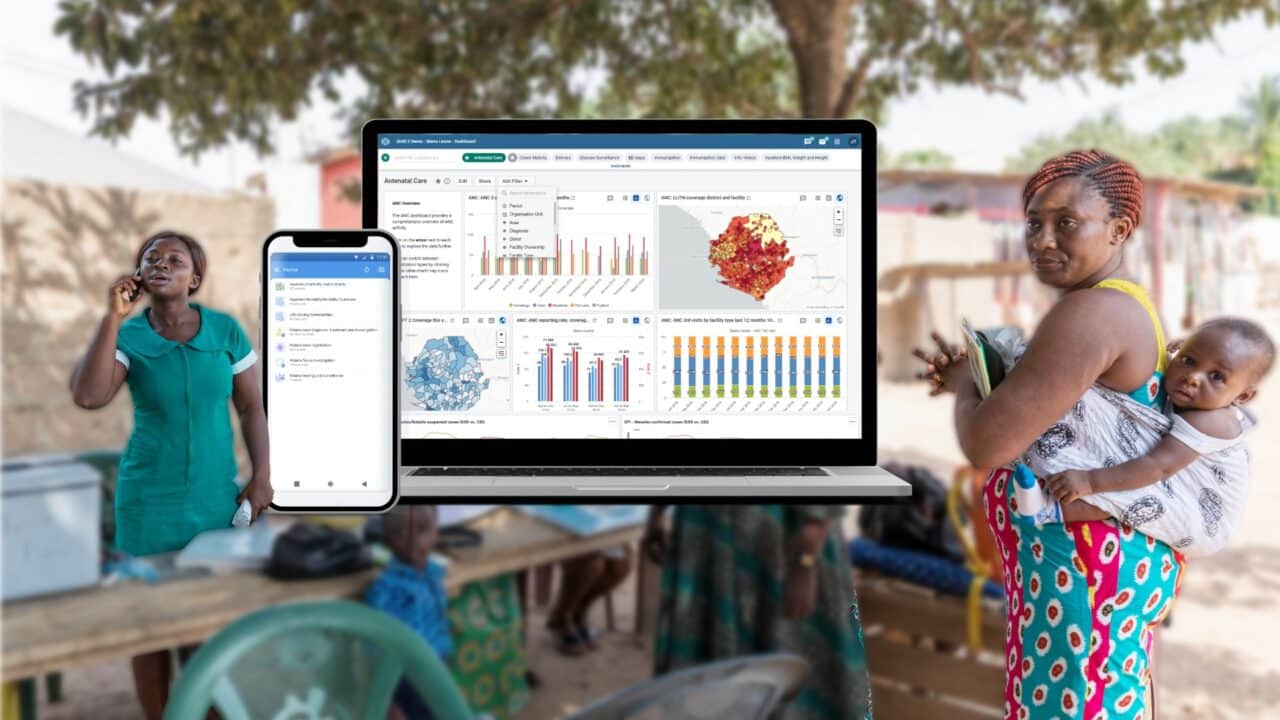
The editorial, published in the Journal of Public Health in Africa, calls for equipping every community health worker (CHW) on the continent with a smartphone loaded with DHIS2 Tracker programs for real-time surveillance, case detection and program monitoring. It also calls for every primary health care facility to adopt DHIS2 Tracker programs to monitor immunization coverage, maternal health indicators and stock management in real time.
“Equipping each CHW with a smart gadget preloaded with the DHIS2 Tracker would revolutionise community-based surveillance, case detection and programme monitoring,” the authors state. “Real-time data from villages could feed into district and national dashboards, reducing reporting delays from months to minutes. This transformation would enhance early outbreak warning, facilitate the monitoring of maternal and child health services, and strengthen accountability at the community level.”
The authors also call for moving beyond program-specific, siloed deployments toward an integrated DHIS2 platform that combines routine program monitoring with public health emergency management—enabling Ministries of Health to track HIV, malaria and maternal health alongside cholera, mpox and COVID-19 outbreaks in a single platform.
DHIS2 is currently deployed across all 55 African Union member states for routine health information management. Many countries in Africa already use DHIS2 Tracker programs for electronic disease surveillance and immunization registries, and some are currently piloting the use of DHIS2 as a lightweight Electronic Medical Record (EMR) system at the facility level. Digitizing primary health care facilities would generate high-quality, timely data to inform local, national and continental policy.
The authors also identify reliable connectivity, artificial intelligence and interoperability standards as key enablers of the digital health agenda. They note that the five priorities they outline are “both feasible and urgent,” but that they “require strong political commitment, sustainable financing, and a coordinated approach” across the member states of the African Union and global partners. They further stress the importance of avoiding dependency and ensuring long-term resilience, and working toward a self-sustaining model that protects data sovereignty, facilitates local innovation, and ensures the ongoing adaptability of digital health systems to emerging technology.
This vision is closely aligned with HISP UiO’s mission and strategy, and we look forward to continuing to support Africa CDC through our ongoing partnership to help achieve these goals.
Read the full editorial in the Journal of Public Health in Africa.
For media inquiries, please contact comms@dhis2.org.