
HISP UiO publishes EMR-DHIS2 integration survey report
A new report explores the current state of EMR implementations and EMR–DHIS2 integrations across 30 countries in the DHIS2 ecosystem.
Digitizing patient data through Electronic Medical Records (EMRs) or similar systems is an increasingly common part of national health strategies in countries where DHIS2 is used. While some countries have years of experience using DHIS2 Tracker programs to collect longitudinal patient data for specific health areas—such as immunization or HIV treatment—and some have begun to explore the potential of using DHIS2 as a lightweight facility-level EMR, in many other countries a variety of software systems are currently in use.
In order to better understand how countries and implementations are using EMRs and how we at HISP UiO can better support interoperability with external EMRs, the DHIS2 extensibility team recently conducted a survey on EMR usage and integrations.
The survey was conducted in two ways: a longer form, which we used in direct interviews with developers and implementers in HISP groups; and a shorter form, which we shared widely through the DHIS2 Community of Practice. We were very pleased with the level of community engagement, with participants from 30 countries and organizations ultimately sharing their input with us.
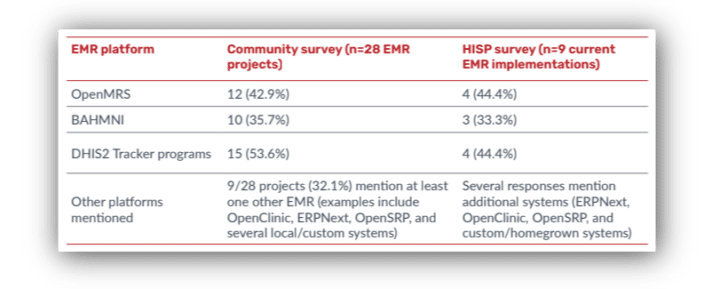
The responses we got gave us very valuable insights into what EMRs are currently in use—including DHIS2 Tracker programs, which emerged as the most commonly used solution in the countries surveyed—how implementations are performing integrations, what approaches have been successful (or not), and what aspirations there are for future developments. With this information, we get a much clearer picture of what we can do to support EMR-DHIS2 integrations. For example, this information could help us develop reference implementations that match common usage patterns and demonstrate cases that implementations intend to deploy in the future.
We want to share this information back with the community, since it can be helpful to compare notes on what countries and organizations are doing, disseminate lessons learned and best practices, and help inspire effective implementation in other countries. To that end, we have written a downloadable report of our findings and next steps, as well as a blog post that summarizes our key findings.
If you have have questions or comments about this work, you are welcome to share them with the extensibility team on the Community of Practice.