
DHIS2 2026 Annual Conference and Climate & Health Academy Brings Together Global Community
One year after confronting the global health community’s funding crisis head-on, the DHIS2 2026 Annual Conference brought an optimistic spirit, with 371 participants from 63 countries exploring how to chart innovative ways forward together.
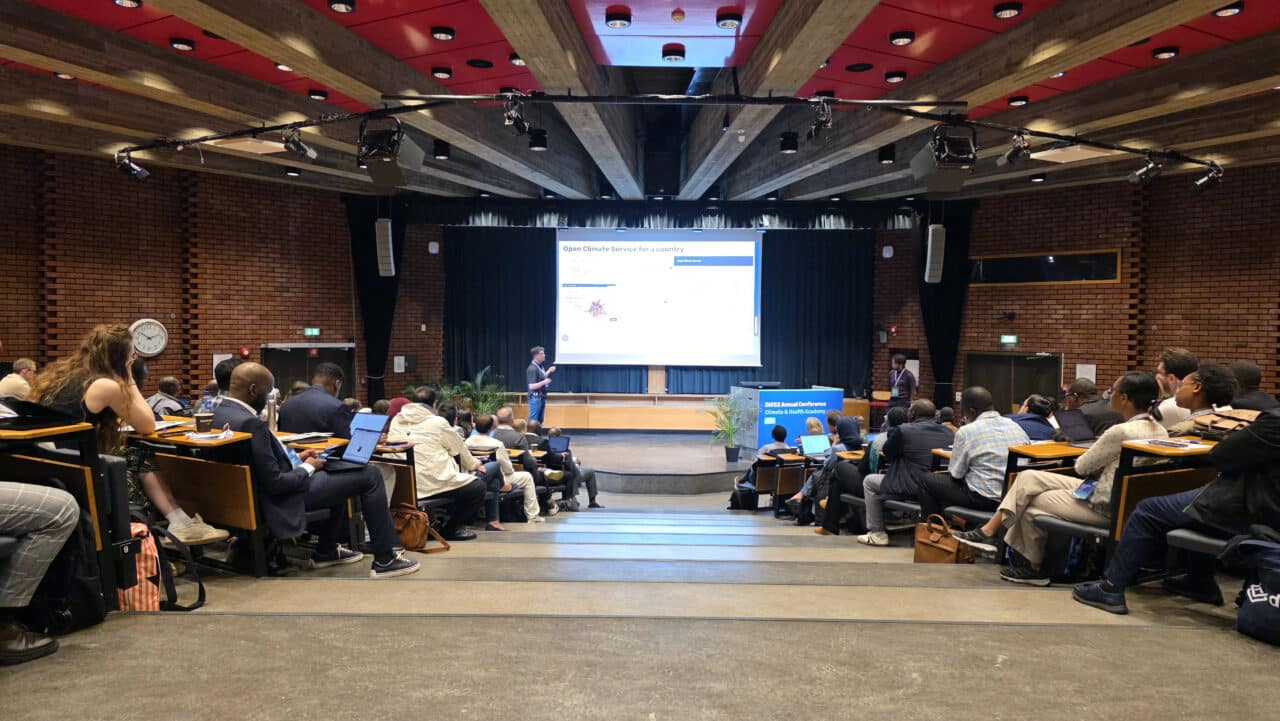
The HISP Centre at the University of Oslo (HISP UiO), which develops and maintains the DHIS2 open-source software, hosted the 2026 DHIS2 Annual Conference, 15–18 June on the UiO campus. The event welcomed 371 participants from 63 countries, including 27 Ministries of Health and government bodies, in addition to more than 1,000 registered online participants.
Last year’s conference confronted a sober reality: declining financial assistance for health programs and a sudden cut in development aid funding had left the global health community searching for ways to sustain hard-won digital infrastructure. A year on, this year’s conference carried a different energy—less about survival, more about what comes next. Conversations throughout the week turned toward new models of collaboration, shared ownership, and locally driven innovation as the community charts a way forward together.
New this year, the conference ran alongside the first-ever DHIS2 Climate & Health Academy, which offered hands-on technical training on climate data integration and predictive modeling, as well as presentations by country teams on the innovative work ways they are bringing climate and health data together with DHIS2. The Academy’s presence throughout the week brought a sharpened focus on climate-resilient health systems to the main conference program. 111 of the in-person participants were registered specifically for the Academy, indicating a significant level of interest in DHIS2 for Climate & Health.
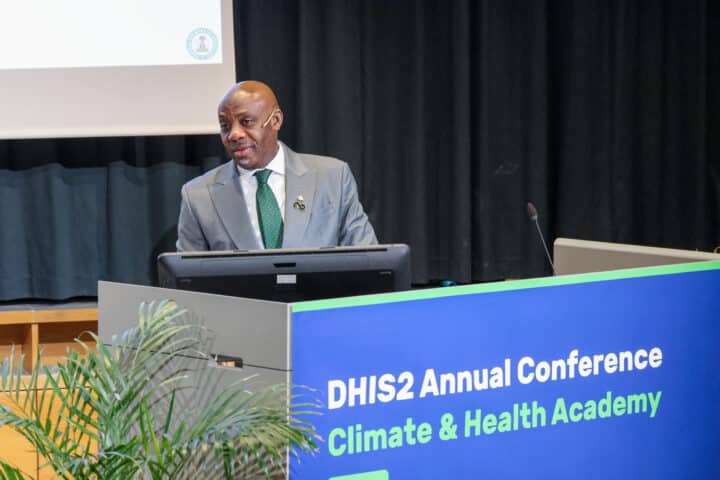
Among the conference’s standout moments was a plenary session on Nigeria’s national education management information system (EMIS), featuring a keynote by Nigeria’s Honourable Minister of Education, Dr. Maruf Tunji Alausa. The session offered a firsthand look at how DHIS2 underpins education data systems at national scale, part of a broader set of sessions exploring how DHIS2 is being used to close the gap between data collection and decisions that improve outcomes for learners, with examples spanning Nigeria, Lesotho, Lao PDR, and beyond.
This year’s conference introduced several firsts. DHIS2 Technology Partners took the stage for the first time, presenting integrations and joint solutions built around DHIS2, and HISP UiO introduced the DHIS2 Shared Services Fee, which offers a model for collectively sustaining the DHIS2 platform. The community celebrated the inaugural DHIS2 Awards, recognizing standout impact and contributions from across the ecosystem—including the finalists of the 2026 DHIS2App Competition.
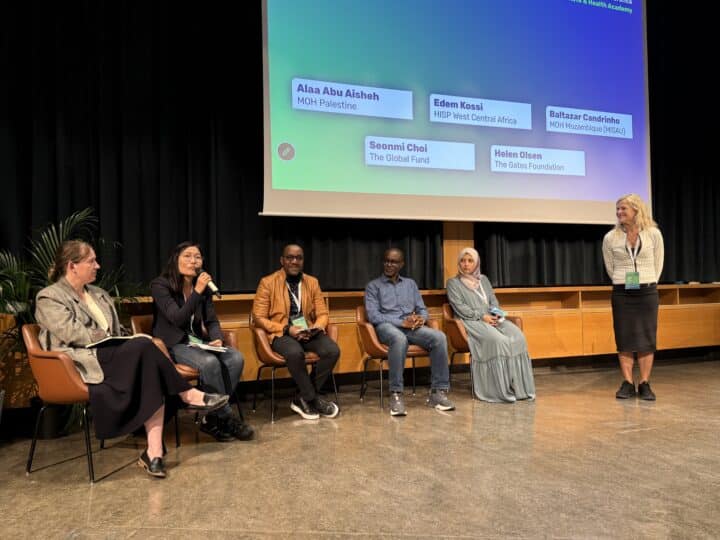
The conference closed with a panel discussion on the path ahead for DHIS2 and how the community can deepen collaboration in the years to come, moderated by HISP UiO director, Professor Kristin Braa. Panelists included Alaa Abu Aisheh (MOH Palestine), Dr. Baltazar Candrinho (MOH Mozambique/MISAU), Dr. Edem Kossi (HISP West & Central Africa), Helen Olsen (The Gates Foundation), and Seonmi Choi (The Global Fund), bringing together ministry, implementer, and donor perspectives on what collaboration looks like next.
The turnout and tone of this year’s conference reflect a global community that has weathered a difficult year and is now turning its attention forward—toward new partnerships, new tools, and new ways of working together to strengthen digital infrastructure in health, education, climate, logistics, and beyond.
Recordings of the conference sessions are available on the DHIS2 YouTube channel. View photos from the event in our online album.