

DHIS2 in China
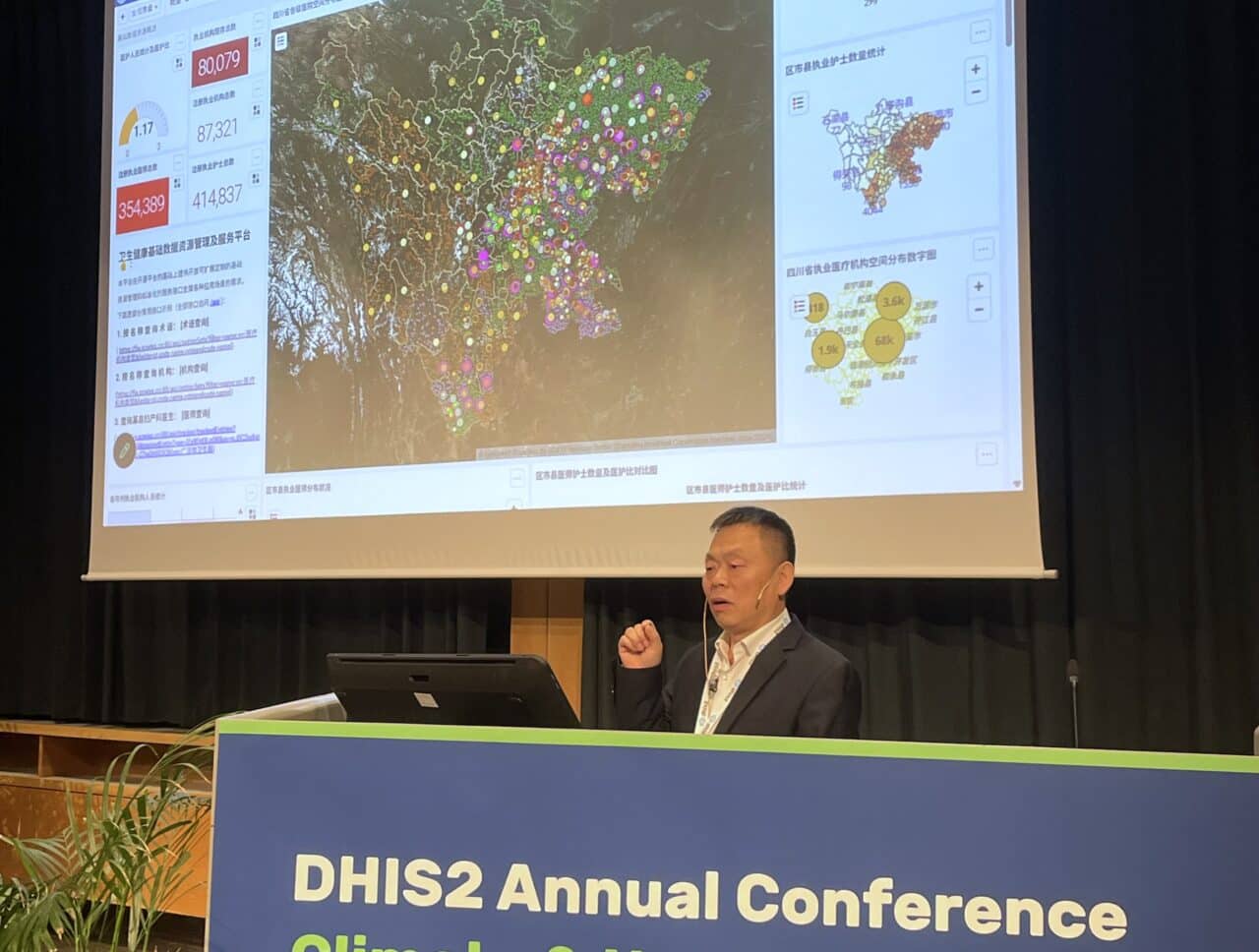
At the DHIS2 Annual Conference, Dr. Lin Xiaodong shared how DHIS2 is deployed in China’s Sichuan Province as a health data governance and service platform that supports 80,000 institutions in a region with a population of 80 million.
At the 2026 DHIS2 Global Annual Conference, Dr. Lin Xiaodong, Director of the Standard Professional Committee at the Sichuan Provincial Health Information Health Center and Sichuan Provincial Health Information Association, introduced the implementation and application of the DHIS2 system in Sichuan Province, China to the global DHIS2 community.
In Sichuan Province, a unified governance and standardized service platform for provincial health information basic data, as well as a rapid response information support system for emerging infectious diseases, have been developed based on DHIS2. The system covers more than 80,000 medical and health institutions across the province, serving over 80 million permanent residents, and is used to collect and aggregate data on medical and health services and disease surveillance.
Dr. Lin has been deeply engaged with DHIS2 for more than 15 years, continuously promoting its implementation. He is currently building a community ecosystem to strive to develop it into a regional medical and health information infrastructure platform adapted to domestic scenarios.
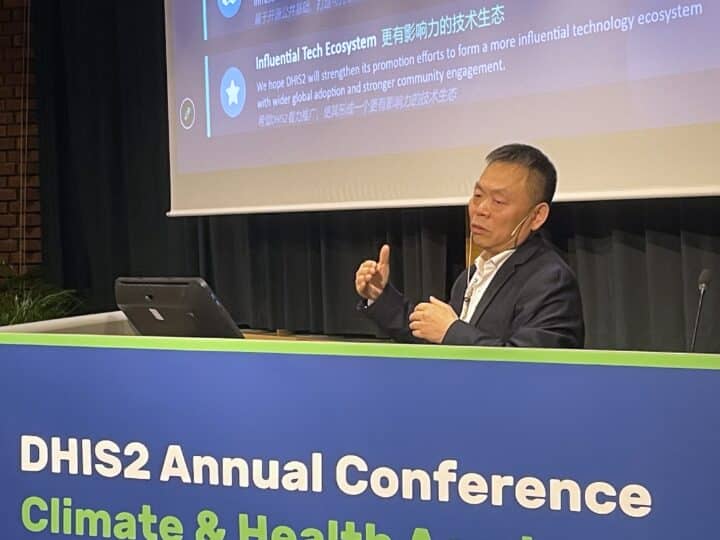
During his plenary remarks, Dr. Lin shared his team’s practical achievements with global DHIS2 practitioners for the first time. He announced that the team from the Sichuan Provincial Health Information Association has completed the localization transformation of DHIS2, explained how the system meets the business needs of medical and health data in Sichuan Province, shared the team’s contributions to the global public health cause, and described the long-term development blueprint of DHIS2 in China.
“We are committed to building an influential DHIS2 ecosystem in the industry. Relying on a sustainable open-source foundation, we will create a developer application community that is rooted in the local context and connected to the world.”
— Dr. Lin Xiaodong, Sichuan Provincial Health Information Center, Sichuan Provincial Health Information Association
DHIS2: Empowering basic health and medical services for organizations in Sichuan
Sichuan Province in China has a geographical scale comparable to many countries, with a permanent population of over 80 million. The region boasts a sound medical and health service system, including more than 80,000 medical and health institutions, over 320,000 practicing physicians, and more than 500,000 nurses.
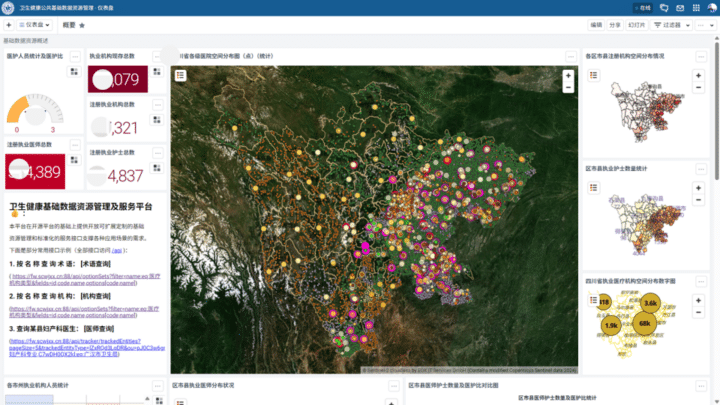
One of the core projects led by Dr. Lin’s team is the construction of a provincial health master data governance and service platform based on DHIS2, which connects data from medical and health institutions at all levels across the province. The platform reuses DHIS2 Event and Tracker data models to store full-volume basic data, including residents’ personal basic information, medical institutions, medical staff, and standard terminology codes. It is equipped with visual dashboards to support macro overviews and drill-down refined data analysis. Leveraging the dedicated health network and standardized unified APIs, it provides shared public services — such as standardized practicing subject identity authentication and basic data sharing for medical institutions — effectively addressing the challenges of fragmented industry data and isolated data silos in business systems.
The team’s second key implementation is the Sichuan Provincial CDC surveillance and early warning system. This system supports targeted screenings for high-risk groups of infectious diseases such as AIDS, hepatitis B, and tuberculosis. It also provides s a real-time monitoring and rapid response module for emerging infectious diseases, assisting provincial CDC departments in quickly identifying and handling potential outbreaks.
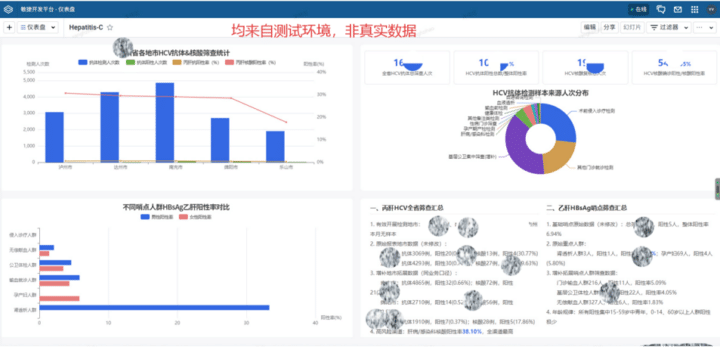
To adapt to domestic business specifications, the team has completed a large number of adaptation tasks: fully localizing the entire DHIS2 operation interface into Chinese, and reconstructing the data entry and infectious disease line listing application modules. After medical and health institutions at all levels across the province collect raw data through various types of business software, they rely on DHIS2 open APIs to complete multi-system data integration and uniformly import data into the platform.
Promoting the popularization of DHIS2 in the healthcare industry by domestic ecosystem partners
Dr. Lin also shared that the Sichuan Provincial Health Information Association is promoting DHIS2 beyond the public health system, guiding ecosystem partners to provide more market-oriented value-added solutions for medical and health scenarios for the public.
The first solution in this area is the Traditional Chinese Medicine Big Data Platform, which has been fully put into use in a prefecture-level city with a population of over 5 million. The second is the hospital data center, which builds a hospital-wide data integration base based on DHIS2, and uniformly provides capabilities for data governance, multi-dimensional analysis, and management decision support.
Integrating into the global community and jointly building the DHIS2 ecosystem
Dr. Lin stated that the value of DHIS2 goes far beyond the software itself, and the global developer collaborative community is equally crucial. Over the past 15 years, he has participated deeply in the DHIS2 Community of Practice and continuously drawn on the implementation experience of pioneer experts from the international HISP network.

For example, the doctoral dissertation of Dr. Edem Kossi, the head of HISP in West and Central Africa, is the core reference for local DHIS2 implementation. Dr. Lin led the joint completion of the Chinese translation of this dissertation, which serves as a core textbook for DHIS2 talent training in China. Since 2011, he has long volunteered to complete the Chinese localization and translation of DHIS2 interfaces and official documents.
Relying on the Sichuan Provincial Health Information Association, Dr. Lin has established a local DHIS2 community of practice and independently developed the open-source localized project CDHIS2, which greatly simplifies the process of domestic localization customization and deployment, and facilitates the large-scale promotion of DHIS2 across the country.
Future outlook: Building an open-source digital technology ecosystem foundation with DHIS2
At the end of his speech, Dr. Lin presented the vision for future development of DHIS2 in Sichuan: to build DHIS2 into a provincial health management data hub, serving as an open, sustainable, and collaboratively built underlying technology ecosystem, expanding the participation of all parties in the industry and empowering the construction of digital public health infrastructure.
“We look forward to relying on the joint efforts of the DHIS2 global community, HISP research centers, and all practitioners to enable DHIS2 to be widely implemented and applied in Sichuan and even across China.”
— Dr. Lin Xiaodong, Sichuan Provincial Health Information Center
To promote the realization of this vision, Dr. Lin stated that he will continue to deepen exchanges and cooperation with the global HISP network and the international DHIS2 community. He will continue to participate in global DHIS2 Annual Conferences, and plans to host similar international exchange conferences in China to regularly share practical experiences and business challenges, so as to achieve mutual learning of global experiences.
Watch a recording of Dr. Lin’s presentation on the DHIS2 YouTube channel.