
Pakistan scales DHIS2 to more than 1,650 health facilities, improving care for mothers and children
Health authorities deployed DHIS2 across Balochistan province, replacing paper-based reporting and giving officials real-time visibility into maternal, newborn, and child health services.
For years, health officials in Balochistan faced a familiar problem: by the time data arrived from health facilities across Pakistan’s largest province, it was already outdated. A recent Unicef article on this implementation describes the situation vividly. Health workers recorded patient information manually throughout the month, and at the end of each reporting period, district teams compiled and entered the figures—a slow process that made it nearly impossible to respond quickly to emerging health needs.
“The process was slow and placed a heavy burden on district health teams,” said Syed Muzaffar Ali, a senior software engineer at the Directorate General Health Services in Quetta. “More importantly, it delayed our ability to respond to what was actually happening in communities.”
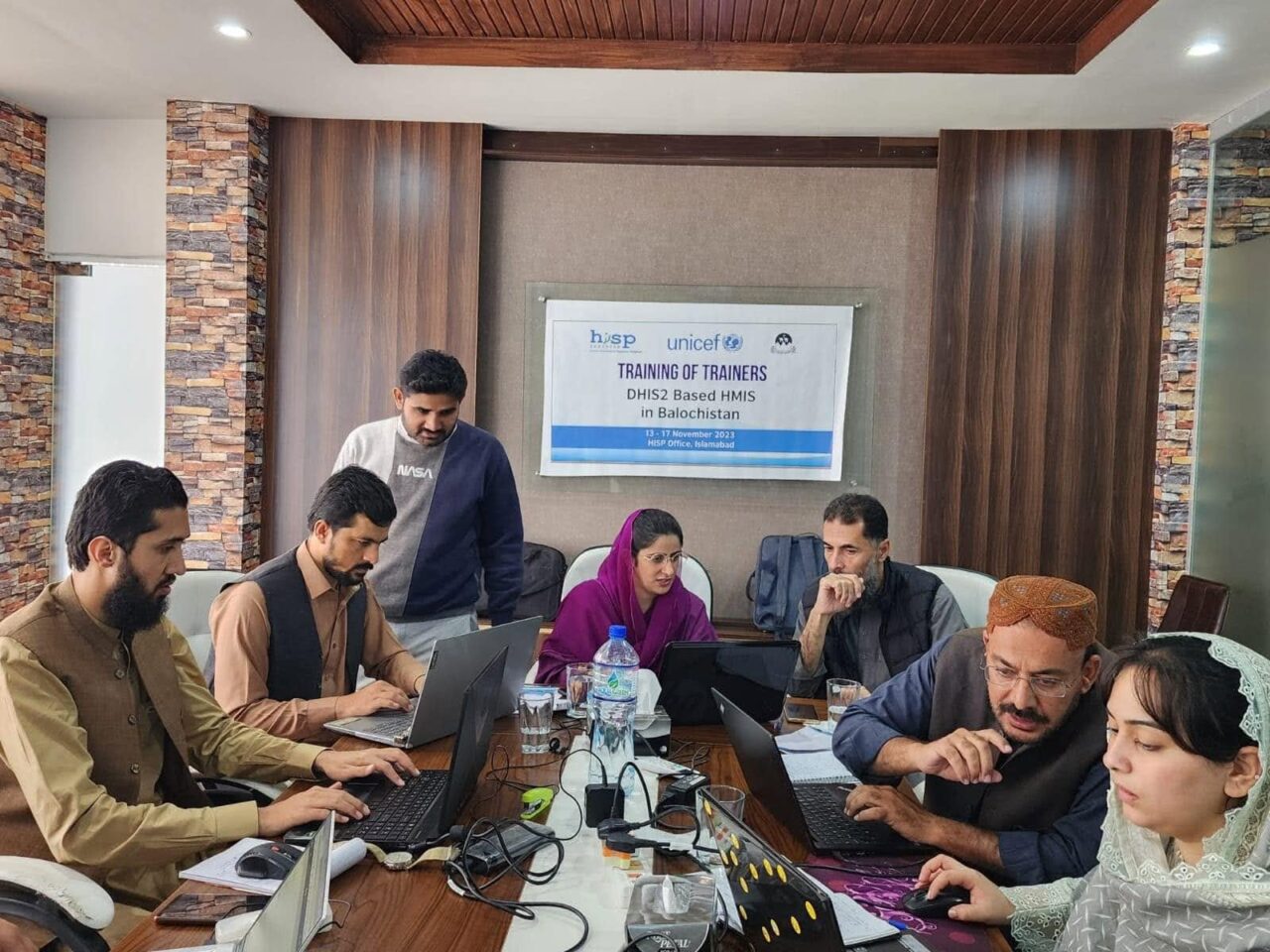
To address these challenges, Balochistan’s health authorities extended DHIS2 to every district in the province, connecting more than 1,650 primary and secondary health facilities and training 4,500 health workers to report daily rather than monthly. With technical support from HISP Pakistan, officials can now see maternal, newborn and child health data as it is recorded, and have used it to identify and correct service gaps at individual facilities.
A province-wide rollout built on health worker training, offline data capture and local adaptation
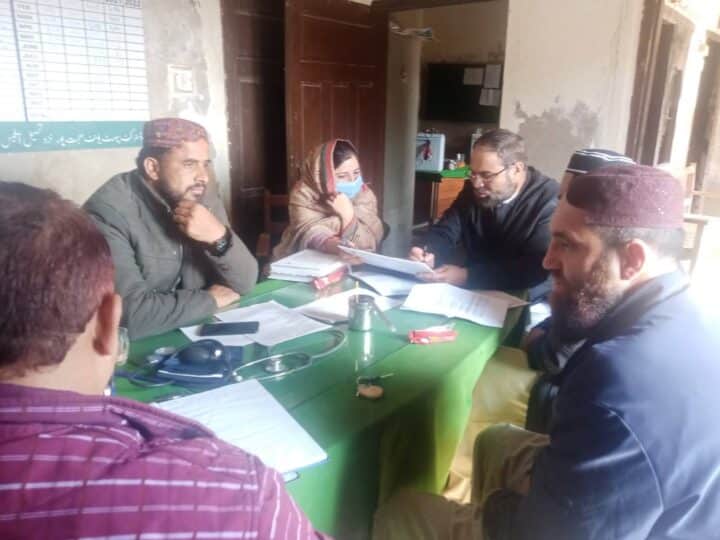
Balochistan’s health authorities began deploying DHIS2 in December 2023, and by 2025 the system covered all districts in the province, connecting more than 1,650 primary and secondary health facilities to a single digital platform. To support the transition, 4,500 health workers at district and provincial levels were trained across the province, enabling a shift from monthly to daily data entry.
Where internet connectivity is unavailable, a common challenge across Balochistan’s vast and mountainous terrain, the DHIS2 mobile app allows offline data capture, with automatic syncing once a connection is restored. HISP Pakistan worked with local health workers to adapt the platform to rural and underserved districts.
“The rollout of DHIS2 across Balochistan represents a significant step forward in digital health governance. Thanks to strong government leadership and close collaboration with partners, the province now benefits from real-time visibility of health service delivery. This enables faster decision-making, strengthens accountability, and ultimately delivers better health outcomes for children and families.” – Dr. Amir Akram, Unicef health specialist.
Faster detection of service gaps, supply shortages and potential outbreaks across all districts
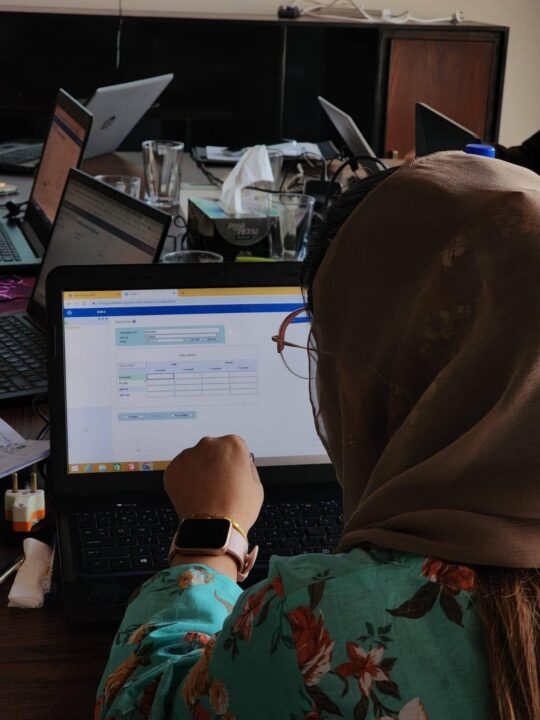
The impact of real-time data became clear quickly. When no births were recorded at a remote rural health facility for two weeks, the gap was flagged for investigation. Officials discovered the facility’s labor room was out of service due to faulty equipment, and corrective action was taken immediately. Under the previous system, the problem might have gone undetected for much longer.
Using a provincial health dashboard developed with HISP Pakistan, health authorities can now monitor trends across all districts simultaneously, directing medicines and resources where they are needed and detecting potential outbreaks earlier.
“Ultimately, digital transformation is about more than technology; it is about using better information to improve the health and well-being of communities, said HISP Pakistan CEO Adnan Bashir. “The province-wide DHIS2 deployment provides Balochistan with a foundation for more timely, transparent, and evidence-informed decision-making. We are proud to be part of this milestone and remain committed to supporting the province as it continues to strengthen its health system through digital innovation.”