
Jordan Digitizes Health Facility Water and Sanitation Assessments with DHIS2
The Ministry of Health, in collaboration with Unicef and HISP MENA, has moved the WASH-FIT facility assessment from paper onto its national DHIS2 platform, enabling faster identification of gaps, improved resource prioritization, lower operating costs, and better decision making.
For health facility teams in Jordan, checking whether a clinic had safe water, working sanitation and adequate waste handling meant filling in a paper form—and then waiting. Reports from remote facilities often arrived late, and officials at governorate and national levels had no easy way to see which facilities were struggling or where to send help first.
The form was WASH-FIT, the Water and Sanitation for Health Facility Improvement Tool, developed by the World Health Organization and Unicef. It gives facilities a structured way to measure themselves against standards covering water supply, sanitation and hygiene, health care waste, hand hygiene, energy and environmental conditions, cleaning, and staffing and management; to identify priority risks, act on them, and measure improvement over time. For countries in the region, gaps in these areas pose risks to patient safety, maternal and neonatal health, antimicrobial resistance and health system resilience.
To address this, Jordan’s Ministry of Health, working with Unicef Jordan and local implementation partner HISP MENA, moved the assessment onto the country’s national DHIS2 platform, giving facility staff, governorates and national officials a shared, up-to-date picture of conditions in health facilities and a structured way to track problems through to resolution.
From paper checklists to real-time data and tracked corrective actions
With the paper-based process, the inspections moved slowly. Facilities completed the forms by hand, and delays in reporting from remote sites meant that by the time results reached governorate and national decision-makers, they no longer described current conditions. Follow-up on identified issues was frequently fragmented, with no central record of what had been resolved. Additionally, since scoring and aggregation were done by hand, there was a higher risk of data entry and calculation errors, which would likely not be caught.
Digitizing the assessment with DHIS2, however, has changed both how the data is collected and what happens once it is submitted. In terms of collection, staff now work through the assessment on a phone or tablet, and because the system functions offline, they can do so even without reliable connectivity. Scoring is calculated automatically, and problems are color-coded so that those requiring the most urgent attention are immediately visible.
Perhaps the more consequential change is what happens once a problem has been identified. Each is converted into a task and assigned to a specific person at the facility, department or directorate level. The task includes information about what needs to be done, by which specific actor (such as a facility, department, or directorate), what the deadline is, and how completion will be verified.
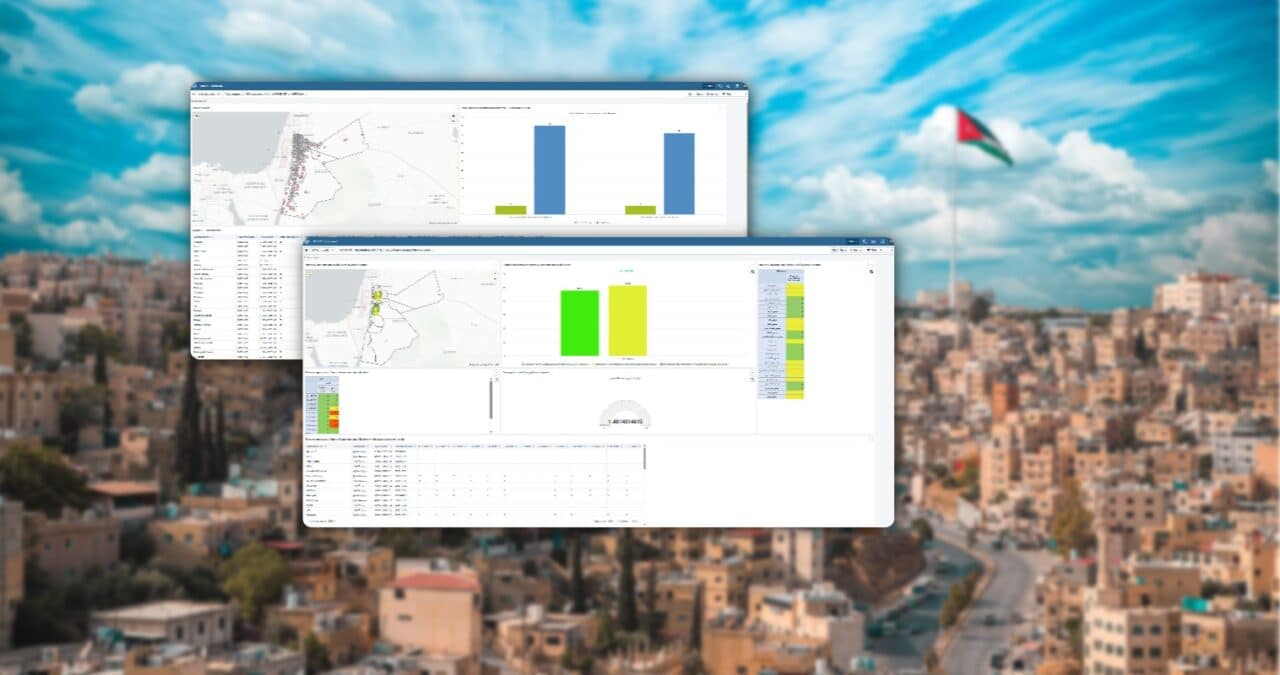
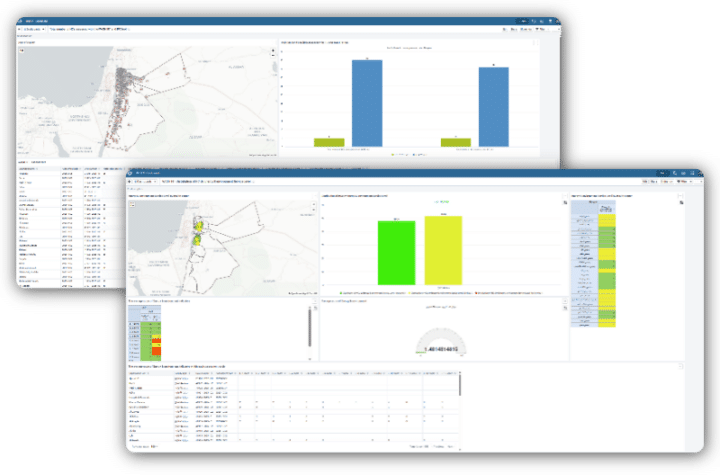
Interactive DHIS2 dashboards provide national and governorate-level performance views, domain-level scoring trends, an overview of high-priority unresolved risks, facility-level gap profiles, and closure rates of corrective actions. Directorates can see which tasks are running late in their areas, and which problems keep resurfacing, and national committees can now see the patterns that only emerge when facilities are viewed side by side.
The system also uses a dynamic reporting cycle, which supports monthly, quarterly, biannual or annual reporting, or even more frequent weekly or ad hoc reporting for emergency infection prevention and control monitoring, for example. Within each cycle, facilities close resolved actions and submit updates, governorates validate what comes in, and national dashboards consolidate the results to inform planning and policy.
Faster identification of gaps and clearer accountability in the first deployments
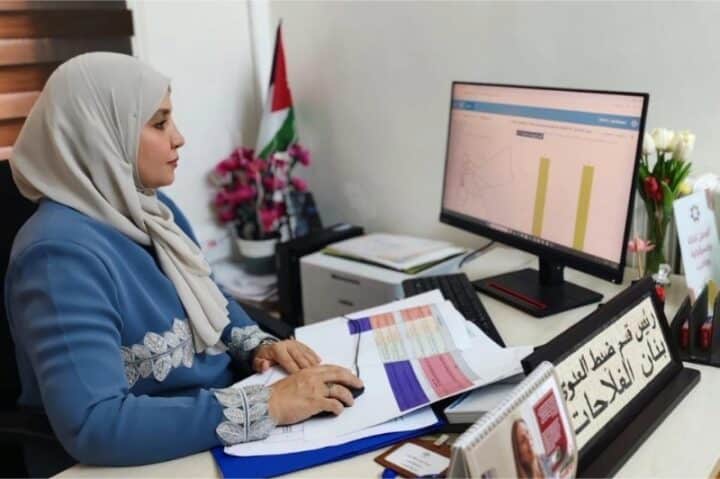
According to Unicef Jordan, the digitized tool is already showing improvements. Facilities are identifying systemic infrastructure gaps more quickly, which allows for faster and more targeted intervention, and infection prevention practices have become more consistent. Accountability has been strengthened, since it is now clear who is responsible for resolving each problem.
The time required to process data has also been significantly reduced, so information moves from the facility to the people who act on it without the delays the paper process introduced. Additionally, since every identified risk is tracked through to resolution, facilities are no longer working from a static checklist but from a prioritized set of recommendations.
This real-time visibility of WASH-FIT data at the governorate and national levels improves prioritization of resources and strengthens programmatic decision-making.
Building on national DHIS2 infrastructure keeps costs low and makes the model replicable
The digitized WASH-FIT system runs on the ministry’s own DHIS2 server, hosted on-premise within the ministry’s infrastructure, so the data remains under national ownership and within Jordan’s health data protection regulations. Since Jordan already had a DHIS2 system in place, along with staff trained to use it, digitizing WASH-FIT did not require a separate system to be built and maintained, which keeps long-term running costs down. The ministry can adapt the system itself as its needs change using local DHIS2 capacity, and the platform can exchange data with other government systems, such as by keeping facility registries and user accounts synchronized, in alignment with the national digital health strategy.
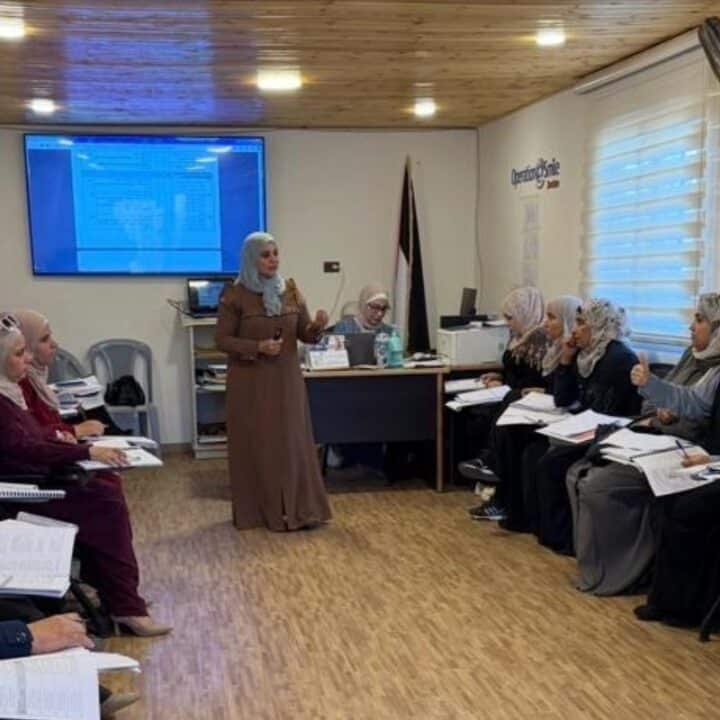
Ultimately, this setup is built to be shared and reused. It can be adapted to a country’s own governance structure, language, infection control priorities and facility types, and where DHIS2 is already in place, little customization is needed. Unicef Jordan stands ready to help countries that want to adopt the model, through demonstrations, documentation, ready-made configuration packages and hands-on guidance, and has raised the possibility of countries in the region agreeing on shared indicators, which would let them compare results with one another.