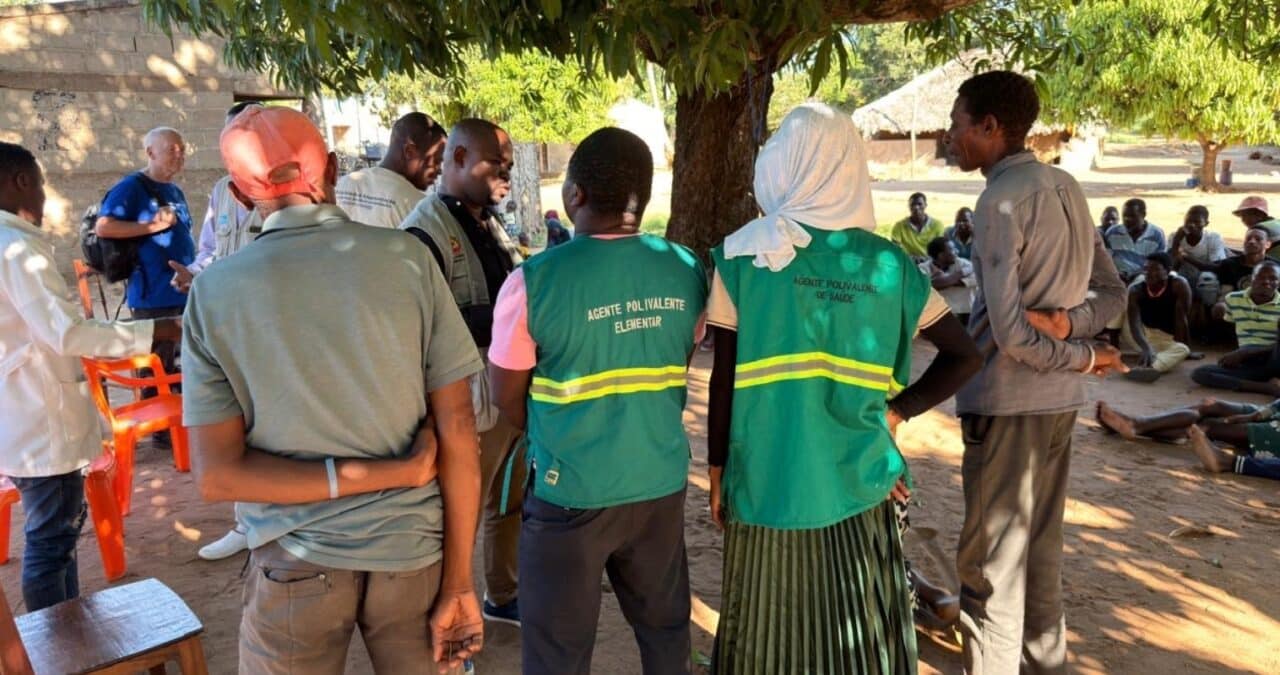
Community health workers are often the first points of contact that people have with the broader health system. They register households, screen and treat common illnesses, follow up on pregnancies and immunizations, and refer clients to medical facilities when needed. A community health information system (CHIS) exists to support that work, helping community health workers record what they do, track individual clients over time, know who is due for a visit, and trigger action when someone needs it.
Data generated in communities has traditionally stayed disconnected from national health management information systems, or flowed in one direction only—upward, in aggregate, with little coming back. That leaves decision-makers without a full picture of a country’s health, and leaves community health workers filling in forms whose results they never see.
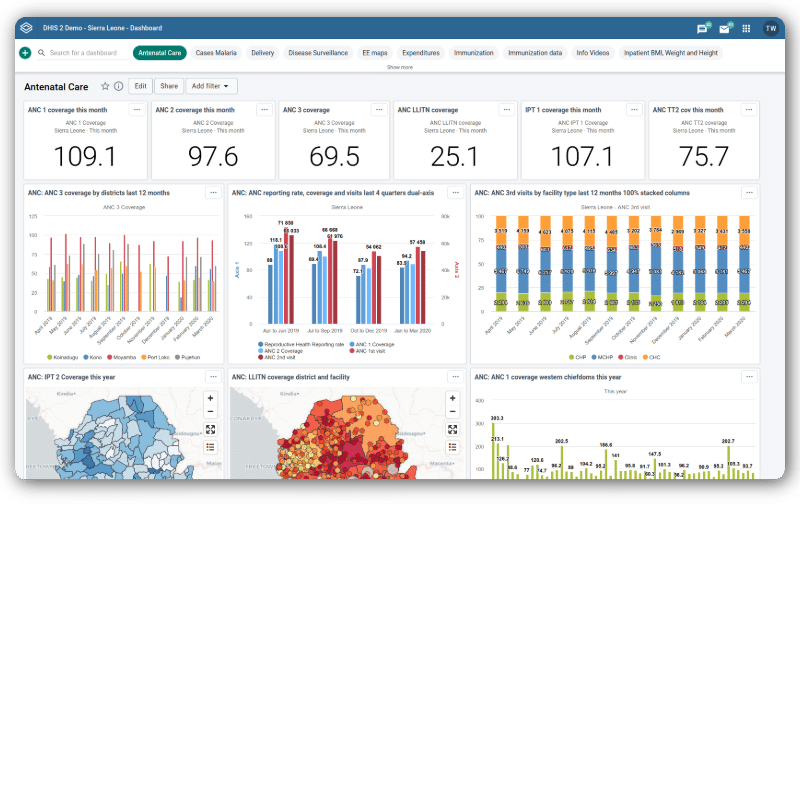
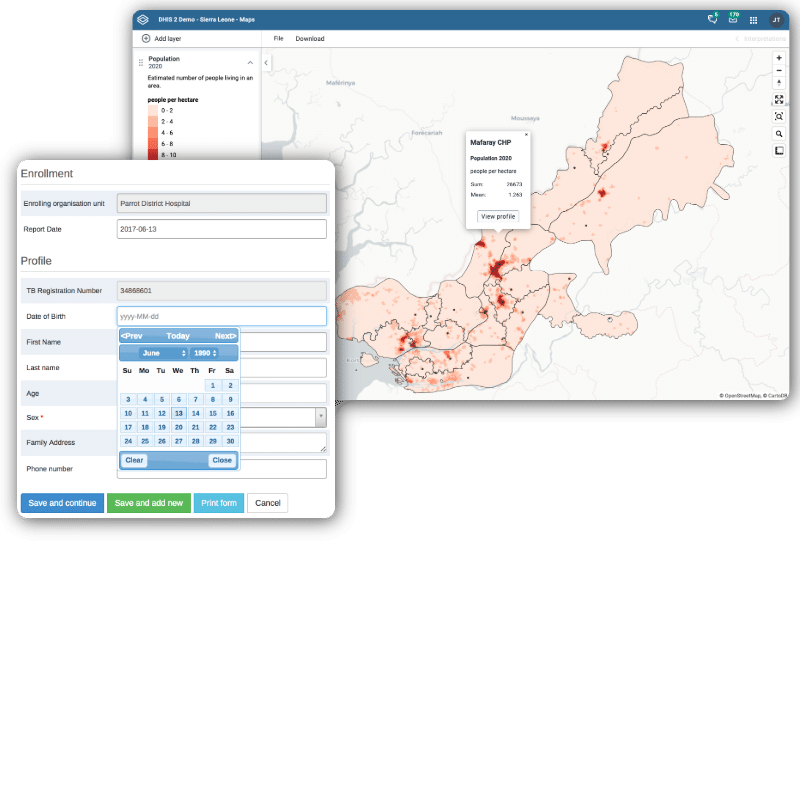
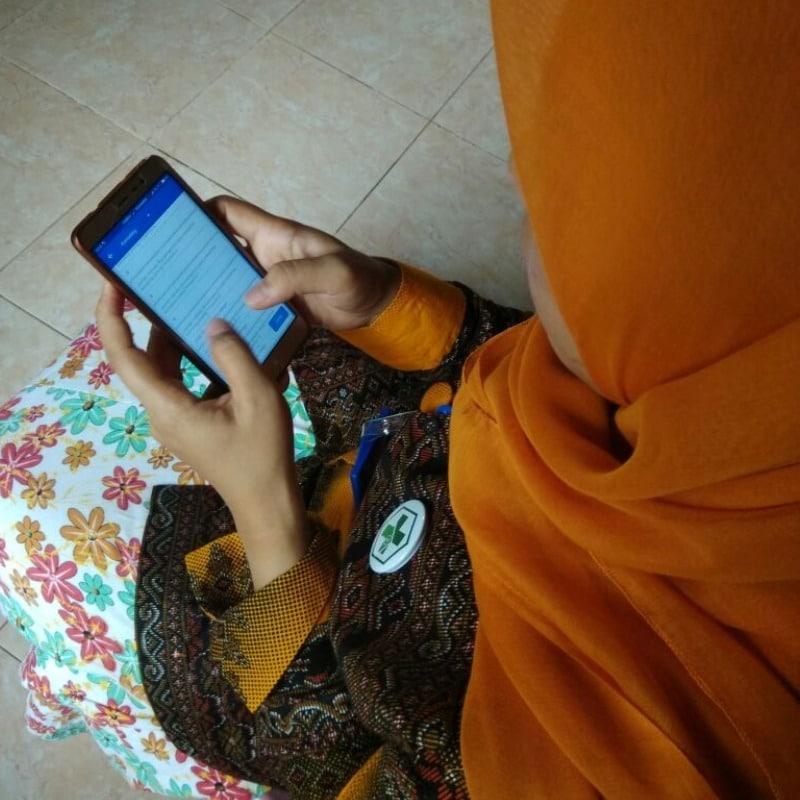
DHIS2 addresses both needs, as community health workers capture data on the same platform used for facility reporting, using the DHIS2 Android app for mobile data collection online or offline, or reporting basic data by SMS where smartphones aren’t available. Because it is one system rather than two, there is no parallel set of registers to maintain, no duplicate reporting, and no separate database to reconcile later. Their work becomes visible in national planning, budgeting and program management alongside facility data—and community health workers and their supervisors can see their own coverage and performance, not just submit numbers. This approach responds directly to a 2019 World Health Assembly resolution that called for aligning data and digital efforts around community health worker programs and building a stronger evidence base for their impact.