

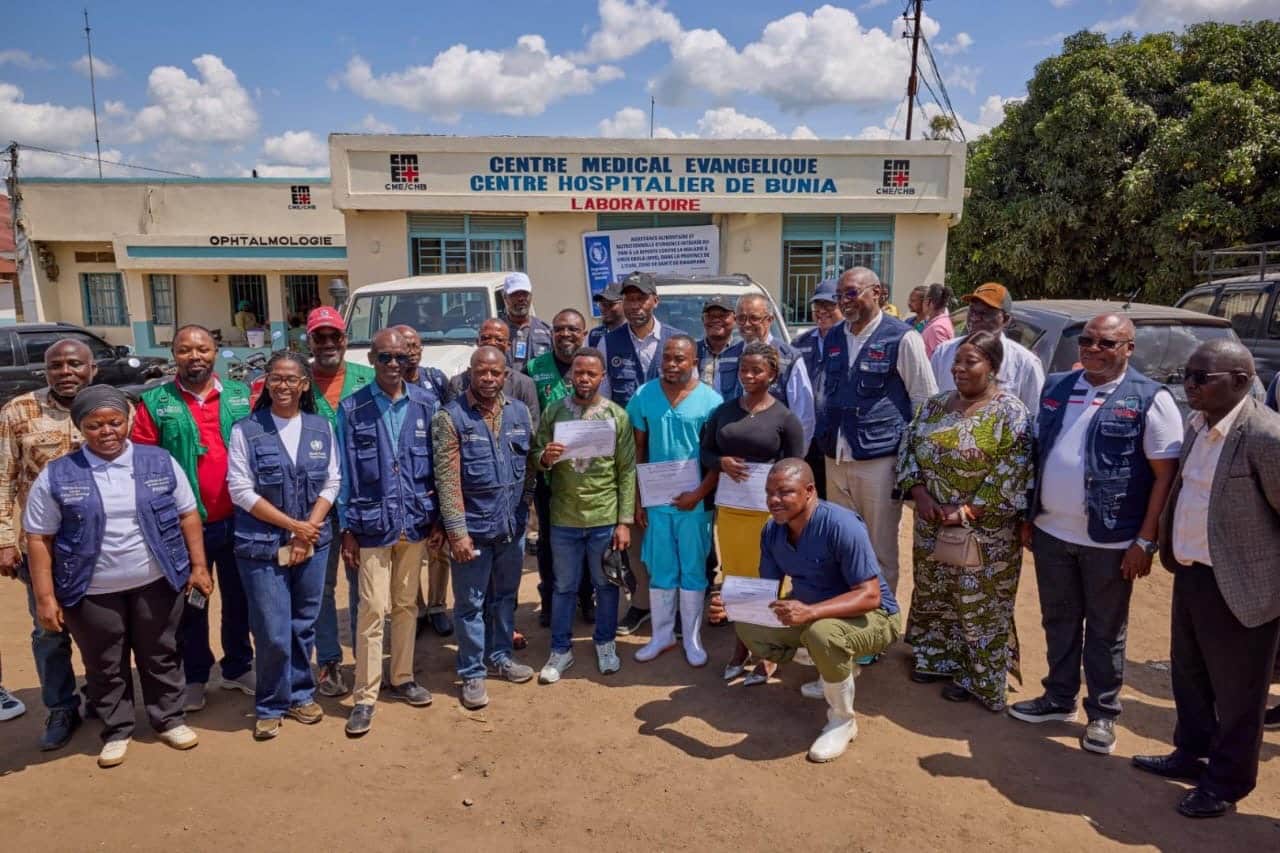
HISP & DHIS2 Support Ebola Outbreak Response
The HISP network is helping the DRC and Uganda respond to the ongoing Ebola outbreak, while HISP UiO collaborates with Africa CDC to strengthen digital disease surveillance systems through a standardized DHIS2 toolkit.
Ebola remains one of the most severe public health threats in sub-Saharan Africa, with outbreaks continuing to test the capacity of national health systems to detect, report, and respond rapidly. The current Ebola outbreak, which began in a remote region of the Democratic Republic of Congo (DRC), has put the world on high alert due to the speed and scale of its spread, and has been categorized by the World Health Organization (WHO) as a public health emergency of international concern.
In the DRC and Uganda, health authorities are leveraging DHIS2—already in use for disease surveillance across 55 countries—with the support of local HISP groups to strengthen Ebola surveillance and activate outbreak response. At the same time, local HISP groups in Africa and the HISP Centre at the University of Oslo (HISP UiO) are working with the Africa Centers for Disease Control and Prevention (Africa CDC) and other partners to strengthen disease surveillance across the continent.
Local HISP groups support Ebola response in the DRC and Uganda with DHIS2
In countries where DHIS2 is already deployed for disease surveillance, local groups from the HISP network are working with ministries of health to ensure Ebola is integrated into existing digital systems, enabling faster detection and more coordinated response.
The Ebola outbreak was officially declared in the DRC on 15 May 2026, primarily affecting Ituri Province. Thanks to years of collaboration between the Ministry of Health, HISP DRC, HISP UiO, Africa CDC, and other technical partners, the country has developed strong capacity to use DHIS2 for disease surveillance and public health emergency response. This includes using DHIS2 to help respond to outbreaks of Ebola in 2025 and mpox in 2024, as well as to strengthen the country’s animal health surveillance system to support detection of zoonotic diseases.
Immediately following the outbreak declaration, HISP DRC, with support from RTI International and the Public Health Emergency Operations Center (COUSP), rapidly adapted the DHIS2 Tracker configuration previously used during the country’s 16th Ebola outbreak. The system was updated and made operational within 24 hours to support alert notification, case investigation, laboratory result management, and contact tracing.
On the same day, a technical briefing was conducted for provincial response teams to ensure consistent use of the system. Through this rapid deployment, DHIS2 continues to strengthen real-time data collection, analysis, and use, supporting faster decision-making and a more effective Ebola response in the DRC.
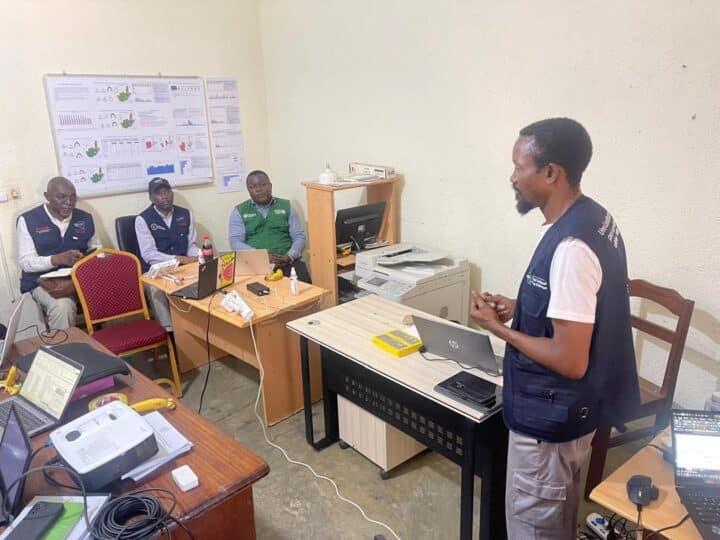
In Uganda, where DHIS2 has previously been used to support Ebola outbreak response, DHIS2 continues to play a central role in routine case based surveillance. Reports of suspected cases and other signals from communities and health facilities are collected in DHIS2, and district surveillance focal people and district health teams are notified to take action to respond in real time. Once signals are verified, they are referred for further investigation, including sample collection and lab testing. Results are entered in DHIS2 and analyzed for next steps. This system supports timely response to health signals, and helps Uganda safeguard public health.
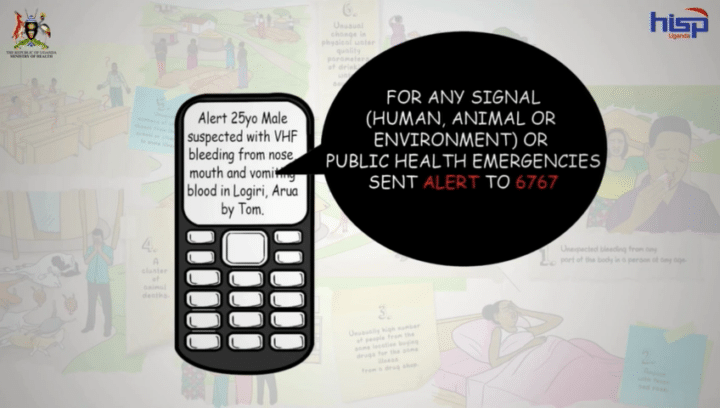
During the current Ebola outbreak that has spread from DRC into Uganda, HISP Uganda continues to support the Ministry of Health with a system for signal collection and management that allows community health workers and the public to submit reports of suspected infection or possible warning signs via toll-free SMS. These submissions generate an alert in DHIS2 which is then verified and investigated by district health teams. To help raise awareness and promote use of this system, HISP Uganda has also produced informational videos that explain what kinds of Ebola systems to look out for and how to report them.
HISP Uganda also supports the MoH’s mortality surveillance, which captures cause of death data, including Ebola, and daily reporting from screening at all land ports of entry in Uganda, building on a system that was first developed and deployed by HISP Uganda during the Covid pandemic. Data from these systems is registered in DHIS2, supporting the overall national surveillance effort.
New resources: Joint Africa CDC Surveillance & Outbreak Response toolkit
The DHIS2 team is collaborating with Africa CDC to update shared DHIS2 resources for unified surveillance and outbreak response data systems in countries. The toolkit includes Ebola as a reference disease and is aligned with WHO’s digital adaptation kit (DAK) for infectious disease surveillance and the WHO’s Ebola Virus Outbreak toolbox. The toolkit enables health authorities to rapidly deploy standardized data collection and monitoring tools when outbreaks occur, aligned with established surveillance best practices.
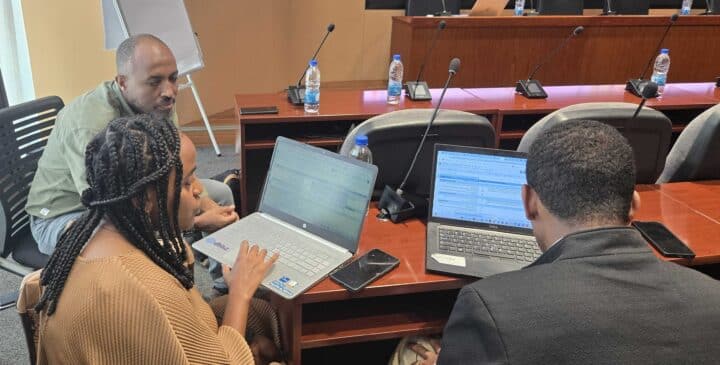
The toolkit provides resources for countries to upgrade their DHIS2 implementations to support all types of infectious disease surveillance in routine and outbreak modes, bringing these data together in a unified database. The toolkit uses mpox, cholera and Ebola as reference diseases and supports a unified data flow for case notification, case investigation and contact tracing. An overview of the toolkit can be found here, while a walkthrough of features is available here. Resources for implementing this toolkit are available on the DHIS2 Community of Practice.
This work is part of an ongoing collaboration between HISP UiO, HISP groups in Africa, and Africa CDC under a memorandum of understanding between Africa CDC and the Kingdom of Norway on strengthening public health in Africa. The DHIS2 surveillance and outbreak response portfolio is provided through core support from Norad and CDC, which has enabled our response to this outbreak.
In early June 2026, HISP UiO and Africa CDC hosted a webinar on this DHIS2 toolkit. Watch a recording on the DHIS2 YouTube channel.