
Nigeria’s Education Minister Details Nationwide Data System Reaching More Than 200,000 Schools
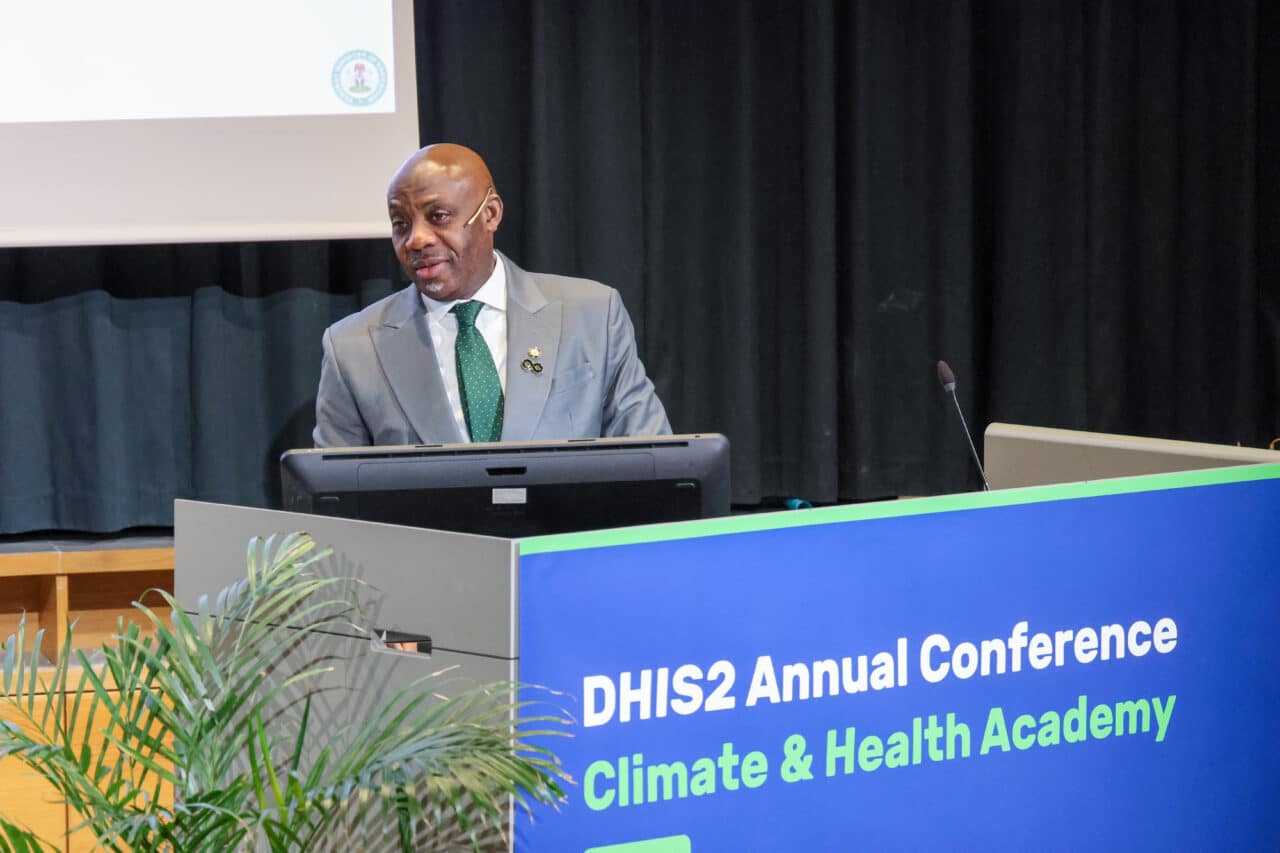
Speaking at the 2026 DHIS2 Annual Conference in Oslo, Dr. Tunji Alausa described how the Digital Nigeria Education Management Information System replaced a fragmented, paper-based process that once took nearly two years to produce usable data.
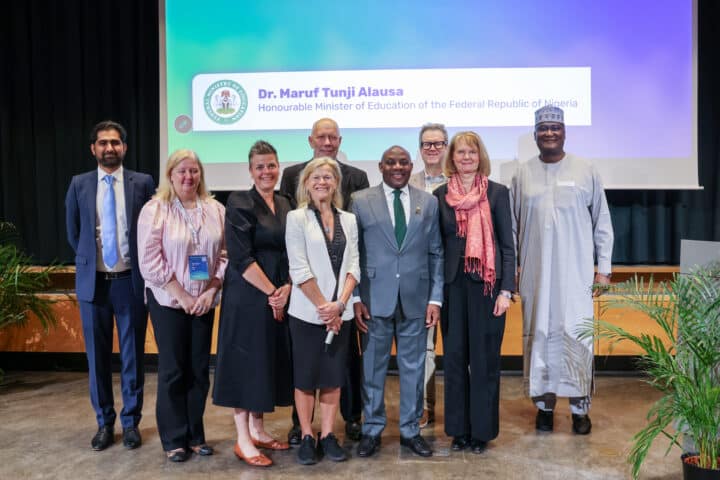
Nigeria’s minister of education, Dr. Maruf Tunji Alausa, described his country’s national rollout of a DHIS2-based education data system during a plenary address at the 2026 DHIS2 Annual Conference in Oslo on June 16.
With an estimated population of more than 240 million people, Nigeria is the most populous country in Africa. Its national education system is also one of Africa’s largest and most complex, with more than 200,000 schools across 36 states. Managing such a large-scale system effectively requires data—something that has been a challenge for Nigeria’s Ministry of Education for years, due to fragmented systems and manual processes.
“The challenge was never a lack of data. But we had data that was fragmented, delayed, difficult to validate, and rarely available in time to support policy decisions, thereby resulting in major accountability gaps.” – Dr. Maruf Tunji Alausa, Nigeria’s Minister of Education
The Minister offered the annual school census as one example. Previously, this data was collected manually from every school using a 16-page paper form. The process took almost two full years from data collection to analysis, meaning the resulting report was already outdated by the time it was finished. Its static format also made granular analysis difficult, limiting its usefulness for decision-making.
Nigeria’s solution to this challenge is the Digital Nigeria Education Management Information System (DNEMIS), based on DHIS2.
“(DNEMIS) is more than a software platform. It is a transformative change for us in the Nigerian education system. It is a national reform instrument for strengthening education governance.” – Dr. Tunji Alausa
Digitization for visibility, accountability, and better education outcomes
Nigeria’s data gaps have made it even more difficult to respond to several persistent systematic challenges. For example, Dr. Tunji Alausa observed that Nigeria is in the “unenviable position” of having an exceptionally high number of out-of-school children, which he estimated to be between 15 million and 17 million in total.
“When you talk about data, a guiding vision is about visibility, which is the beginning of accountability,” he said. “Our reform rests on a simple but profound goal. When data is properly governed and responsibly used, it becomes one of the most powerful instruments for transforming public service delivery.”
Tunji Alausa presented a four-point formula framing how visibility can serve as the beginning of accountability in Nigeria’s education system:
- Every school should be visible
- Every learner should be counted
- Every teacher should be known
- Every intervention should be tracked
Now, thanks to this unified platform, education stakeholders have access to near real-time data on schools, students, and staff to support evidence-based governance and planning.
Dr. Tunji Alausa pointed to several features that made DHIS2 well suited for DNEMIS, including its flexibility for local customization and its offline data collection capabilities, which he said are valuable in a country where many schools lack internet access. He said DHIS2’s ability to provide a shared data structure was also important, as it provides a “shared language” between local, state, and federal levels, empowering state governments with ownership over school data collection and making it easy for them to report to the federal ministry—unlike with the fragmented systems of the past.
“With DNEMIS… we’ve now democratized our education data.” – Dr. Tunji Alausa
The minister thanked the Unicef Nigeria team, the HISP Centre at the University of Oslo, HISP Nigeria, and the HISP network for their support and collaboration on making this system a success.
Learn more about DHIS2 for Education.