Go to the main page

Uganda: DHIS2 Climate & Health Country Profile

Uganda is exploring integration of climate data and predictive modeling capabilities into existing DHIS2 systems to support national climate and health priorities, with an initial focus on malaria climatic suitability mapping, forecasting acute malnutrition, and analyzing health effects of air pollution.

Jump to a section on this page

    DHIS2 for Climate & Health in Uganda

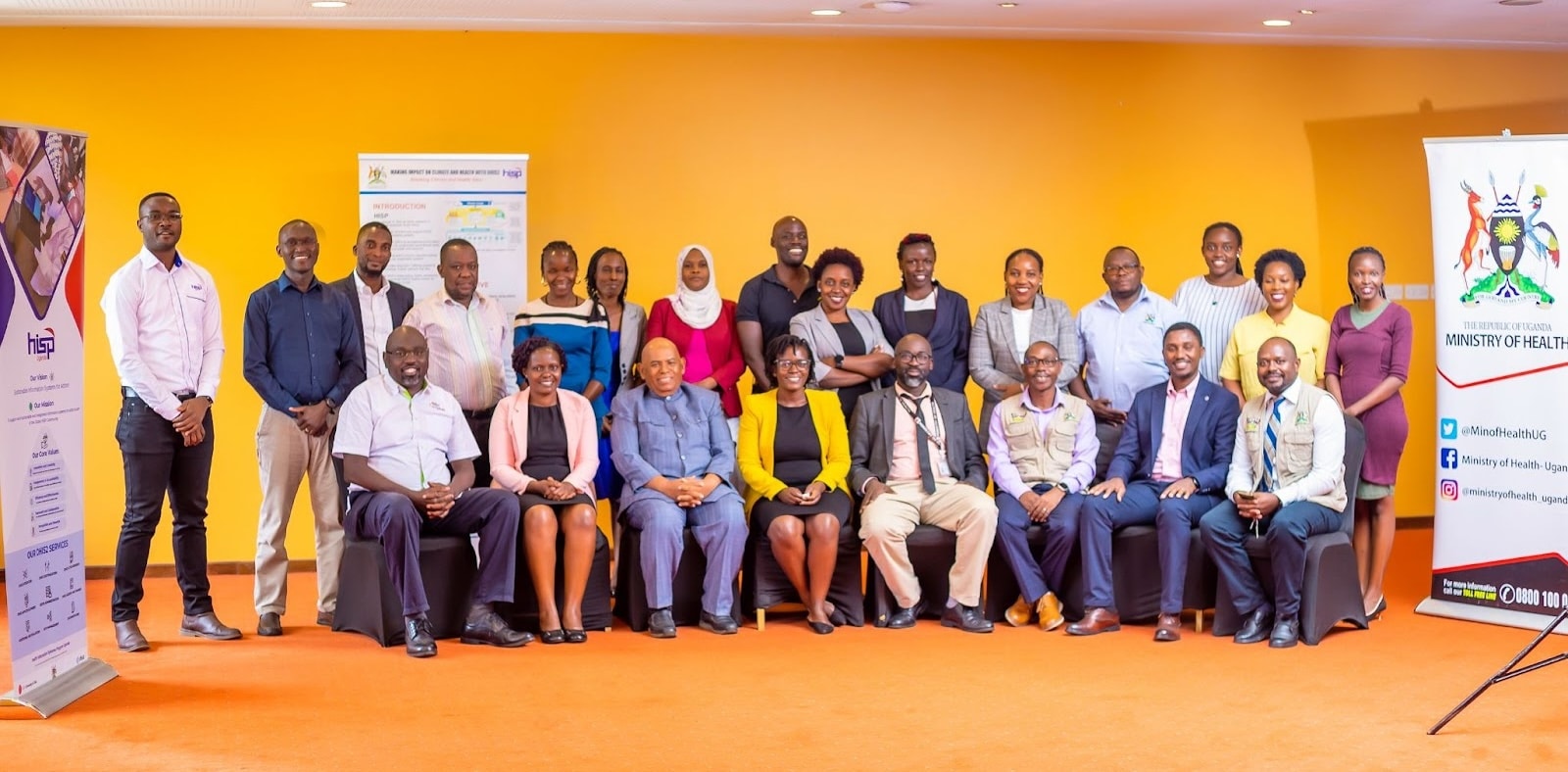
    Uganda was one of the 10 countries involved in the first phase of the DHIS2 Climate & Health project project from 2024-2026. HISP Uganda has worked with the Ministry of Health and Department of Meteorological Services (DMS) to facilitate integration of climate data into national health information systems and collaborated with stakeholders on malaria, nutrition, and air quality use cases, including development and testing of predictive models with local and international research partners.

    Updated: July 2026

    Priority climate & health use cases

    Uganda’s Ministry of Health has identified several initial focus areas for piloting DHIS2 climate & health systems:

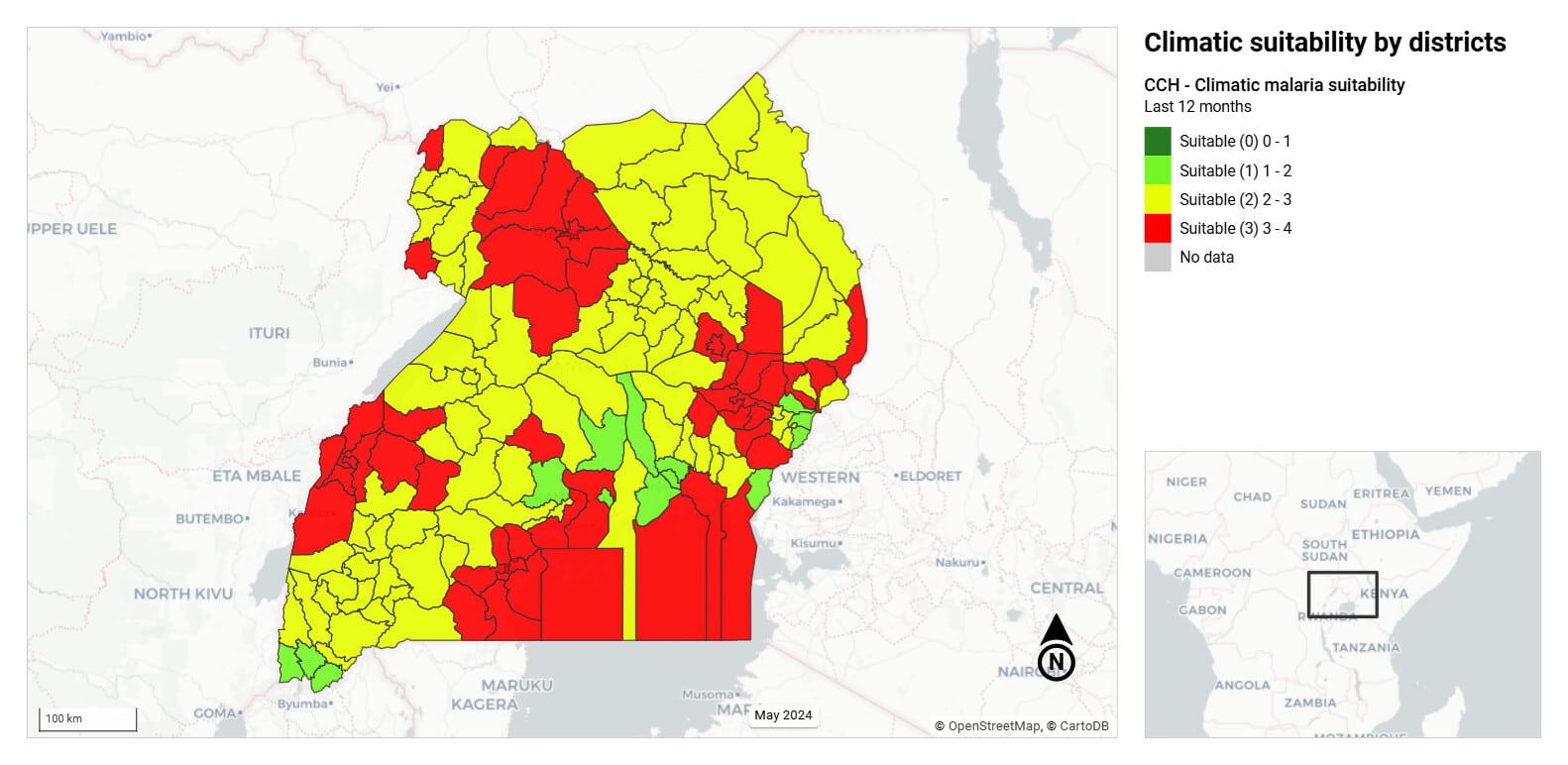
    • Malaria climatic suitability (in production) using weather and malaria case data for mapping and analysis at the district level to identify suitable hotspots and target intervention planning.
    • Malaria forecasting (pilot) using weather and malaria case data for forecasting at the district level to inform early warning and targeted intervention planning
    • Forecasting acute malnutrition (prototype developed) to produce district-level risk mapping for intervention planning and support analysis of key drivers.
    • Air pollution and NCDs (piloting) to analyze whether rising air pollution is worsening the burden of non-communicable diseases.

    Information system infrastructure

    DHIS2 Climate & Health work in Uganda builds off existing DHIS2 infrastructure and capacity and incorporates innovative DHIS2 tools for climate data integration, analysis, and predictive modeling.

    Health information systems & capacity

    In Uganda, DHIS2 has been used by the Ministry of Health since 2013 as the country’s Health Management Information System (HMIS), their main data collection and aggregation tool and national repository for health data. The HMIS now holds almost 15 years of data on key public health programs. Uganda also uses DHIS2 for infectious disease surveillance, mortality data, nutrition programs, and for monitoring prioritized non-communicable diseases. HISP Uganda has supported local capacity building on these systems.

    Through the DHIS2 Climate & Health project, HISP Uganda has worked on information outputs to support Uganda’s priority use cases, and is working to build capacity on use of climate-health tools and outputs.

    • Malaria suitability risk mapping leveraging the research-based approach implemented in the ENACTS MapRoom, implemented in the national HMIS system. This output is also available in the global DHIS2 Climate & Health demo database and has been adapted by other countries for their local systems.
    • Malnutrition risk mapping using predictive models that incorporate population, malnutrition, disease and seasonality data to generate district-level risk maps and time-series visualizations in DHIS2 to inform planning and prioritization.

    Climate data integration

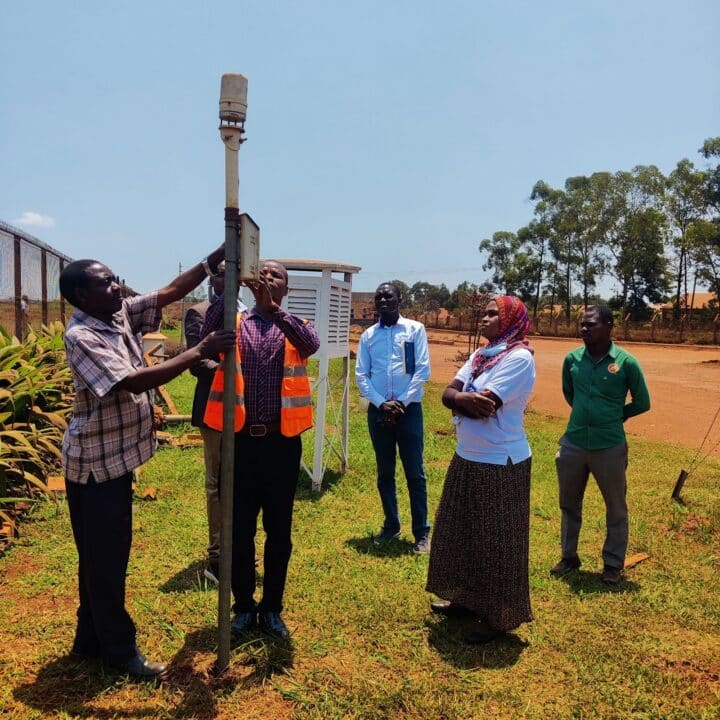
    The DHIS2 Climate App has been installed in Uganda’s national HMIS and malaria repository systems with 10 years of imported data from global datasets such as ERA-5 and NASA earth observation data. These climate data sets have also been included in the malaria scorecard for Uganda produced by the African Leaders Malaria Alliance (ALMA). These global datasets have been validated through comparison with locally sampled climate data, ensuring contextual relevance and accuracy.

    A collaborative framework and data sharing agreement between the Department of Meteorological Services (DMS) and the MoH has been approved, and technical meetings are ongoing to facilitate implementation, including the use of the ENACTS integration tool to enable import of data from Uganda’s national ENACTS MapRoom into DHIS2.

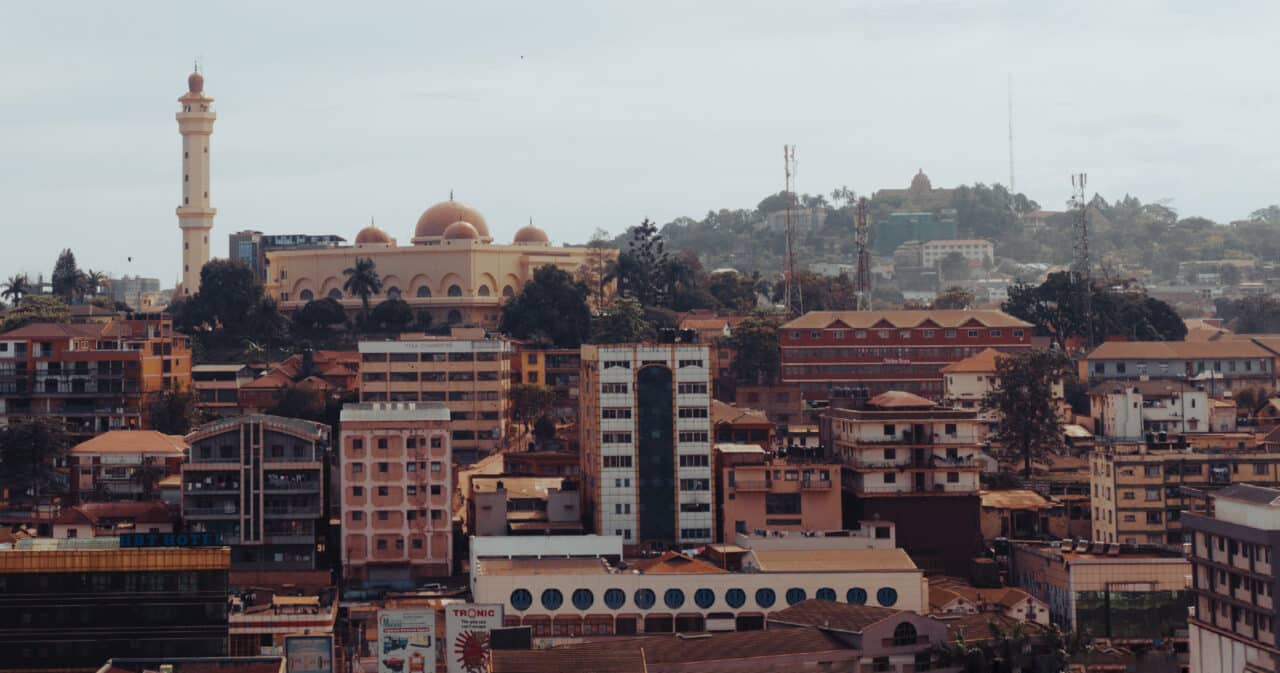
    Additionally, real-time air quality data (PM10 and PM2.5) from Makerere University’s AirQo Project has been integrated into DHIS2. This collaboration on air quality has enabled integration of data from over 70 fixed air quality monitors across Kampala, Uganda’s capital. HISP Uganda is in the process of collaborating with CICERO on bias correction of this air quality data to develop a nation-wide gridded product.

    Predictive modeling

    The Chap Modeling Platform and DHIS2 Modeling App have been installed on Uganda’s HMIS DHIS2 testing instance, where it has been tested with climate data and approved by MoH leadership. It has also been installed on the malaria repository to enable modeling and testing with malaria intervention data.

    HISP Uganda is collaborating with several local and international modeling partners to support development and testing of models for various climate-sensitive health threats in the Ugandan context. These include the University of Glasgow DIDIDI project for modeling of schistosomiasis, the Makerere University RIF project for developing DHIS2-integrated predictive models for maternal and child health, the Malaria Consortium FORECAST project for modeling vector borne diseases.

    Policies, partnerships & governance

    Uganda has a well-developed policy landscape for climate and health, grounded in national priorities and supported by a network of partners.

    National policy

    Uganda’s climate and health work is anchored within the national climate change policy and implemented through the country’s Health National Adaptation Plan (H-NAP) 2025-2030. The H-HAP indicates that local meteorological data generated by UNMA should be integrated with health data in the national DHIS2 platform to support risk monitoring and help drive early warning and early action. DHIS2 is also listed as a key data source for climate-health analysis for several focus areas in the H-NAP, based on routine reporting from the facility level.

    Governance & coordination

    Currently, climate change and health activities are coordinated by a designated focal person within the Department of Environmental Health. With the approval of the H-NAP, plans are underway to establish a fully staffed coordination office/secretariat within the department dedicated to overseeing the implementation of climate and health initiatives. HISP Uganda coordinates with this department and other local stakeholders on DHIS2 Climate & Health work, and participates in the national climate change and health sub-committee, leading the component on climate service integration in the H-NAP implementation, including early warning system development.

    Partner & funding landscape

    At the national level, the Ministry of Health, the Ministry of Water and Environment, and the Ministry of Finance are working collaboratively to ensure that the government allocates funding to support the implementation of the H-NAP.

    While Uganda is one of few countries that has demonstrated commitment of domestic resourcing to climate and health, funding from international partners is also essential to support these initiatives. Recent enhancements to DHIS2 systems and development of local innovations have received financial support through the DHIS2 Climate & Health project, funded by the Wellcome Trust. Through the Clinton Health Access Initiative (CHAI) and Makerere School of Public Health, funding from the Rockefeller Foundation has been secured by the Ministry of Health to support capacity building for climate and health research. The FORECAST project, led by the Malaria Consortium and funded by the National Institute for Health and Care Research (2025–2029), aims to strengthen Uganda’s resilience to mosquito-borne diseases; malaria, Rift Valley fever, and yellow fever through predictive models, risk mapping, and enhanced outbreak preparedness. The Global Fund has also provided support for the DHIS2 malaria repository, including the integration of climate data and connection to predictive models using Chap.

    Action research

    Through a PhD program co-hosted by HISP Uganda as part of the DHIS2 Climate & Health project, two doctoral research projects are being conducted alongside the implementation activities. The first examines “Socio-technical factors shaping climate-service integration into Uganda’s health system,” while the second focuses on “Assessing the effects of climate and air-quality variability on non-communicable diseases: A DHIS2-based modelling and visualisation approach.”

    The research has received approval from the Uganda National Council for Science and Technology (UNCST) and has so far produced two publications: “Legitimacy-Building to Establish Climate Services in Uganda’s Health System: The Role of a Digital Health Platform,” published in SSM – Social Sciences & Medicine, and “Establishing Climate Services in Uganda’s Health System: Aligning Actors through the DHIS2 Platform,” published in the proceedings of the IFIP WG 9.4 International Conference.

    News & updates

    Learn more about DHIS2 Climate & Health work in Uganda:

    Conference Presentation: Forecasting Malnutrition with DHIS2 and Chap in Uganda

    During a session at the 2026 DHIS2 Annual Conference, HISP Uganda presented on their work on climate-informed malnutrition early warning in Uganda.

    Watch Recording

    Project Report: Using DHIS2 to Link Climate, Air Quality, and Health Outcomes in Uganda

    HISP Uganda shared a summary of their work on air quality and health in Uganda on the DHIS2 Community of Practice.

    Read More

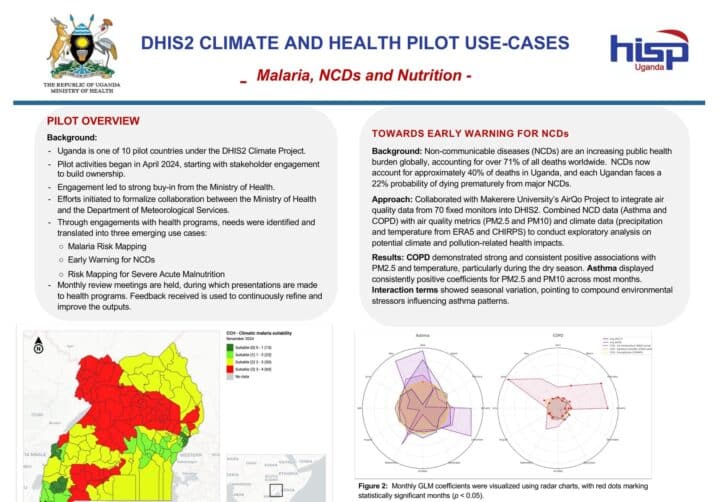
    Poster: DHIS2 Climate & Health Pilot Use Cases: Malaria, NCDs and Nutrition

    HISP Uganda presented a poster in June 2025 summarizing the work in Uganda on three climate and health use cases.

    Learn More

    Additional resources

    Contact

    Are you working on climate and health in Uganda? We would love to hear from you. Contact the global DHIS2 Climate & Health project team at climate@dhis2.org, or connect with HISP Uganda at: info@hispuganda.org