
HISP Highlights July 2026
The July 2026 HISP Highlights post features the latest news, achievements, and updates from across our global HISP network.
July brought a landmark moment for the HISP network: the official launch of Nigeria’s DHIS2-based national education management information system, DNEMIS, now the world’s largest DHIS2 implementation.
The month was marked by a strong focus on interoperability and surveillance, from a One Health integration testing session in Zanzibar and an interoperability workshop in Karachi, to a surveillance system integration workshop in Kampala and continued eIDSR mentorship in Uganda’s Yumbe District. HISP WCA led a busy month across West and Central Africa, supporting data quality, climate-health, and emergency response tools in Cameroon, Mali, and Togo, while HISP Rwanda hosted a regional analytics academy in Kigali and welcomed a learning delegation from Chad.
Scroll for updates in Training, Implementation and Events.
Events
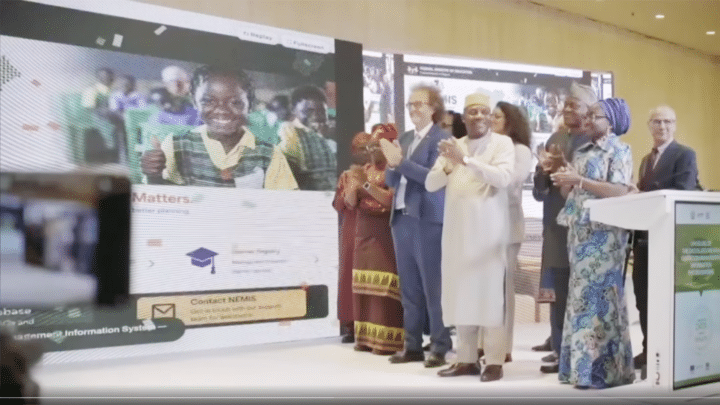
DNEMIS Official Launch in Nigeria
Nigeria’s Ministry of Education officially launched its new DHIS2-based national education management information system, DNEMIS, at an event in Abuja. The Minister of Education spoke about the system’s role in data-driven resource allocation and decision-making, and thanked the HISP Centre, UNICEF Nigeria, the European Union, and other partners for their collaboration. HISP Centre Deputy Director Ola Hodne Titlestad, who attended the event with DHIS2 for Education colleagues, noted that DNEMIS is now the world’s largest DHIS2 implementation and reaffirmed a long-term commitment to strengthening the system alongside HISP Nigeria, the Federal Ministry of Education, and UNICEF. More
Chad Delegation Visits HISP Rwanda
HISP Rwanda welcomed a delegation from Chad’s Ministry of Public Health and Prevention and Institute of Public Health to its Kigali offices, on a learning mission focused on innovative approaches to public health and digital transformation. The delegation toured HISP Rwanda’s technical departments and discussed ongoing collaboration in Chad, where HISP supports the Ministry of Health’s digital transformation through DHIS2-based solutions, as well as opportunities to accelerate future projects and strengthen health systems in Chad. More
Implementation
Validation Workshop in Ethiopia
On July 4, HISP Ethiopia convened an iHRIS–DHIS2 integration validation workshop, bringing together technical experts and stakeholders from the Federal Ministry of Health Ethiopia to review progress on integrating the two systems, building on a recent interoperability readiness assessment. The meeting featured a demonstration of the interoperability solution and discussions on data synchronization, data quality, governance, and implementation priorities to enable health workforce data exchange with DHIS2. More
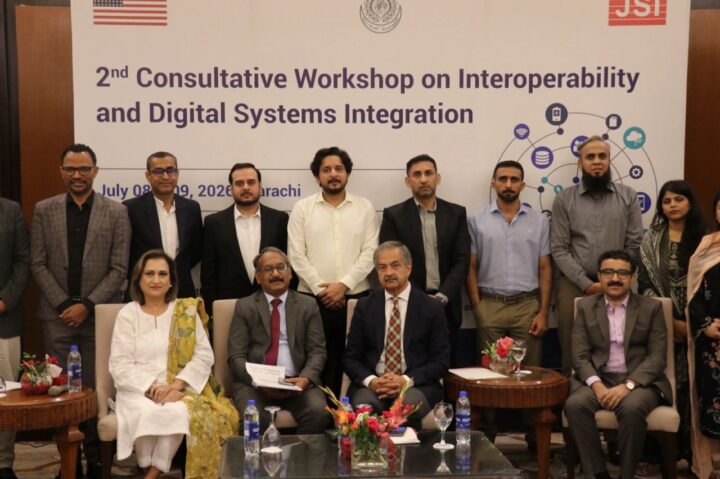
One Health Interoperability Workshop in Karachi
HISP Pakistan facilitated a two-day workshop on interoperability and digital system integration for One Health in Karachi, with support from JSI. The workshop brought together key stakeholders to discuss interoperability frameworks and digital integration strategies for a connected One Health ecosystem in Pakistan. More
Field Supervision for eRDQA Deployment in Togo
HISP WCA supported Togo’s National Health Information System and Informatics Directorate in conducting a field supervision mission across Togo’s Savanes, Kara, and Centrale regions, as part of the eRDQA app integration with the national DHIS2 platform. The team supported Android app users, gathered feedback, and tested the tool under real conditions at health facilities including the Regional Hospital Centers of Sokodé and Dapaong, and the health centers of Kadambara, Ataloté, and Kpessidè. The results will help optimize the app, strengthen user capacity, and consolidate institutional collaboration for better health data quality in Togo. More
One Health System User Acceptance Testing in Zanzibar
HISP Tanzania joined partners in Zanzibar for a user acceptance testing session on integrating the One Health System with the electronic Integrated Disease Surveillance and Response (eIDSR) system and the Zanzibar Animal Health System (ZAHS). Experts from Amref Health Africa, the UDSM DHIS2 Lab, the Second Vice President’s Office, the Ministry of Agriculture, Irrigation, Natural Resources and Livestock, Point of Entry, and Ministry of Health teams validated workflows and tested system interoperability to ensure a successful integration. More
VCM Registers Digitization in Nigeria
HISP Nigeria supported the VCM Registers Digitization pilot across 11 participating states in Northern Nigeria, with the final training held in Katsina State in July. Throughout the effort, HISP Nigeria worked alongside UNICEF Nigeria, the National Primary Health Care Development Agency (NPHCDA), state governments, and frontline health workers to build capacity for the DHIS2-based platform, strengthening immunization data management. HISP Nigeria looks forward to supporting the next phase of implementation. More
HISP Rwanda Newsletter
HISP Rwanda has published the latest edition of its quarterly newsletter, featuring key milestones, strategic partnerships, digital innovations, and capacity-building initiatives from April to June 2026. Discover how HISP Rwanda continues to advance data-driven solutions that strengthen health and education systems across Rwanda and partner countries. More
Training
DHIS2 Data Access and Analytics Academy in Kigali
HISP Rwanda, in collaboration with HISP UiO, hosted a week of intensive training on configuring data access and analytics in DHIS2, held July 13–17 in Kigali. Participants from 10 countries—including the Central African Republic, Chad, Guinea, Senegal, Comoros, Congo, Djibouti, Madagascar, and Gabon—strengthened their skills in system design, data element and organizational unit management, dashboards, and user roles and data access, culminating in a final exam and certificate ceremony. More
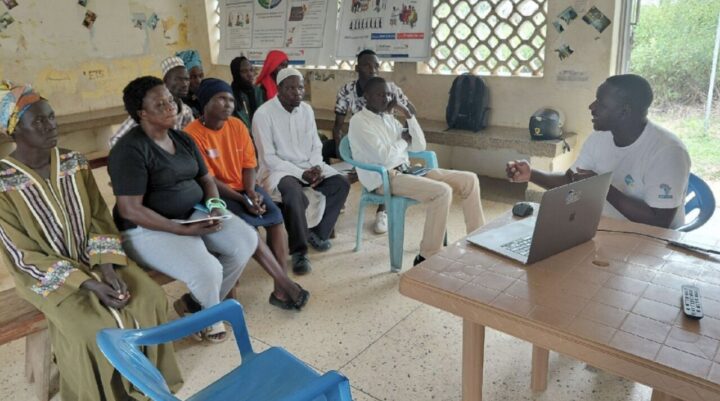
Strengthening eIDSR in Uganda
HISP Uganda provided technical support for a six-day surveillance mentorship in Yumbe District, supported by the Ministry of Health and IRC’s Core Group Partners Project. District and facility teams received hands-on practice with the eIDSR system across web, Android, and SMS reporting channels, alongside IDSR and AFP/polio surveillance training, addressing gaps in case detection, reporting timeliness, and data quality. Each of the 47 participating health workers left with a site-specific action plan to sustain improvements beyond the training. More
RRT Rostering Tool Workshop in Cameroon
HISP WCA, in collaboration with Cameroon’s Ministry of Public Health and with support from CDC Atlanta and HISP UiO, facilitated a workshop on configuring the DHIS2 RRT Rostering Tool, July 6–11. The initiative aims to digitize the management of Rapid Response Teams, improving the identification of experts, coordination of deployments, and responsiveness to public health emergencies. More
Surveillance System Integration Workshop in Kampala
On July 14–16, the Ministry of Health Uganda, Africa CDC, and HISP Uganda brought together surveillance experts, laboratories, and partners including WHO, CDC Uganda, AFENET, KCCA, and Baylor Uganda for a workshop in Kampala addressing fragmentation across Uganda’s disease surveillance tools, from eIDSR to mTrac, Go.Data, and ODK. Teams mapped existing systems, identified duplication and gaps, and agreed on clearer roles and data-sharing rules for tasks like case investigation and contact tracing—laying the groundwork for an implementation plan using the Africa CDC Surveillance and Emergency Response Toolkit. More
Climate-Health Module Workshop for Mali in Lomé
HISP WCA convened a technical workshop July 13–18 in Lomé, bringing together key actors working to strengthen Mali’s health information system. Participants defined functional requirements, configured metadata, and set up monitoring and analysis tools to integrate a Climate-Health module into DHIS2, in response to growing public health challenges linked to climate change. The initiative will strengthen the collection, analysis, and use of climate and health data to improve surveillance of climate-sensitive diseases and build resilience in Mali’s health system. More
Data Quality Optimization in Cameroon
July 20–24, HISP WCA, in collaboration with Cameroon’s Ministry of Public Health and the Health Information Unit (CIS), conducted the second technical workshop on configuring data quality tools in DHIS2, with support from the Global Fund. Facilitated by colleagues Sakibou Alassani and Well Geovani Lawson, the workshop marks a key step forward for national programs including malaria, HIV, TB, and immunization. Next steps include finalizing reports, updating facility groups, and training trainers. More
Capacity Building for Mental Health
HISP India supported the Live Love Laugh Foundation (TLLLF) as a technical partner for the DHIS2-based LLL MIS Application, in building capacity for the platform, which strengthens monitoring and data collection across the foundation’s Community Mental Health Program. The application enables program teams to track beneficiaries across the continuum of care, monitor community-based outreach, and generate timely reports for evidence-based planning. The training brought together Project Coordinators and MIS personnel to build skills in application navigation, data entry, and standard reporting workflows. More