Go to the main page

Tanzania: DHIS2 Climate & Health Country Profile

Tanzania is exploring integration of climate data and predictive modeling capabilities into existing DHIS2 systems to support national climate and health priorities, with an initial focus on malaria early warning.

Jump to a section on this page

    DHIS2 for Climate & Health in Tanzania

    Tanzania was one of the 10 countries involved in the first phase of the DHIS2 Climate & Health project from 2024-2026. The ongoing work in Tanzania has focused on stakeholder engagement and establishment of local governance structures with the Ministry of Health (MoH), National Malaria Control Programme, Tanzanian Meteorological Authority (TMA), HISP Tanzania, and other key partners, and defining frameworks for climate-health integration based on national priorities, and testing innovative DHIS2 Climate & Health tools in national DHIS2 systems.

    Updated: July 2026

    Priority climate & health use cases

    The Tanzanian Ministry of Health has identified malaria as an initial focus area for piloting DHIS2 climate & health systems:

    • Climate-informed malaria risk monitoring & early warning (in testing), initially focused on integrating climate data into the country’s existing Malaria Epidemic Threshold Early Warning Dashboard for more accurate prediction and automatic triggering of alerts.

    Information system infrastructure

    DHIS2 Climate & Health work in Tanzania leverages existing DHIS2 infrastructure and capacity, while testing innovative DHIS2 tools for climate data integration and predictive modeling.

    Health information systems & capacity

    DHIS2 has been used as Tanzania’s national health management information system (HMIS) since 2013, replacing the DHIS v1 system that had been in use since 2007. Both the Ministries of Health of mainland Tanzania and Zanzibar are responsible for owning and managing their HMIS systems, and receive technical assistance and capacity building support from HISP Tanzania. DHIS2 is also used in Tanzania for disease surveillance, community health, and a wide range of health programmes.

    Climate data integration

    The DHIS2 Climate App has been installed in a DHIS2 training instance, enabling upload and integration of climate data and HMIS data in DHIS2. HISP Tanzania has worked with the MoH National Malaria Control Programme (NMCP) to identify and map relevant climate variables from globally available data sets, including precipitation, temperature, and relative humidity, and used these to develop information products in the DHIS2 testing instance that show malaria-climate relationships.

    HISP Tanzania has also engaged with the Tanzanian Meteorological Authority (TMA) to explore pushing local climate data into DHIS2 and collaborated with key partners to design data flow pathways and an integration architecture that can be implemented once a data sharing memorandum with the MoH is signed.

    Predictive modeling

    HISP Tanzania has installed the Chap Modeling Platform and DHIS2 Modeling App on a DHIS2 testing instance and conducted testing sessions jointly with the NMCP that validated model outputs against historical malaria surveillance data and identified configuration requirements for production deployment. A primary area of focus for the NMCP is using the Chap EWARS model to extend the existing Malaria Epidemic Threshold Early Warning Dashboard, which currently shows epidemic thresholds and alerts using malaria data only (manually calculated in Excel and uploaded to DHIS2), by integrating climate data for more accurate prediction and alert triggering and automating the prediction workflow by leveraging Chap and the Modeling App.

    At the request of the MoH, HISP Tanzania is also working on developing descriptive models that recommend optimal interventions for areas with predicted high malaria surges–including LLIN quantities, antimalarial drug requirements, and cost estimates–and has engaged in capacity building on mechanistic modeling approaches with the University of Dar es Salaam to support these requirements. These approaches are already being applied in HISP Tanzania’s pilot work in South Sudan.

    Policies, partnerships & governance

    Tanzania has a policy landscape for climate and health that is supported by governance structures that are evolving with the active engagement of HISP Tanzania and other partners.

    National policy

    The updated Health National Adaptation Plan (H-NAP) of Tanzania for 2025-2030 (currently in draft status) has been drafted by a collaborative stakeholder group including HISP Tanzania. It is aligned with the country’s larger National Adaptation Plan 2025-2035, and outlines a number of priorities for increasing climate resilience of the health system where DHIS2 plays a role. In particular, it sets a high-level goal to strengthen inclusive climate-sensitive disease surveillance and response systems, which includes expanding digital surveillance systems to integrate real-time climate-sensitive disease tracking and integrating climate-sensitive disease modules into Tanzania’s national information systems.

    Governance & coordination

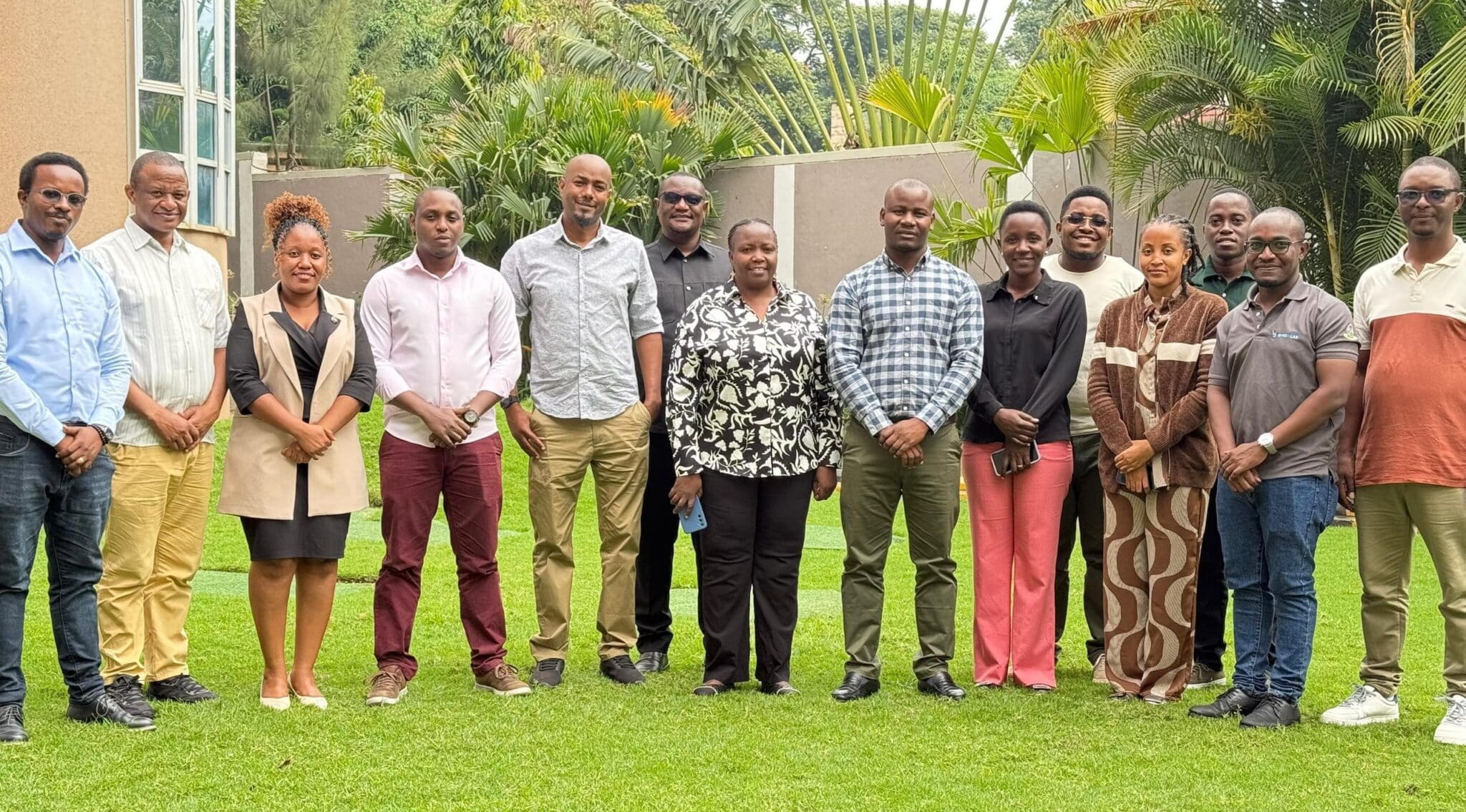
    HISP Tanzania has helped to bring together stakeholders across the government for engagement in climate and health work, including all relevant MoH departments. This has facilitated the creation of the Climate and Health Integration Technical Working Group (C&H TWG), which includes all stakeholders who are working on the integration of climate data and health data in Tanzania, and has helped to harmonize projects objectives, draft a list of proposed joint activities, and establish a governance framework for ongoing collaboration.

    Partner & funding landscape

    Funding for initial work on DHIS2 climate and health systems in Tanzania was provided by Wellcome through the HISP-led DHIS2 Climate & Health project. In addition, the Ifakara Health Institute’s (IHI) in Tanzania has been engaged in parallel projects funded by Wellcome and the Gates Foundation-funded to develop climate-informed malaria models and digitize climate data gaps. HISP Tanzania has engaged with IHI to foster shared tools, methodologies, and learning across these initiatives.

    News & updates

    Learn more about DHIS2 Climate & Health work in Tanzania:

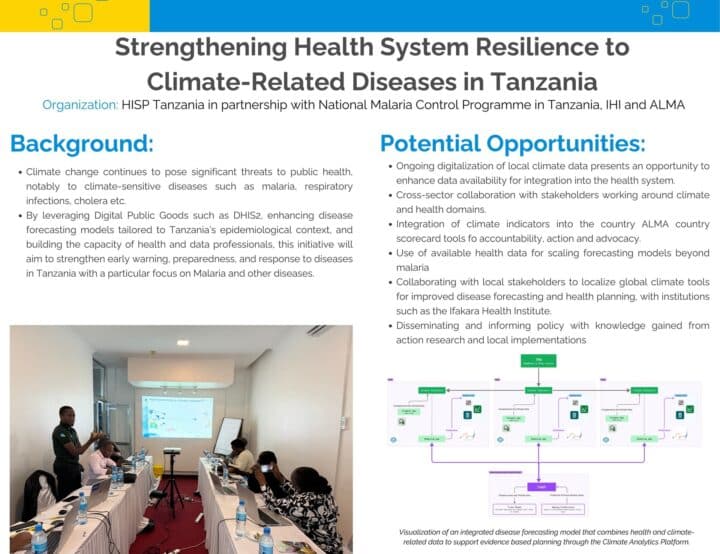
    Poster: Strengthening Health System Resilience to Climate-Related Diseases in Tanzania

    HISP Tanzania presented a poster in June 2025 summarizing the country’s progress with DHIS2 for Climate & Health.

    Learn more

    Additional resources

    Explore these additional resources for more information:

    Contact

    Are you working on climate and health in Tanzania? We would love to hear from you. Contact the global DHIS2 Climate & Health project team at climate@dhis2.org, or connect with HISP Tanzania at: info@hisptanzania.org