The DHIS2 Annual Conference takes place from 15-18 June 2026! Learn more
DHIS2 for NCDs
Noncommunicable diseases are the leading cause of death and disability worldwide. DHIS2 provides a flexible, integrated platform to support countries in tracking, managing, and responding to NCDs—from routine facility reporting to advanced patient registries, screening programs, and climate-linked risk systems.
Jump to a section on this page
Overview
Noncommunicable diseases (NCDs), including cardiovascular disease, diabetes, cancer, chronic respiratory conditions, and mental health disorders, account for approximately 74% of all deaths globally, with the majority occurring in low- and middle-income countries (LMICs). Addressing this burden requires health systems that can collect and use data consistently, monitor populations over time, and act on evidence at every level, from the community clinic to the national Ministry of Health.
DHIS2 is already deployed as the national health information platform in more than 75 countries, many of which face a growing NCD burden alongside persistent infectious disease challenges. In many of these countries, NCD data is being collected in DHIS2 as part of routine health reporting, providing a foundation that programs can build on without starting from scratch.
Whether you are establishing a national hypertension registry, expanding a cancer surveillance system, linking climate data to NCD outcomes, or looking to better understand comorbidities across disease programs, DHIS2 offers the tools and flexibility to support your goals.
Are you looking to implement or expand a DHIS2-based NCD program? The HISP network has deep experience supporting countries with NCD information system design, implementation, and scale-up. Contact us to discuss how we can support your work.

DHIS2 features for NCD programs
DHIS2 offers a comprehensive set of tools to support NCD programs at every stage of implementation—from routine facility reporting to advanced patient registries, risk stratification, and cross-sector analytics.
Facility readiness and routine reporting
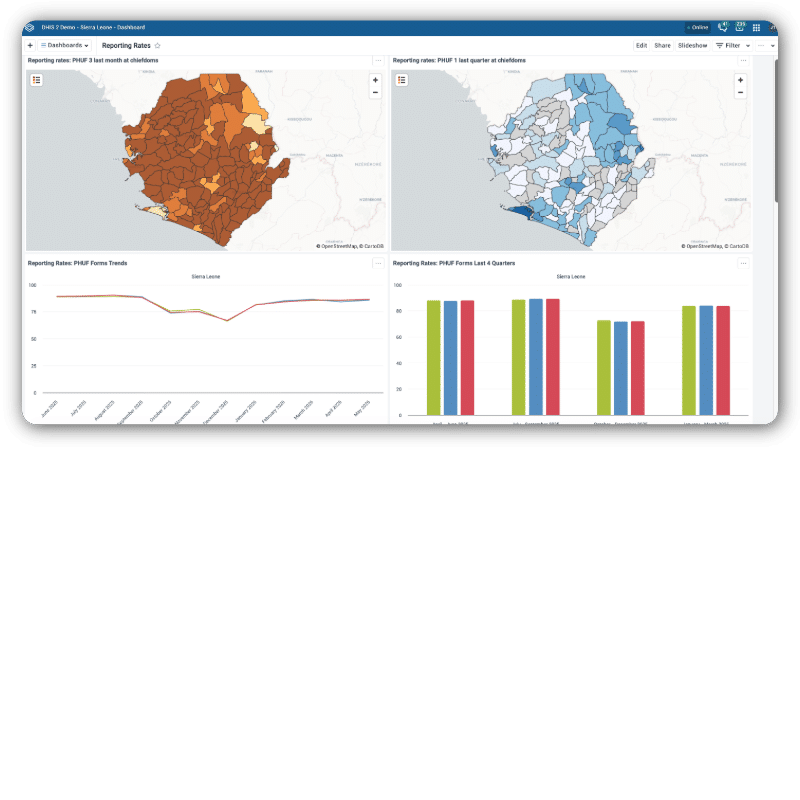
Many countries already collect NCD-related data in DHIS2 as part of routine health management information system (HMIS) reporting. This existing data—covering diagnoses, service utilization, medicines and service availability, and health worker capacity—can be used immediately for program monitoring and targeted interventions, without additional system investment.
- Use existing HMIS data to baseline NCD service coverage and quality
- Assess facility readiness across staff, supplies, and infrastructure
- Monitor NCD service utilization trends across administrative levels
- Generate automated reports for district and national program managers
- Import STEPS surveys to compare incidence with population prevalence of NCDs and risk factors
NCD registries and patient management
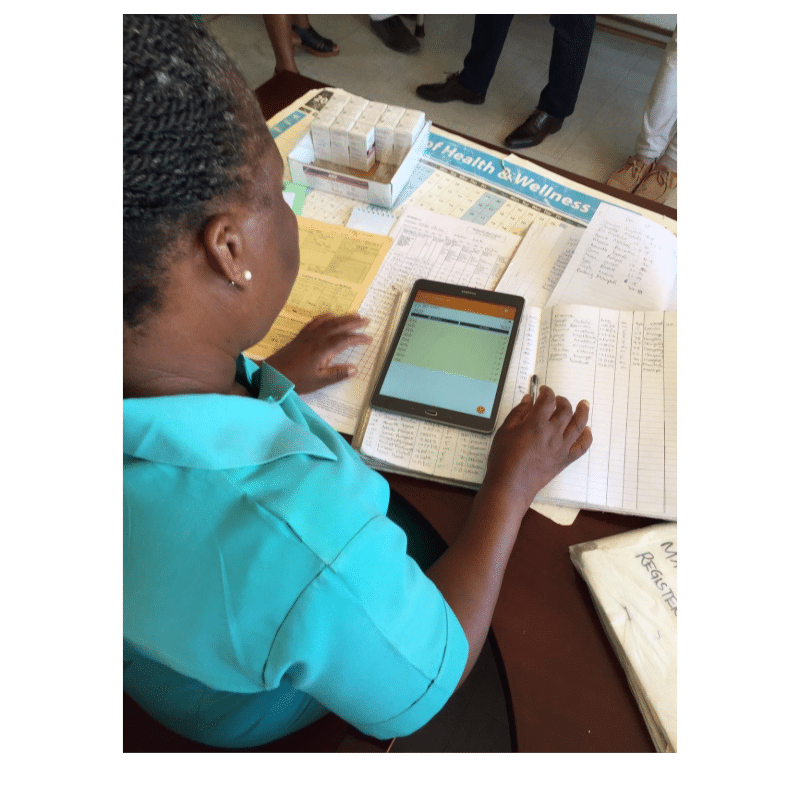
For programs requiring individual-level data, DHIS2 Tracker supports the enrollment and longitudinal follow-up of NCD patients across conditions including hypertension, diabetes, cancer, mental health, and rehabilitation. Patient management trackers support clinical data capture, appointment scheduling, treatment follow-up, and outcome recording—all within the same platform used for routine HMIS reporting, enabling seamless triangulation of patient-level and population-level data.
- Enroll, track, and count individual patients longitudinally across chronic NCD programs
- Capture clinical measurements, treatment history, and follow-up visits over time
- Transform OPD registries to patient working lists for defaulter tracking and appointment reminders
- Integrate with electronic medical records (EMRs) for advanced clinical data management
- Extend tracker configurations to additional conditions without rebuilding from scratch
Screening and risk stratification
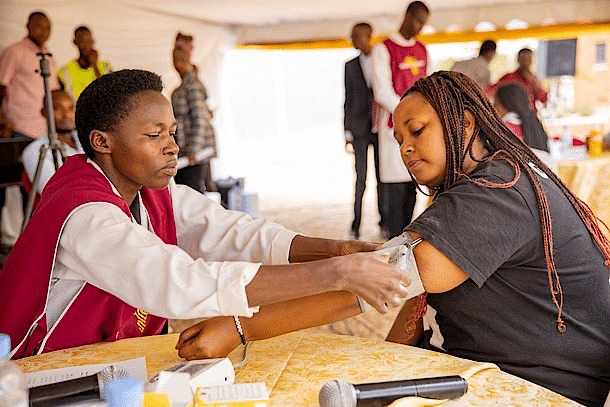
DHIS2 supports structured screening programs for NCDs, including blood pressure measurement, blood glucose testing, and cancer screening. Risk scoring algorithms can be integrated into DHIS2 Tracker to flag high-risk patients and prioritize follow-up at the primary health care level, enabling a more proactive approach to NCD prevention and care.
- Organize and monitor population-level NCD screening programs and campaigns
- Capture screening results and link findings directly to patient records in Tracker
- Apply risk scoring algorithms to stratify patients by clinical priority
- Schedule and track follow-up for high-risk individuals at the primary care level
- Monitor screening coverage by geographic area and target population
Cross-cutting analytics
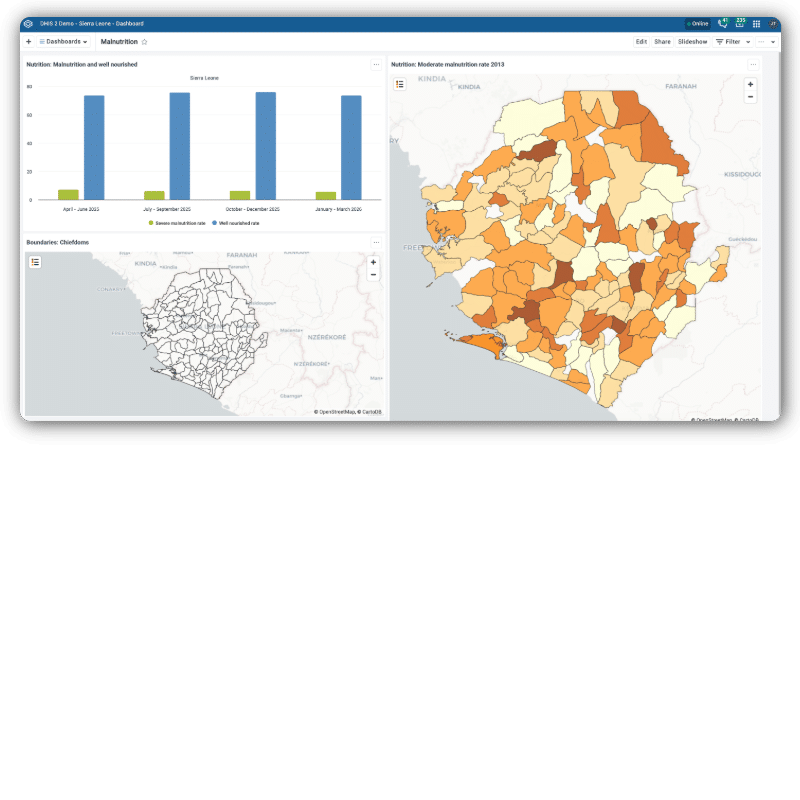
One of the most powerful features of DHIS2 for NCD programs is the ability to combine NCD data with data from other health programs within the same platform. Health authorities can analyze comorbidities—for example, comparing NCD burden with HIV, tuberculosis (TB), malnutrition, or malaria program data—and generate a more complete picture of population health.
- Build customizable dashboards for NCD program managers, district officers, and national authorities
- Validate, clean, and monitor data quality using built-in tools designed for routine health system data
- Disaggregate indicators by geography, age, sex, and condition
- Combine facility-level and patient-level data for integrated analysis
- Track progress toward national and global NCD targets over time
Climate data integration
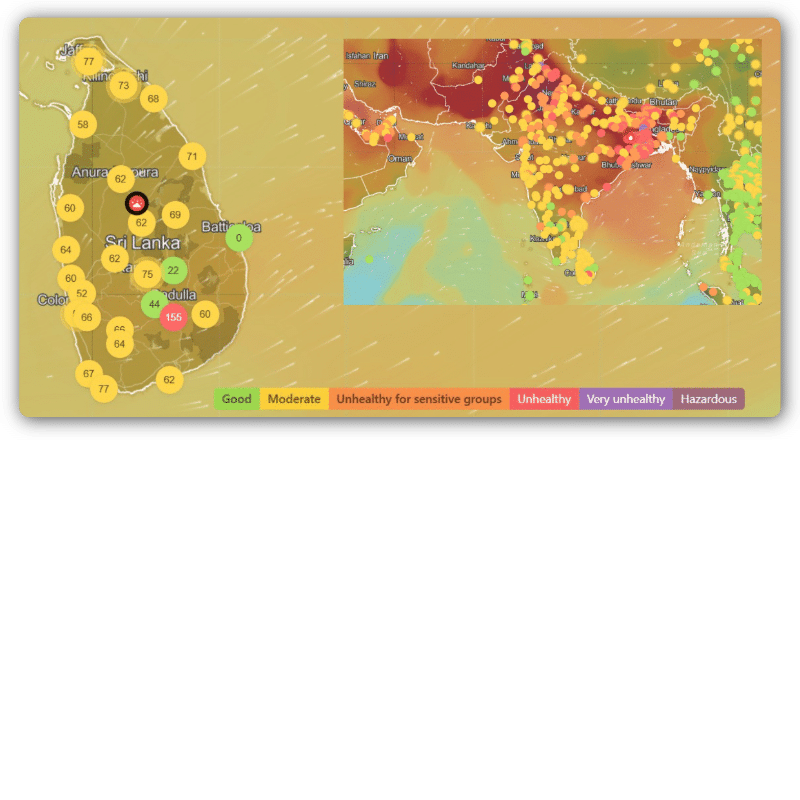
Climate change is an important driver of NCD incidence and severity. Extreme heat, poor air quality, flooding, and other climate-related events affect cardiovascular disease, respiratory conditions, and mental health outcomes, particularly in vulnerable populations in low- and middle-income countries (LMICs).
- Integrate climate and environmental data with NCD health data for exposure-outcome analysis
- Link air quality monitoring to facility-level respiratory disease reporting
- Connect extreme weather early warning systems to NCD program alerts for rapid adaption of routine NCD services
- Apply AI-powered predictive modeling through the Chap Modeling Platform to forecast climate-sensitive NCD outcomes.
Integration and standards
DHIS2 is designed for interoperability and supports international standards relevant to NCD programs, enabling countries to maintain internationally comparable data within their national information systems.
- Connect with laboratory information management systems (LIMS) to link lab results like HbA1c, lipid panels, or pathology reports, directly to patient records in Tracker.
- Integrate with CanReg5, the World Health Organization’s tool for cancer registry data management.
- Apply ICD-10 and ICD-11 coding for morbidity and cause-of-death reporting.
- Use the DHIS2 cause-of-death module to monitor disease-specific mortality and track progress toward national and global targets.
- Interoperate with EMR systems to maintain holistic health records and document NCD complications management at hospital level.
NCD use cases supported by DHIS2
While the features above are broadly applicable, DHIS2 has been adapted to support NCD programs across a wide range of conditions and contexts. Chronic NCDs, including hypertension, diabetes, cancer, and chronic respiratory disease, are the primary focus, with dedicated resources, toolkits, and country implementation experience available. DHIS2’s flexible platform also supports a growing number of emerging NCD use cases, including mental health, injury surveillance, and vision and hearing programs.
Chronic NCDs
Chronic NCDs make up the majority of DHIS2’s NCD work, and are often the greatest share of country NCD burden. Routine HMIS data already present in DHIS2 systems provides a starting point for targeted interventions and program monitoring. From there, countries can expand into patient-level tracking, registries, risk scoring, and longitudinal follow-up, using tools that integrate seamlessly into existing national platforms.
The following areas have dedicated resources, toolkits, and country implementation experience.
- Hypertension: Hypertension is the leading risk factor for cardiovascular disease and a major driver of premature death worldwide. Through a Resolve to Save Lives (RTSL) initiative, DHIS2 Tracker has been used to support national hypertension programs though validated configurations for patient enrollment, blood pressure monitoring, treatment protocols, and follow-up scheduling, with tools designed to integrate with existing national HMIS data.
- Diabetes: Diabetes affects more than 500 million people globally and is closely linked to cardiovascular disease and chronic kidney disease. The Diabetes Compass initiative, as well as RTSL-supported implementations, have used DHIS2 Tracker to support patient registration, HbA1c monitoring, complication screening, and primary care follow-up in national platforms across multiple countries.
- Cancer: Cancer encompasses many subtypes with distinct prevention, screening, treatment, and registry requirements, making integrated data management a particular challenge. DHIS2 supports cancer programs from facility-based screening to national registries, with integration with CanReg5, support for ICD-10 and ICD-11 coding, and a partnership with St. Jude Children’s Research Hospital for pediatric oncology data management.
- COPD and chronic respiratory disease: Chronic obstructive pulmonary disease (COPD) and other respiratory conditions are a significant and often underreported part of the NCD burden, particularly in settings with high rates of indoor air pollution, tobacco use, and occupational exposures. In Uganda, health authorities have used DHIS2 to link air quality monitoring data with facility-level respiratory health outcomes, creating a novel climate-NCD surveillance system.
- Mental health: Mental health and neurological conditions represent a significant and growing share of the global NCD burden, yet they remain among the most underserved areas in health information systems. In Tanzania, the Ministry of Health has implemented an integrated system to monitor both NCD and mental health conditions at the facility level within the national HMIS platform.
Emerging and additional NCD areas
DHIS2’s flexible data model supports a wide variety of NCD use cases beyond the primary areas above. In several countries, programs are already using DHIS2 to address these needs; in others, there is growing interest and early development work underway.
Vision & hearing
DHIS2 has been used to support vision and hearing screening programs, including tools developed as part of the DHIS2 Health Data Toolkit.
Injury surveillance and rehabilitation
DHIS2 supports injury surveillance and rehabilitation tracking, including occupational health use cases and patient intake workflows in emergency and trauma settings.
Acute conditions and cross-program overlap
Some acute conditions, such as acute asthma attacks, intersect with both NCD and communicable disease programs. DHIS2’s integrated platform allows these to be monitored alongside routine NCD reporting.
Integration and standards
DHIS2 is designed for interoperability and supports a range of international standards relevant to NCD programs.
Laboratory systems
DHIS2 can be integrated with laboratory information management systems (LIMS) to automatically link lab results — such as HbA1c, lipid panels, or pathology reports — to patient records in Tracker.
CanReg5
DHIS2 integrates with CanReg5, the WHO tool for cancer registry data management, enabling countries to maintain internationally comparable cancer incidence data within their national information systems.
ICD-10 and ICD-11
DHIS2 supports the use of International Statistical Classification of Diseases and Related Health Problems (ICD)-10 and ICD-11 coding standards for morbidity and cause-of-death reporting.
Cause-of-death module
The DHIS2 cause-of-death module supports structured coding and reporting of mortality data, enabling NCD programs to monitor disease-specific mortality and track progress toward national and global targets.
Impact stories
Read about how countries are using DHIS2 to strengthen NCD programs and improve health outcomes.
Resources
- DHIS2 for NCDs webinar An overview of DHIS2 capabilities for noncommunicable disease programs, including demonstrations of tracker-based patient management and analytics tools. Noncommunicable Disease Data in Four National HMIS (Webinar recording)
- DHIS2 Health Data Toolkit Standards-based configuration packages for common NCD use cases, including hypertension and diabetes, as well as Health Facility Profiles. dhis2.org/health-data-toolkit
- DHIS2 documentation Technical documentation for configuring and using DHIS2 for NCD programs. docs.dhis2.org
- DHIS2 and electronic medical records Information on integrating DHIS2 with EMR systems for advanced NCD data management. dhis2.org/health/electronic-medical-records
- DHIS2 for Climate & Health Learn how DHIS2 supports climate-resilient health systems, including NCD-relevant climate data integration. dhis2.org/climate
Get Support for DHIS2 NCD implementation
You can also contact a member of the HISP network in your region for support on national or subnational NCD information system projects. If you are a funder or program manager looking to explore what DHIS2 can offer for your NCD initiative, we welcome you to reach out.
Connect with the community
The DHIS2 Community of Practice (CoP) is the primary forum for DHIS2 discussion and peer support. Join NCD practitioners and implementers from around the world to share use cases, ask questions, and stay current on emerging tools and approaches.
Partnerships
DHIS2’s work in noncommunicable diseases is developed in close collaboration with global health partners, funders, and implementing organizations.
World Diabetes Foundation (WDF): WDF has supported the development and implementation of DHIS2-based diabetes management and monitoring tools in several countries, helping to build national capacity for data-driven diabetes care.
Resolve to Save Lives (RTSL): RTSL has partnered with DHIS2 to develop and scale validated hypertension and cardiovascular disease patient management tools across multiple countries, with a focus on high-burden settings.
WHO International Agency for Research on Cancer (IARC): DHIS2 collaborates with WHO IARC on cancer registry standards and CanReg5 integration to support internationally comparable cancer surveillance in LMICs.
Pan American Health Organization (PAHO) — Hearts in the Americas: DHIS2 supports the PAHO Hearts in the Americas initiative, which works to reduce cardiovascular disease morbidity and mortality across Latin America and the Caribbean through strengthened health information and patient management systems.
Caribbean Public Health Agency (CARPHA): DHIS2 works with CARPHA to strengthen NCD surveillance and data systems across the Caribbean region.